from my sketchbook: three careers

Don't forget your second wind/Sooner or later you'll get your second wind
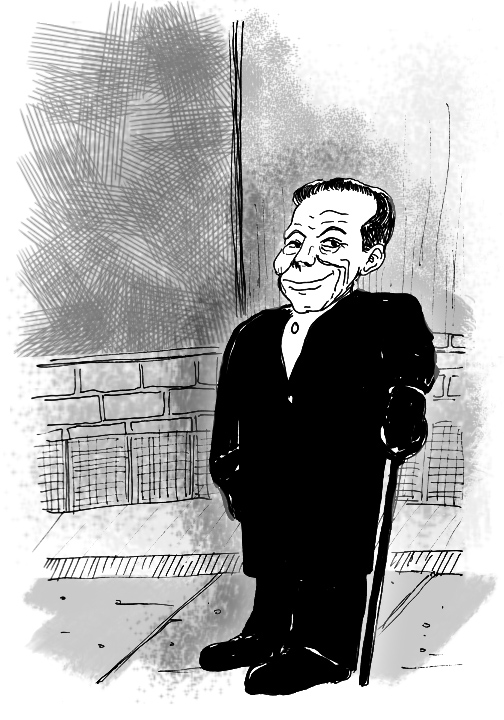
Hollywood is a fickle, fickle place. As presented countless times in this blog, the entertainment business can be cruel, heartless, unrelenting and unforgiving. Beginning way back in the infancy of the motion picture business, hundreds and hundreds of eager young actors and actresses have had their dreams dashed and have been cast aside when the “next big thing” comes along. Sometimes the finger can be pointed at naiveté, drugs or a capricious public, but whatever the reason, a slew of casualties are left in the wake of the elusive quest for fame. However, some are much luckier than others. There are the select few who have managed to maintain two successful careers — one separated by a generation of fans from the other. Such is the case with three particular actors whose on-screen activity spanned many decades and whom each essentially had two careers.

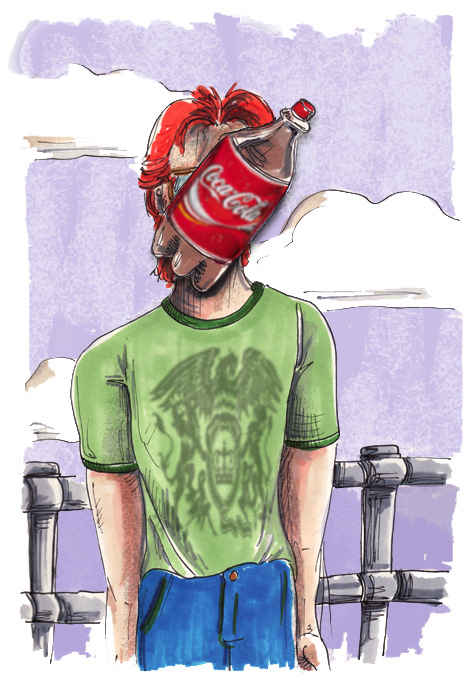
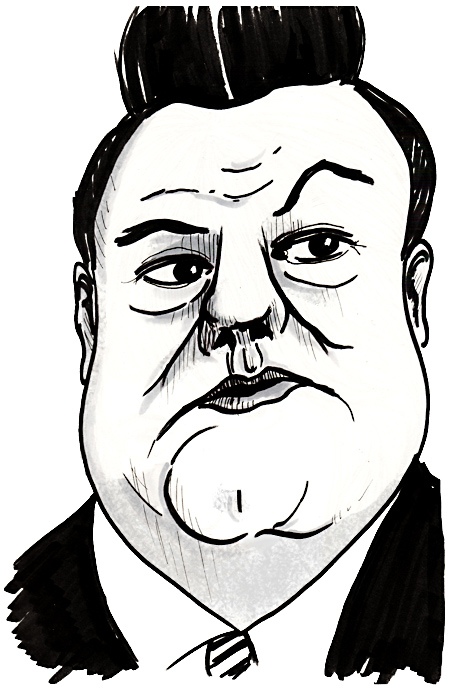
In 1928, 20 year-old Buddy Ebsen, and his younger sister Vilma, arrived in New York City from Orlando Florida, with a little under thirty dollars and aspirations of becoming Broadway dancers. Their popularity in vaudeville led to a contract with MGM where Buddy danced and sang his way through one musical after another, partnering with Shirley Temple, Judy Garland and others along the way. His surreal style of dancing prompted Walt Disney to film Buddy as reference for a dancing Mickey Mouse. Buddy was soon cast as The Scarecrow in 1939’s The Wizard of Oz,  but traded roles with Ray Bolger, who was playing the Tin Man, a move that would prove fateful. After rehearsals and recording the songs, Buddy experienced cramps and shortness of breath from the aluminum dust in the Tin Man makeup. Hospitalization forced him to drop out of the picture. He complained of lung ailments for the rest of his life from “that damned picture”. (Ironically, he outlived his major co-stars by at least 16 years.) His acting career was briefly interrupted by his service during World War II. When he returned to acting after an honorable discharge, he appeared almost exclusively in Westerns. One notable exception was his turn as Audrey Hepburn’s estranged husband Doc Golightly in 1961’s Breakfast at Tiffany’s.  That role caught the attention of a CBS casting director. Buddy was recruited for the role that would define his second career  — Jed Clampett, the patriarch of The Beverly Hillbillies, the wildly popular show that ran for nine seasons. After Hillbillies  cancellation, Buddy starred in, what could be labeled as “career number three”, the detective series Barnaby Jones, for eight seasons. He made guest appearances in movies and TV until his retirement. Buddy passed away in 2003 at the age of 95. The majority of his Hillbillies fans were not aware of his roots as a movie musical hoofer.

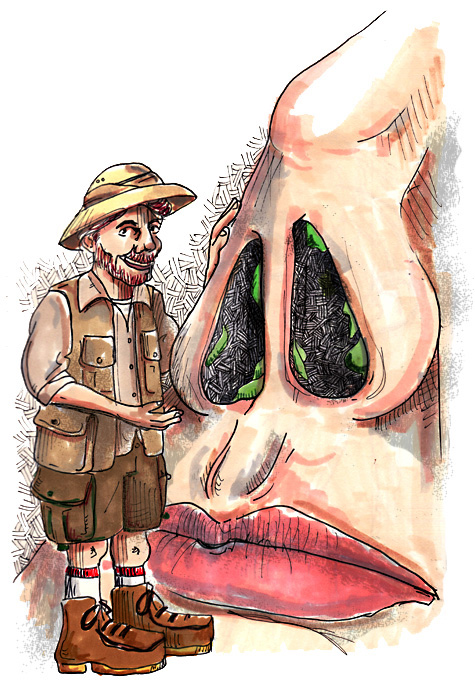
Leslie Nielsen started out as a disc jockey, but his uncle actor Jean Hersholt inspired his interest in acting. He began what would become a long career in television and motion pictures, primarily as a dramatic actor. He starred in the science-fiction classic Forbidden Planet  in 1956. He auditioned for the part of Messala in Ben-Hur,  but lost to Stephen Boyd. Undiscouraged, he followed that with roles in many Westerns and romantic comedies. He was part of the all-star cast of  the 1972 disaster film The Poseidon Adventure  as the doomed ship’s captain. In 1980, he began what became his “second career” as a slapstick film comedian when he played the deadpan  Dr. Rumack in Airplane!   Cast alongside other well-known serious actors parodying their regular on-screen personas, Leslie delivered the often -quoted answer to “Surely, you can’t be serious” as “I am serious and don’t call me ‘Shirley'”. Film critic Roger Ebert called Leslie “The Olivier of spoofs”. Leslie went on to star in a  succession  of raucous send-ups including Spy Hard  and the popular Naked Gun  series. He starred in nearly a dozen more genre parody films until his death in 2010 at age 84. His biggest comedy fans were not aware of his early days as a serious actor.

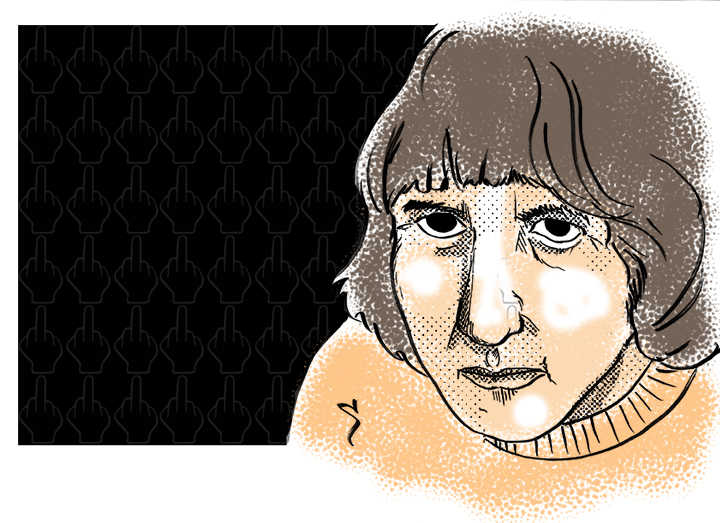
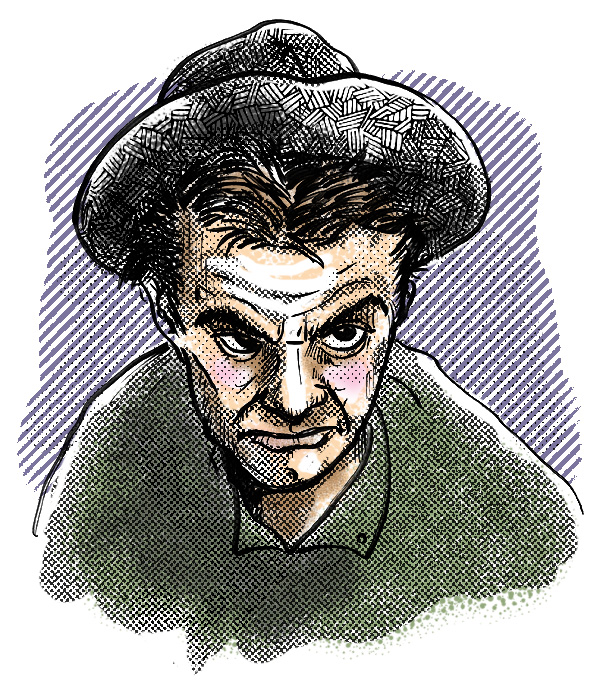
Len Lesser was cast in small but key roles opposite Clint Eastwood in Kelly’s Heroes  and The Outlaw Josey Wales.  His hulking build made him the ideal villain and he played numerous gangsters, hit men, enforcers and jailers. During the filming of Papillion,  the harrowing prison adventure with Steve McQueen and Dustin Hoffman, McQueen insisted that Len, as the overseer on a prison ship, not hold back in a scene that called for Len to shove the star. “Don’t think of me as a movie star”, said McQueen. Len pushed McQueen so hard, he lost his balance. When an astonshed and intimidated Hoffman’s turn came, he said, “Len, I want  you to think of me as a movie star.” However, Len is best known for his comedic turn as Jerry Seinfeld’s Uncle Leo, with his “Jerry Hello!” greeting. When Len passed away in February 2011, fans knew little of his early motion picture career as a “heavy”.

Few are lucky enough to have a lasting and memorable career in television and films. Even fewer are lucky enough to have two.

Comments

comments

from my sketchbook: karen lancaume

Through early morning fog I see/visions of the things to be
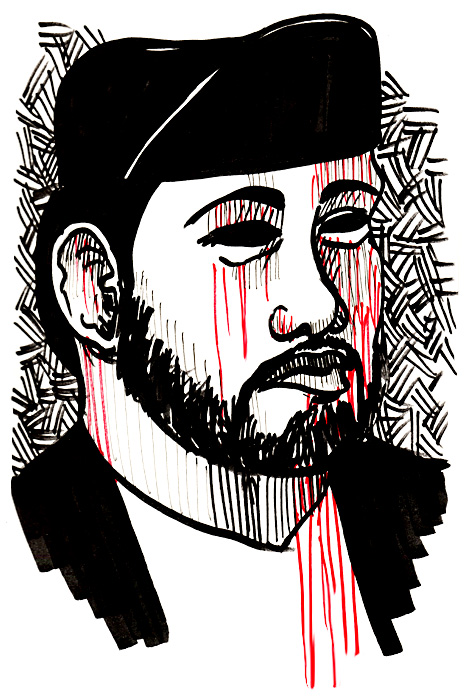
Karen Bach had just finished studying communications and business when she married a DJ from her native Lyon, France. At her husband’s insistence, she began appearing in adult films in an effort to help alleviate the couple’s debts. Using the name “Karen Lancaume” (a play on the renowned French cosmetic company), she made over 40 adult films in France and Germany. Hoping to make the difficult crossover into the mainstream movie industry, she was cast in the controversial 2000 release Baise-moi.  The film was described as a pornographic Thelma and Louise and was promptly banned by the French government. Baise-moi,  with its graphic depiction of violence and unsimulated sex, became a staple on the independent film festival circuit.

Failing to be recognized as a legitimate actress, Karen retired from the film industry altogether in 2002 and disappeared from the public eye. In 2005, one week after her 32nd birthday, Karen committed suicide with an overdose of sleeping pills. She left a note that simply read, “Too painful.”

Comments

comments

from my sketchbook: barney doyle

take me out to the ballgame/take me out to the crowd
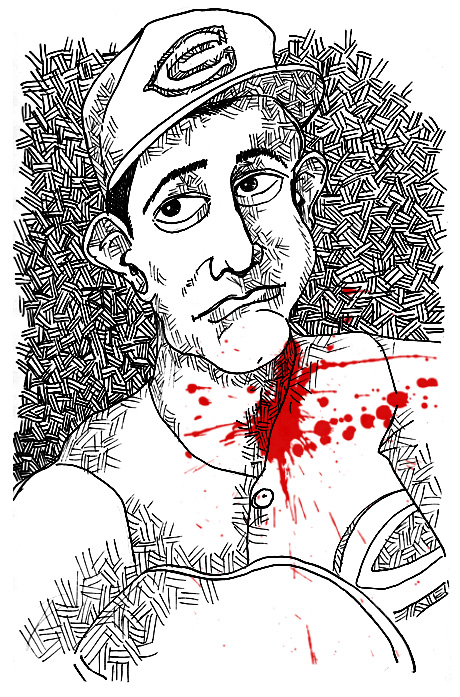
A heart ailment forced 53 year-old Barney Doyle into an early retirement. A life long New York Giants fan, he would now be able to attend more games.

On Independence Day 1950, Barney went to an early Mass, had a quick breakfast and picked up a friend’s son, Otto Flaig, to make good on a promise to take the boy to a ball game. They arrived at the Polo Grounds in Upper Manhattan and found their section in the packed stadium. The sky was clear and it was a beautiful day for a double-header between the Brooklyn Dodgers and Barney’s beloved Giants. At twenty minutes after twelve noon, the Dodgers took the field for batting practice. In seat 3, row C, high in grandstand section 42, facing the Coogan’s Bluff section of New York, Barney leaned over to tell his young companion something above the din of the crowd. Suddenly, a bullet drilled into Barney’s left temple and he slumped back, dead before his back hit the bench. Police and medics pushed their way through the unruly crowd to the scene. As medical staff carried Barney’s body away, some of the standing-room patrons fought for the now-vacant seat. Otto was annoyed when policemen ushered him away for questioning, claiming he was missing the game — a game he had been dreaming of for a month.

Subsequent investigation determined that 14 year-old Robert Peebles had climbed to the roof of his Coogan’s Bluff tenement and fired the one bullet he had saved for the July 4th celebration from his .45 caliber gun. Robert stood behind a five-foot high retainer wall, 1,200 yards from the Polo Grounds, when he pulled the trigger. He couldn’t even see the ballpark from his position. He was charged with juvenile delinquency.

Comments

comments

from my sketchbook: karyn kupcinet

We get it on most every night/When that old moon gets so big and bright
Karyn Kupcinet, the daughter of popular Chicago columnist Irv Kupcinet, was a young and aspiring actress. She was given access to producers thorough her father’s connections. Using the name “Tammy Windsor”, she landed a small role in the campy Roger Corman original Little Shop of Horrors.  In 1961, she was offered a small role in The Ladies Man by its director-star, Jerry Lewis. This was her last motion picture before turning to a modest career on episodic television. Karyn made numerous, one-shot appearances in both comedies and dramas, including a regular role on the short-lived Gertrude Berg Show,  alongside a young Marion Ross.

Karyn was getting positive feedback for her acting. However, she began an unfounded concern for her physical appearance and started taking an excessive amount of diet pills. Around this time, she began a relationship with fellow actor Andrew Prine, but her overuse of prescription drugs was a cause of conflict for the couple. In addition, Karyn was arrested for shoplifting in 1962.

Prine dismissed Karyn’s pleas for an exclusive relationship. He distanced himself from the actress and pursued other women. Karyn took to spying on Prine and his dates. She even sent threatening messages to Prine, using printed words and letters she had cut out of magazines.

On November 28, 1963, Karyn arrived late for a Thanksgiving dinner invitation from actor Mark Goddard (several years before he would gain fame as Major Don West on Lost in Space) and his wife Marcia. Goddard and his wife noticed Karyn behaving in an unusual manner. He noted that her voice seemed strange, she played with her food – eating very little and seemed to be moving her head at odd angles. When confronted by the Goddards, Karyn began to cry and told an unsubstantiated story of a baby being left on her doorstep earlier in the day. Once calmed down and comforted, Karyn left for home in a taxi, promising to call upon her arrival.

Two friends came by Karyn’s house later that evening. The three watched television and drank coffee until Karyn dozed off on the sofa. She awoke, excused herself and headed for her bedroom. The two men lowered the volume on the TV and locked the front door behind them.

On November 30, the Goddards went to Karyn’s home after not hearing from her since Thanksgiving. They found her lying on the sofa. She was nude and she was dead. The front door was unlocked and the television was still on. A subsequent police search yielded bottles of Desoxyn, Miltown, and other medications. A coronoer’s examination concluded that, due to a broken hyoid bone in her throat, Karyn had been strangled. Her death was officially ruled a homicide.

Years later, while doing independent research for a book, author James Ellroy claimed that a sheriff’s report found a book that recommended naked dancing to free one’s inhibitions lying on a table near Karyn’s body. It had been placed on the table and bookmarked at the page that explained the dancing. Ellroy has theorized that she followed the advice in the book, started dancing, fell and broke her hyoid bone on a chair. He went on to say that the coroner who performed Karyn’s autopsy was an alcoholic and botched the autopsy.

Another scenario from conspiracy theorist Penn Jones claims that a woman who dialed her local operator approximately 20 minutes before President Kennedy’s assassination with information of the shooting, was Karyn. Jones’ claim points to Irv Kupcinet as the source of the information saying he passed the knowledge on to his daughter. Jones goes on to say that Karyn was murdered because of this knowledge.

Karyn’s family have disputed Ellroy’s claim and, although they believed Karyn was murdered, dismissed Jones’ theory as well.

Comments

comments

IF: journey

Strangers waiting, up and down the boulevard/Their shadows searching in the night/Streetlights people, living just to find emotion/Hiding, somewhere in the night.
Passover — the holiest day on the Jewish calendar after Rosh Hashanah, Yom Kippur, Sukkot, Shavuot, Shemini Atzeret and Simchat Torah …..um, where was I ?

Oh, yeah. Passover.  Passover recounts the story of the ancient Israelites’ long journey out of slavery and oppression by Egypt and the Pharaoh. The Jews were enslaved and ordered to build the pyramids. This, of course, was the last time any Jew attempted a large home construction project with his own hands. The poor children of Israel were miserable and looked to their leader Moses for comfort and a remedy to their problems.

Moses demanded that the uninterested Pharaoh “let his people go.” With some assistance from God, Moses warned of ten plagues that would be brought upon Egypt until the Jews were freed. After an unrelenting wave of locusts and boils and flaming hail and anthrax (the disease, not the band — although that would have definitely qualified as a plague), Pharaoh said “Alright already! Beat it!” and granted the people their freedom. Wasting no time, the Israelites rapidly gathered their belongings and split. In their haste, they quickly grabbed the dough that had been baking on the hot rocks, not allowing it to properly rise. Because of this very act, this simple exercise in impatience, every year on Passover, Jews are condemned commanded to eat matzo in celebration of their freedom.

My observance of Passover has changed throughout the various stages of my life. As a child, there was little to no observance of Passover in my house. Of course, we had the obligatory single box of matzo and the occasional can of chocolate macaroons, but they held an equal place at the table alongside the plastic-wrapped loaves of bread. My father wasn’t going to stand for this “matzo shit” when he craved a bologna sandwich. Thirty years ago, when I met my wife and her traditionally observant family, I was introduced their elaborate seder. My in-law’s seder, the steadfast Passover meal, was a relative-stuffed, marathon event in which my father-in-law, reading from a generations-old tome, chronicled the tale of the Exodus in what seemed like real time. The entire ritual was meticulously orchestrated — from the reciting of the ma nishtana,  to the off-key, communal singing of prayers — until we reached page 62 in the Haggadah and dinner was served. As the years rolled on and the massive preparation began to take its toll on my beleaguered in-laws, the seder has evolved into a much more intimate affair. The guest list has been whittled down to the families of their three grown children. Since my in-law’s grandchildren range in age from preschool to thirty years old, participation seems to excite only the smaller ones. Seated at the table, the older grandchildren can be caught observing their younger counterparts with glazed expressions, betraying conflicting feelings of fond memories and detachment. Others at the table are frantically calculating the arrival of page 62. My father-in-law’s one-time epic dissertations on the adventures of Moses and his freedom-seeking crew has been reduced to, what we fondly refer to as, the “Reader’s Digest” seder.

Matzo is the most familiar symbol of Passover. Both Jews, who suffer rejoice in its annual arrival, and non-Jews, who have sampled it in curiosity, are accustomed to its presence on supermarket shelves. Even among the assembly of unfamiliar products, like gefilte fish, farfel and kichel,  matzo has become the Passover equivalent of chocolate bunnies… sort of. Not renowned for its versatility, inventive chefs (such as my mother-in-law) have sprung unlikely offerings like matzo lasagna (using strips of matzo in place of noodles) and matzo pizza (using matzo instead of anything that remotely resembles pizza) on their invited Passover visitors. These preparations have their hearts in the right place , but their taste buds have taken the eight day celebration off. An age-old dish, created to tolerate the eating of matzo and to mask its bland taste and cardboard-like texture, is matzo brie or fried matzo. Matzo brie, depending on whose family tradition you are following, can be likened to anything from French toast to an omelet to a doorstop. Years ago, my wife and I had a heated debate over the proper way to prepare matzo brie. Of course, we were each used to the way it was concocted by our respective mothers. I came to really love the way my wife made matzo brie , despite its noticeable difference from how my mom made it. The reason, I figured, was: number one — I can’t cook to save my life and number two — I damn well better prefer my wife’s cooking over my mother’s. Oh, my wife’s matzo brie  is really good, too.

While our methods of honoring the redemption of the children of Israel were virtually non-existent, my mother did  like making matzo brie and my brother and I loved eating it. We would sit at the kitchen table and carefully watch as my mother eyeballed the perfect amount of oil into her heated electric skillet. Then, in one fluid motion, she’d remove every insipid slice of plain matzo from a box and run the stack under a rushing stream of water from the kitchen faucet, deeply soaking every piece. The next step would be breaking the saturated mass into bite-sized pieces and combining the result together in a bowl of an egg, milk, salt and pepper mixture — coating each shard in preparation for frying. Once she was satisfied with the coverage, she’d dump the whole shebang into the crackling oil and shuffle it around for several minutes until it was golden brown and some pieces fused together. My brother and I hungrily gaped at the pan as my mother dished out equal portions and warned us to eat slowly, lest we get indigestion (this was a yearly practice associated with the consuming of my mother’s matzo brie). My brother and I would take turns with the cinnamon sugar and maple syrup, adjusting the fare to our individual liking.

One day during a particular Passover in my youth, my mother was not around when my brother got a hankering for matzo brie. He decided after years of careful observation and making mental notes, he could flawlessly duplicate my mother’s recipe with a result that would pass a blind taste-test with no problem. I stood back as my brother assaulted the kitchen. He spun the dial on the skillet to the setting he had seen mother select countless time before. He gathered the eggs, the milk, the salt, the pepper and the familiar mixing bowl and set them on the counter like little food-staple soldiers. Then, he turned to the table to choose the main ingredient — the missing element that puts the “matzo” in “matzo brie.” Unfortunately, this was my dear brother’s downfall. He mistakenly appropriated a box of egg matzo instead of its stiff, innocuous comrade. Egg matzo, as its label so cautiously warns, is for exclusive consumption by children and the infirm. Its inclusion of fruit juice instead of water makes for a softer, almost palatable, alternative to the regular “bread of affliction” that is the preferred celebratory punishment choice. When commingled with the wet ingredients and the baptismal-like drenching of water, egg matzo becomes a disastrous mess once it hits a pan of hot cooking oil. My brother found this out the hard way. My mother came home and witnessed the after-effects of what came to be known around my house as “The Fried Matzo Incident.” One new electric skillet later, my brother never attempted fried matzo again.

So, the tradition of Passover in my life has gone from unfamiliarity to extremely traditional to my current feeling of skeptical indifference. Only two things have remained constant — confirmation of the start time for the annual network telecast of The Ten Commandments  and, of course,  matzo.

Comments

comments

from my sketchbook: klaus nomi

Za Bakdaz

He would have you believe that he landed on this planet from some far off galaxy, but in reality, Klaus Nomi was born in Germany (on planet Earth) in 1944.

In his youth, he worked as an usher at the Deutsche Oper in West Berlin where he’d entertain the other ushers and the maintenance staff by singing opera after the shows. He also sang in small clubs in Germany until he moved to New York City in 1972. He began performing in the arty East Village clubs showcasing an eclectic blend of operatic arias and pop classics from the 1960s. His shows featured strobe lights and smoke bombs and unusual costumes and was a word-of-mouth sensation. Klaus soon teamed with Joey Arias, a Fiorucci  live model and drag queen turned singer/performance artist. Klaus appeared with Arias and his band Strange Party at various night clubs in New York City. Their otherworldly shows caught the attention of David Bowie and he asked the pair to accompany him on his upcoming guest appearance on Saturday Night Live.  Klaus sang back-up with Bowie on “TVC15”, “Boys Keep Swinging” and “The Man Who Sold the World” on the show in 1979. Bowie wore an over-sized plastic tuxedo for his set and Klaus was taken by it. He commissioned one to be made for himself and it soon became his iconic trademark. Klaus released four albums and a slew of singles ranging from opera to show tunes to covers of early rock and roll classics. As his career progressed, he concentrated primarily on opera and displayed an incredibly wide vocal range.

In the late 1970s, Klaus’ health began to deteriorate and he eventually succumbed to the then-relatively unknown disease AIDS in 1983. He was 39.

In the nearly 30 years since his death, Klaus’ cult following has increased. A documentary of his life, The Nomi Song, was released in 2004. Several designers have used his unusual fashion as an inspiration for their lines. Many artists have recorded cover versions of his songs. A cartoon version of Klaus even popped up on The Venture Brothers in 2006.

Yet, Klaus Nomi remains largely unknown.

Comments

comments