

Adventure is out there!
DCS: frederick douglass
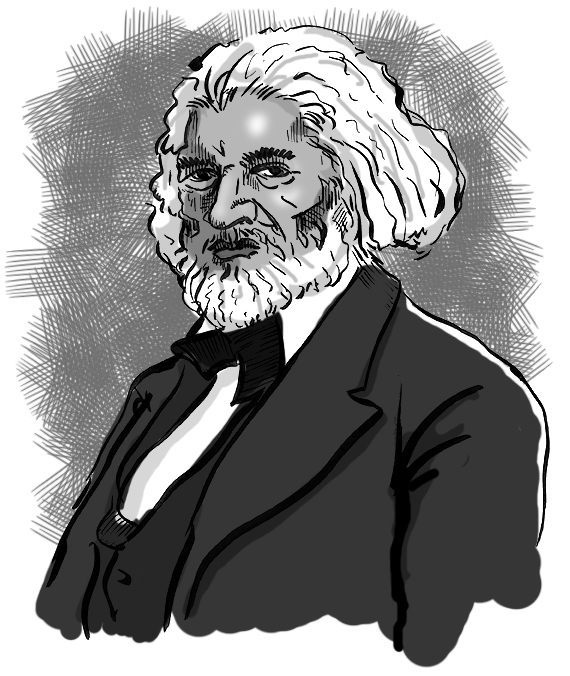
Frederick Douglass was a one-time slave who, secretly, taught himself how to read a write. He eventually escaped his inhumane treatment, fleeing to the North and settling in New Bedford, Massachusetts. He became an outspoken proponent for freedom as a firm believer in equality for all people. He was an advocate for voting rights for women and African-Americans and gave many passionate public speeches on the issue. He became the first African-American nominated for Vice President of the United States as the running mate of Victoria Woodhull (the first woman to run for U.S. President), on the Equal Rights Party ticket.
At a recent White House breakfast to kick off Black History Month, a vague and confused reference by the current president brought Douglass’s name to the headlines, prompting
As Co-Founder of Frederick Douglass Family Initiatives, I’m able to publish, exclusively, the following statement from the direct descendants of Frederick Douglass:
The President’s comments from the Roosevelt Room of the White House, about Frederick Douglass, were noted and appreciated by us, the Douglass family. In fact, we believe, if he had more time to elaborate, the President would have mentioned the following:
“Frederick Douglass has done an amazing job …
- Enduring the inhumanity of slavery after being born heir to anguish and exploitation but still managing to become a force for solace and liberty when America needed it most,
- Recognizing that knowledge was his pathway to freedom at such a tender age,
- Teaching himself to read and write and becoming one of the country’s most eloquent spokespersons,
- Standing up to his overseer to say that ‘I am a man!’
- Risking life and limb by escaping the abhorrent institution,
- Composing the Narrative of his life and helping to expose slavery for the crime against humankind that it is,
- Persuading the American public and Abraham Lincoln that we are all equal and deserving of the right to live free,
- Establishing the North Star newspaper when there was very little in the way of navigation or hope for the millions of enslaved persons,
- Supporting the rights of women when few men of such importance endeavored to do so,
- Arguing against unfair U.S. immigration restrictions,
- Understanding that racism in America is part of our “diseased imagination,”
- Recruiting his sons—who were born free—to fight in the war to end the enslavement of other African Americans,
- Being appointed the first black U.S. Marshal by President Rutherford B. Hayes,
- Being appointed U.S. Minister to Haiti by President Benjamin Harrison,
- Serving as a compelling role model for all Americans for nearly two centuries.”
Like the President, we use the present tense when referencing Douglass’s accomplishments because his spirit and legacy are still very much alive, not just during Black History Month, but every month. Leading up to the Bicentennial of Douglass’s birth, in February 2018, here are some of the initiatives that we, the Frederick Douglass family, will be implementing as well as some of those we hope to implement with the support of this administration, the institutions it leads and the American people (black, brown and white alike):
- Publishing the Bicentennial Edition of Narrative of the Life of Frederick Douglass, An American Slave,
- Giving this hard cover book to one million young people in schools, churches, clubs and detention centers as part of our “One Million Abolitionists” project,
- Collaborating to develop the PROTECT human trafficking prevention education program in the State of California,
- Creating a national Frederick Douglass curriculum for elementary and secondary schools as well as colleges,
- Renaming the original bill that governs the nation’s anti-human trafficking work both domestically and abroad: “The Trafficking Victims Prevention & Protection Act,”
- Further renaming the bill to honor him during his Bicentennial: “The Frederick Douglass Trafficking Victims Prevention & Protection Act.”
These are just a few examples of how Frederick Douglass has impacted and will continue to impact this country. We look forward to helping re-animate Douglass’s passion for equality and justice over the coming year leading up to his Bicentennial in 2018. We encourage the President to join in that effort.
In Freedom!
The Frederick Douglass family
All of the Dead Celebrity Spotlight posts for the month of February will be in honor of Black History Month. – JPiC
Comments
IF: mischief
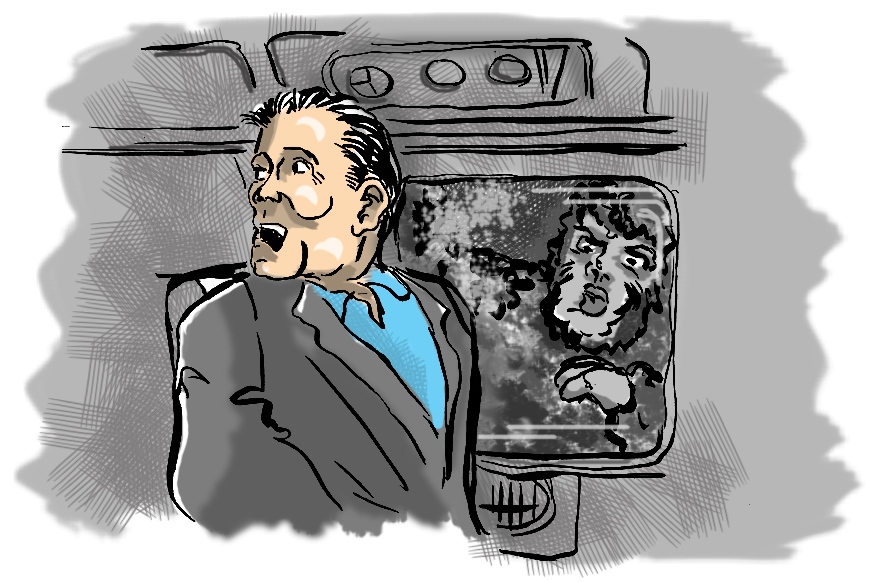
Poor Bob Wilson! No one sees the mischievous gremlin on the wing of the airplane. except him. Not even Shatner‘s overacting could convince them.
Comments
DCS: henry heimlich
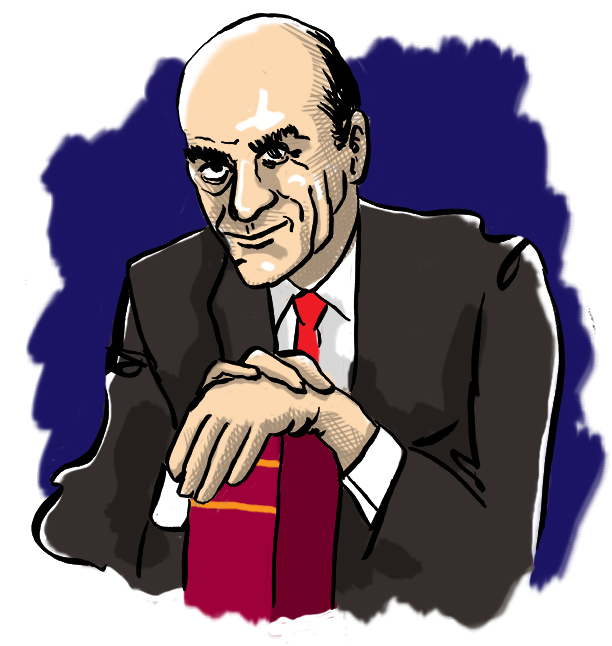
Henry Heimlich, a thoracic surgeon and medical researcher, wrote a piece for the trade publication Emergency Medicine, extolling the virtues of his abdominal thrust method of rescuing victims of choking. The procedure, used to success by a Bellevue, Washington restaurant owner on a choking patron, was embraced and promoted by both the American Heart Association and The American Red Cross. They referred to the action as “The Heimlich Maneuver,” named for its inventor.
In 2006, the American Red Cross “downgraded” the use of the Heimlich Maneuver. Instead, the organization recommended five sharp blows to the back be applied first to clear the airways. If that fails, then the Heimlich Maneuver should be employed.
In 2003, Henry’s colleague Edward Patrick claimed that he should receive credit for co-developing the maneuver. Henry’s own son, Peter, maintains a website that accuses his father of manipulation and fraud.
Henry Heimlich, who passed away in December 2016, used his own life-saving maneuver on a fellow resident of his senior living community, just eight months prior to his own death at 96 years old. Henry was married to Jane Murray, daughter of the famed dance instructor, Arthur Murray. He was the uncle of actor Anson Williams, best known as “Potsie” on the TV sitcom Happy Days.
Comments
DCS: mary tyler moore

Who can take a nothing day, and suddenly make it all seem worthwhile?
Comments
Monday Artday: glow
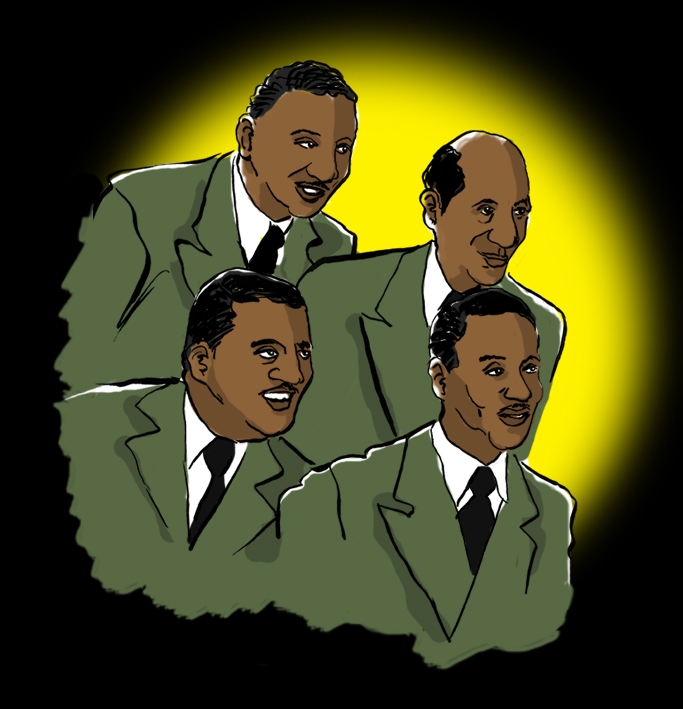
The Mills Brothers began singing in their church choir, branching out to street performances outside their father’s barbershop. A win on a local talent show got them a gig at May’s Opera House in their hometown of Piqua, Ohio. They sang in between showings of Rin Tin Tin. Famed pianist and bandleader Duke Ellington saw the group while on tour in nearby Cincinnati. He was so impressed, he called a representative at Okeh Records and signed the young quartet to a recording contract. They were brought to New York where stardom awaited.
In 1930, CBS Radio exec William Paley was urged to listen to the young men rehearse. He was elated and immediately signed the band to a three-year contract, making them the first African-Americans to have a network radio show. Each program began with the announcement that the only musical instrument or mechanical devices used was a single guitar. The Mills Brothers were adept at imitating trumpets, saxophones and trombones. A similar statement was printed on their record labels. They enjoyed wild success for decades with chart-topping records, radio and film performances and lucrative sponsorships.
In the 1950s, trying to combat the popularity of rock and roll, the Mills Brothers recorded a reworking of a song called “Das Glühwürmchen”from a 1902 German operetta called Lysistrata. American lyricist Johnny Mercer penned new lyrics and re-titled the tune “Glow Worm.” The song, released by the Mills Brothers in 1952, was their last Number 1 hit.
Comments
IF: swirl

“Yeah, yeah. I know. I got a big swirly head. You gonna buy a goddamn ice cream cone or what?”
Comments
Monday Artday: renaissance
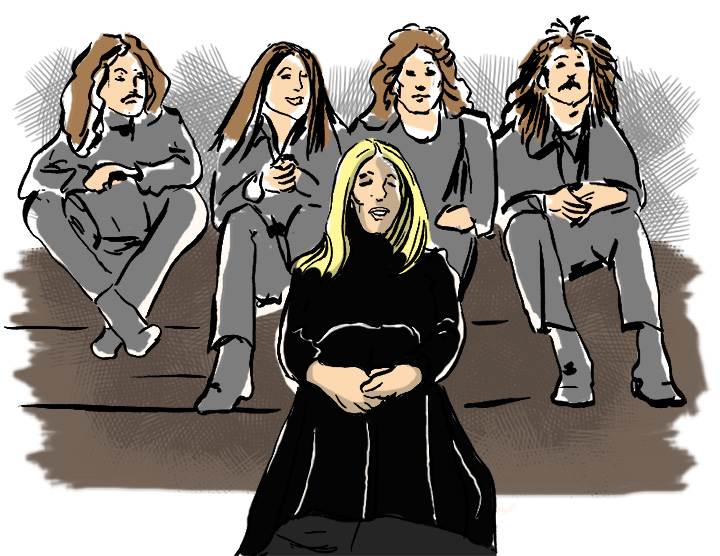
I was a fan of the progressive rock band Renaissance when I was in high school. The band, originally forming from former members of The Yardbirds, evolved into a band combining a rock base with medieval touches and mystical lyrics. They were fronted by the angelic voiced Annie Haslam. Haslam was trained as an opera singer and her soaring vocals became the focus of the Renaissance sound.
A few years ago, a beloved host on a popular Philadelphia radio station announced her plans to leave after a quarter century on the air. A months-long celebration of her career culminated with a tribute at a concert venue that is housed in the same building as the radio station. One of the featured performers at the tribute was Annie Haslam, who had moved to the Philadelphia suburbs in 1999, where she currently makes her home. I was excited to see Annie Haslam in person, as I never had the opportunity to see Renaissance live.
Midway through the event, after many heartfelt speeches and accolades, Annie Haslam approached the podium, looking a bit older than I had remembered from Renaissance album covers, and bent the goose-neck microphone closer to her mouth. After delivering a short tribute of her own, she asked the audience to join her in a few a capella verses of “Carpet of the Sun,” a Renaissance song popular among the 50+ crowd and a staple on “Classic Rock” format radio.
Her cringe-inducing performance, even while augmented by six hundred accompanying vocals, made me wish I had seen Renaissance in 1974 and not now.
Comments
DCS: miguel ferrer

Miguel Ferrer passed away yesterday at the young age of 61. When I posted the announcement of his death on Facebook, I noted his well-known acting roles: NCIS Assistant Director “Owen Granger” in NCIS: Los Angeles, “Vice President Rodriguez” in Iron Man 3, and FBI forensic pathologist “Albert Rosenfield” in David Lynch’s Twin Peaks. He even voiced several animated characters including “Big Boss” in Rio 2, the sinister Hun leader “Shan Yu” in Disney’s Mulan and “Death” in the cartoon series Adventure Time. I remember him fondly for his portrayal of “Bob Morton,” the cocaine-addicted designer of the title character in Robocop.
Miguel was the son of Academy Award-winning actor Jose Ferrer and actress-singer Rosemary Clooney. His sister-in-law was singer Debby Boone and his first cousin was actor George Clooney.
The most intriguing aspect of Miguel’s career was his music. In 1974, Miguel drummed on Keith Moon’s solo album, Two Sides of the Moon, alongside such notable drummers as Ringo Starr, Kenney Jones, Jim Keltner and Moon himself. Later, he was part of a Los Angeles blues-rock band called The Jenerators, fronted by his best friend, actor Bill Mumy (of Lost in Space fame).
Comments
IF: internet

At the very center of the internet…