inktober52: satellite

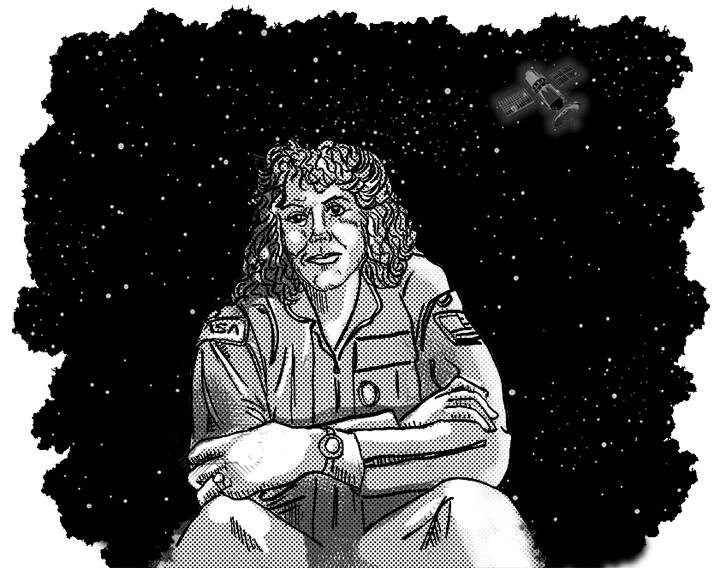
“I can remember in early elementary school when the Russians launched the first satellite. There was still so much unknown about space. People thought Mars was probably populated.” — Christa McAuliffe

On July 19, 1985, then Vice President George H. W. Bush announced that 36 year-old Christa McAuliffe had been selected for NASA’s “Teacher in Space” program. According to a NASA official, she exhibited “an infectious enthusiasm.” She took a year off from teaching to train for the prestigious and historic mission. In between training course, she was thrust into “instant celebrity” status, appearing on numerous television shows where she was interviewed about the mission.

On January 28, 1986, Christa boarded Challenger space shuttle with the other six crew members. Seventy-three seconds into its flight, the shuttle broke apart, resulting in the deaths of all aboard.

Comments

comments

DCS: allen funt

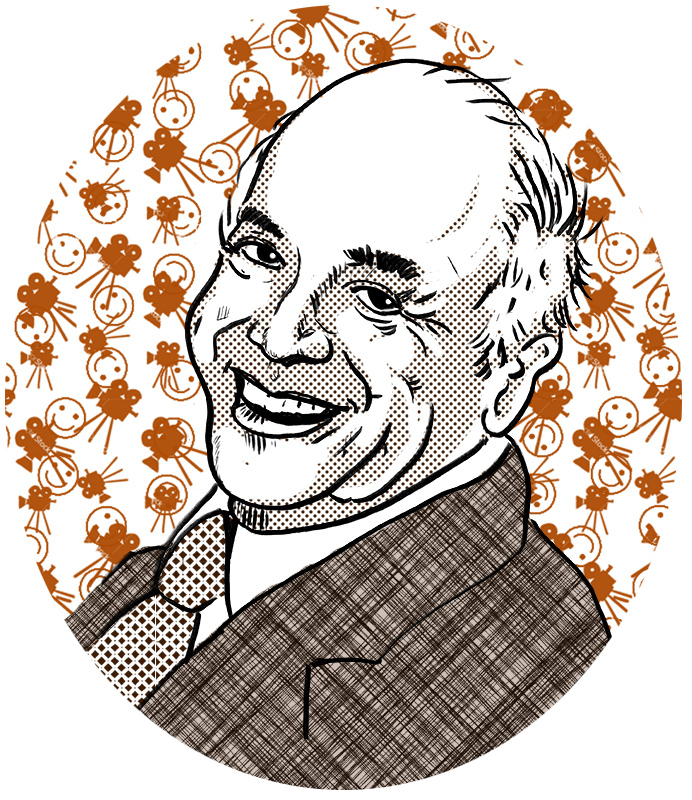
After graduating from the Pratt Institute with a degree in art, Allen Funt began working at a New York advertising agency. Soon, he was switched to their radio advertising department. He found himself writing episodes of the popular radio show Truth or Consequences as well as helping Eleanor Roosevelt with her regular radio addresses. He gained additional broadcast experience while serving with the Army Signal Corps during World War II.

In June 1946, Allen began his radio show Candid Microphone on the ABC Radio Network. It ran for a year, but its popularity triggered a revival on rival network CBS. He produced several short theatrical films based on the Candid Microphone idea. These films were so popular that CBS gave Allen a program in the new medium of television. A slightly altered premise — Candid Camera — made its debut on August 10, 1948. At various times, Candid Camera ran on all three major networks, as well as in first-run syndication until 1993, when Allen Funt was sidelined after suffering a stroke. Allen’s co-hosts along the way included Durward Kirby, Betsy Palmer, Phyllis George and Allen’s son, Peter. In the 70s, Allen produced an X-rated theatrical release called What Do You Say to a Naked Lady?. He followed that with a film called Money Talks. Each of these films used the same Candid Camera format.

In February 1969, Allen and his family were aboard a Miami-bound commercial flight that left from Newark Airport. During the flight, two armed passengers hijacked the flight and demanded to be flown to Cuba. Several passengers spotted Allen and believed themselves to be part of a Candid Camera stunt. A frantic Allen pleaded with the passengers, assuring them that he had nothing to do with the situation and they were really being hijacked. The passengers were only convinced when the plane touched down in Cuba and everyone was released after an 11-hour stand-off.

He purchased a 1200-acre ranch near Big Sur, California, where he raised cattle and quarter horses. Allen passed away in 1999 after suffering a stroke – just 11 days before his 85th birthday. Candid Camera was revived for a single season in 2014 on the cable network TV Land.

Comments

comments

inktober52: shoes

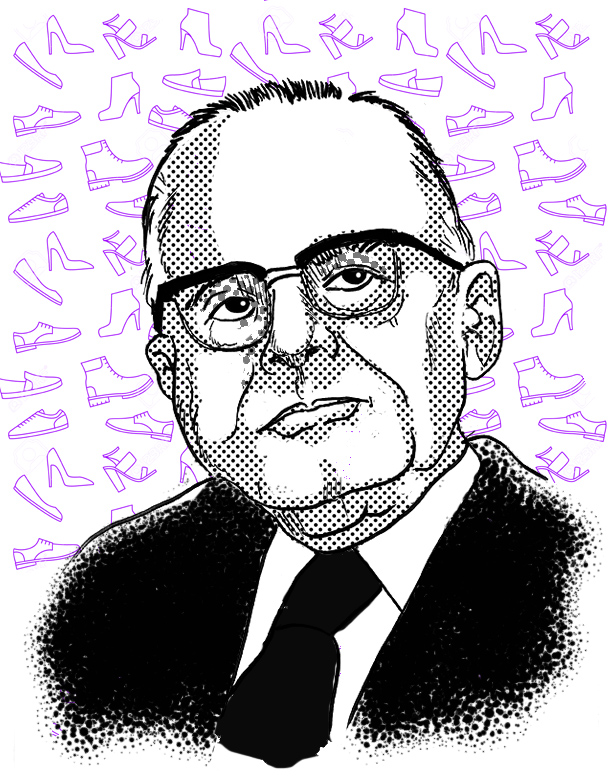
In 1971, President Richard Nixon appointed Earl Butz to his cabinet as Secretary of Agriculture. Earl was a vocal supporter of farmers and was instrumental in changing agricultural policy implemented by Franklin Roosevelt‘s “New Deal.” His first order of business was to abolish the program that paid farmers not to plant crops. His motto to farmers became “Get Big or Get Out.” The USDA urged farmers to plant corn and other “cash crops” from “fencerow to fencerow,” as he put it. In 1972, he arranged for the then-Soviet Union to purchase 30 million tons of American grain. Corporate farming grew under the new policies, but small family farms, who could not compete, were hit hard financially.

Earl maintained his cabinet position after Nixon resigned. As a part of the Gerald Ford administration, Earl attended the World Food Conference in 1974. It was here that he first let his racist feelings surface publicly. In response to Pope Paul VI’s statement on population control, Earl countered with: “He no playa the game, he no make-a de rules.” – all delivered in a mocking, exaggerated Italian accent. The Archdiocese of New York demanded an official apology from the White House. Earl claimed his comment was taken out of context.

Just after the Republican National Convention, Earl was flying to California with former White House counsel John Dean and singers Pat Boone and Sonny Bono. The conversation turned to politics after Earl broke the ice with a dirty joke. Boone, a conservative Republican, asked Earl why the Republican Party has difficulty attracting black members. Earl responded very matter-of-factly. He said: “Blacks are only interested in three things.” He went on to list his beliefs as to the pursuits of African-Americans, including — and I am paraphrasing — good sex, comfortable shoes and accommodating bathroom facilities. Earl, however used decidedly more visceral language. John Dean repeated the quote to reporters at Rolling Stone Magazine during an interview. He did not identify Earl Butz specifically, only saying it was a “cabinet member.” A Time Magazine reporter figured out who it was and revealed it to be Earl. A disgraced Earl Butz resigned his cabinet post on October 4, 1976.

Earl returned to his native Indiana where he was named dean emeritus of Purdue’s School of Agriculture. In 1981, he was sentenced to five years in prison for tax evasion and fined $10,000. He served just thirty days.

Earl passed away in 2008 at the age of 98. At the time of his death, Earl was the oldest living former cabinet member from any administration.

Comments

comments

DCS: joe burrus

Joe Burrus wanted desperately to be as famous and as beloved as Houdini… and he was very, very determined.

Billing himself as “Amazing Joe,” the recovering drug addict began performing magic around the Southern California area, sometimes bringing his act all the way up the West coast. His fascination with Harry Houdini grew until it became an obsession and a self-imposed competition.

On October 30, 1990, he arranged a performance of his coffin escape at Blackbeard’s Family Fun Center, an amusement park in Fresno, California. He had successfully executed the demonstration one year earlier in Oregon. But, this time, he was increasing the danger. Previously, he was wrapped and locked up in chains and placed in a clear coffin made from Plexiglas. The coffin was lowered into a seven-foot deep grave and covered with dirt. Joe freed himself from the chains while the dirt was being shoveled into the hole. By the time the hole was filled in, Joe had successfully escaped and was greeted with wild, approving applause.

On this day, however, Joe planned to have the hole filled with wet cement, expecting to escape in the same way he did through dirt. He didn’t calculate the weight of wet cement and only determined the strength of the Plexiglas by jumping on it a few times.

The act was set to be broadcast on local television. Joe performed a few warm-up tricks for the crowd of thrill-seekers prior to his proposed finale. After completing the preliminary portion of the show, Joe was chained and locked. He lay down in the casket while the lid was secured. As the casket was lowered, he struggled with the metal restraints. When the casket hit the bottom of the seven-foot deep grave, the cement was poured – to the delight of a cheering crowd that included Joe’s wife and two young sons.

When the cement completely filled the hole, the level suddenly dropped about 18 inches. Joe’s crew and assistants surmised that the coffin had broken and collapsed under the undetermined weight of the wet cement.

Efforts to rescue Joe from the hole were slow due to obvious circumstances. When he was finally reached through the slog of cement, Joe was dead. He was 32 years old.

Comments

comments

inktober 2020: week five

inktober 2020 - week five

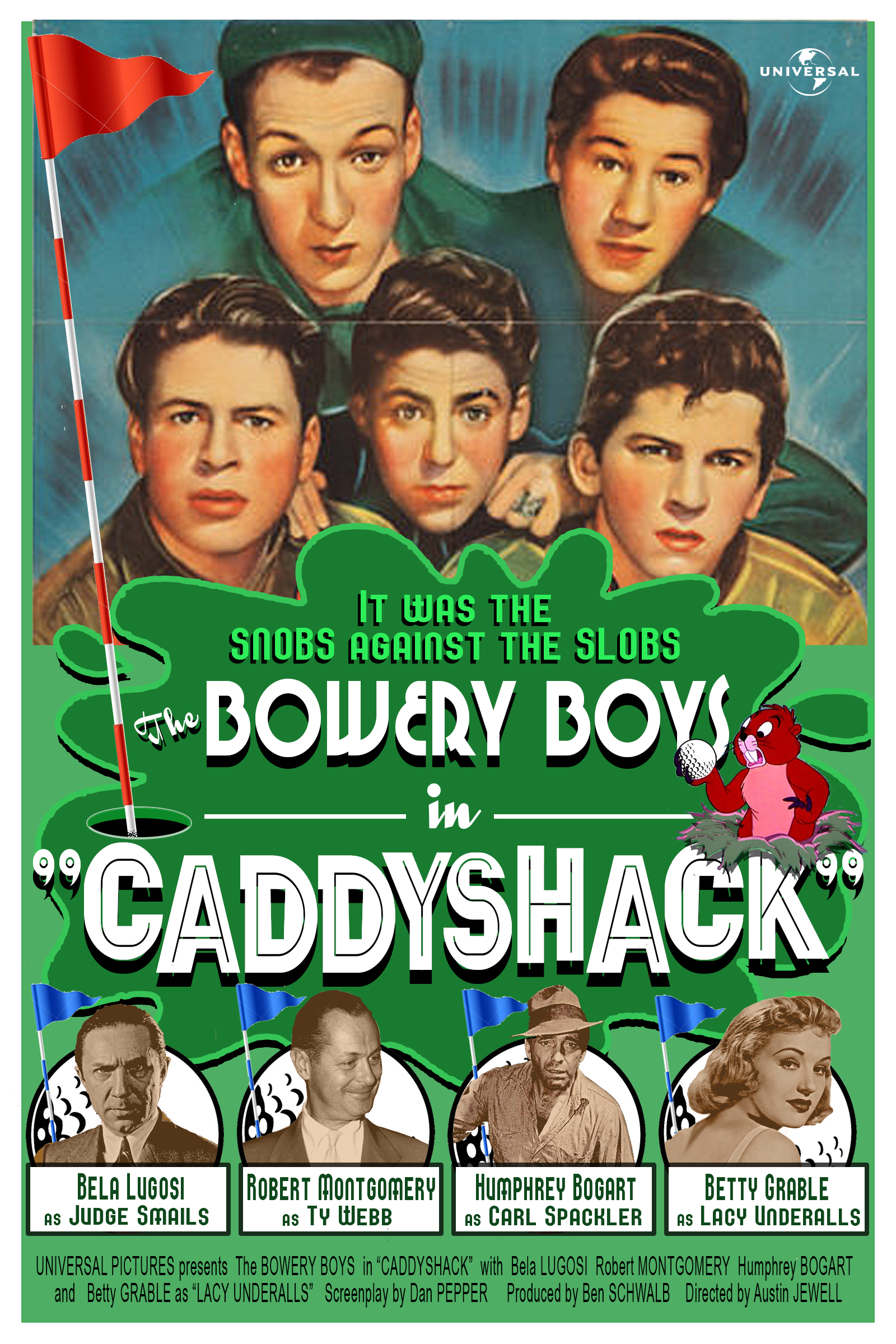
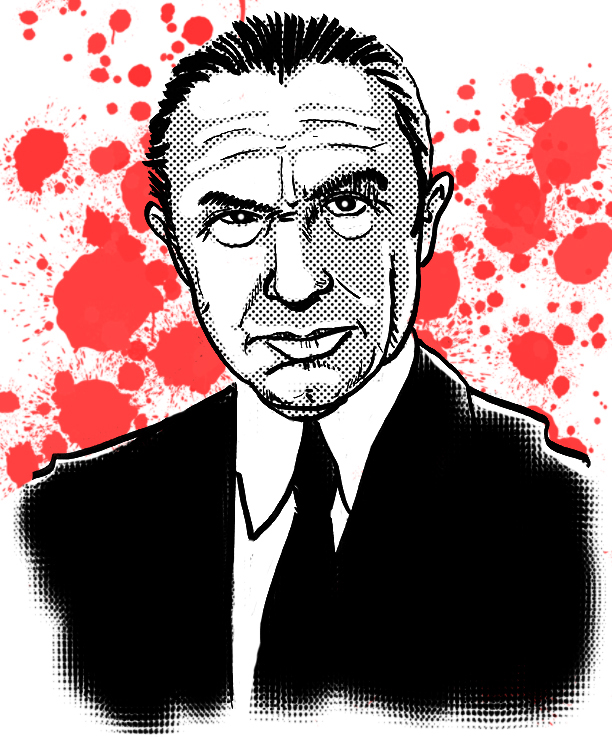
Béla Ferenc Dezső Blaskó was born in Lugos, Hungary in 1882. As a teenager, he began acting in plays and operettas. He moved to Budapest where he performed in dozens of roles with the National Theatre of Hungary. He always claimed that he was “the leading actor of Hungary’s Royal National Theatre,” but there is no evidence to support his claim. His roles were mostly small, supporting roles. He fled his native Hungary to avoid repercussions of his activism against the Hungarian revolutions of 1919. He lived and acted in Berlin using the name “Bela Lugosi,” before heading to the United States.

He formed a small stock company with fellow Hungarian immigrant actors in New York. In 1927, he was approached to star in a Broadway play based on Bram Stoker‘s vampire novel Dracula. The show ran for 261 performances and Bela toured the country to rave reviews. Curiously, when Universal Studios was casting the film, Bela was not under consideration. The hope was that Lon Chaney would make his talking picture debut in the title role, but he died before filming could begin. Director Tod Browning eventually relented and cast Bela.

Due to his association with Dracula, Bela was relegated to a career in horror films, something that did not please him. He fancied himself a Shakespearean actor and felt horror was beneath his talents. He was often paired with Boris Karloff and, despite common belief, the two were friends, although Bela was initially mistrustful of Karloff. He often accused Karloff of trying to upstage him.

As horror films began a decline, so did Bela’s career. A 1938 re-release of Dracula and Frankenstein as a double feature was a shot in the arm that Bela’s career needed. He was offered roles in horror films in the ’40s and he was not very discerning. He began to appear in low-budget ventures for inexperienced directors at small studios purely for the money. He had a methadone habit to support, stemming from his treatment for chronic sciatica. He reprised his role of “Dracula” in the popular Abbott and Costello Meet Frankenstein, but soon found himself in lowbrow comedies, including one opposite Martin and Lewis lookalikes Duke Mitchell and Sammy Petrillo,

While living in poverty, ambitious but inept director Ed Wood reignited Bela’s career, casting the one-time star in several of his achingly-low budget films. During post-production for Bride of the Monster, Bela sought medical assistance in combating his drug addiction. He was surprised by a hospital visit from singer Frank Sinatra, who insisted on paying for Bela’s expenses, despite the two never having met.

Ed Wood shot some test footage for an unnamed, unscripted future project. The shots featured Bela in front of actor/wrestler Tor Johnson’s home and in a cemetery. The footage was later used in the much-derided Plan 9 from Outer Space, which was filmed mostly after Bela’s death. Bela died in his Los Angeles apartment in 1956 at the age of 73. He was buried in a prop cape from one of his many “Dracula” roles, although this was not a request by Bela. It was a decision made by his fourth wife Lillian.

Comments

comments

inktober52: rip

Rip Taylor was more than just a one-liner spewing, confetti-throwing, manic comedian. Sure, that’s what he was best known for, but there was more to his career than just that.

Rip longed to be a Las Vegas comedian and, after a debut on The Ed Sullivan Show in 1964, his wish came to fruition. He became a sought-after and very popular opening act in Sin City for such big names as Frank Sinatra and Ann- Margret. Once his popularity took off, Rip was appearing on various TV talk shows and variety shows. He even made a guest appearance on The Monkees in 1966. On Broadway, Rip took roles that showcased his singing talents, surprising audiences. He shone in musicals like Peter Pan, A Funny Thing Happened on the Way to the Forum, Anything Goes and Oliver!

Rip became a staple on game shows including Match Game and The Gong Show as well as hosting the Chuck Barris’ send-up The $1.98 Beauty Show. A favorite of producer Mark Goodson, his presence was requested by asking for “that crying comedian.” Later, he proved his dramatic prowess as Demi Moore’s boss in Indecent Proposal. Along the way, Rip lent his voice to a number of cartoons including The Jetsons and Duck Tales.

As a friend of entertainer Liberace, Rip was an advocate for AIDS-related charities and in 2005, served as Grand Marshal of the Washington, DC Capital Pride Parade. In 2009, Rip took exception when author Brent Hartinger referred to the comedian as “openly gay.” He sent an email stating: “You don’t know me to summarize I am openly gay. I don’t know you’re not an open heroin user. You see how that works? Think before you write.”

After a career that spanned six decades, the comedian who rightfully earned the nicknames “The Prince of Pandemonium,” “The Master of Mayhem” and “King of Camp and Confetti,” passed away in 2019 at the age of 88. His remains were cremated and sprinkled over Hawaii…. like confetti.

Comments

comments

DCS: kathy o’dare

two dates
Kathy O’Dare was born in Los Angeles, the daughter of a popular local TV show host. She followed in her father’s show biz footsteps, making her acting debut in 1968 at the age of 11 as a member of the notorious “Sour Grapes Bunch” on the children’s psychedelic showcase The Banana Splits. Her second role didn’t come until she was a teenager, when she appeared as one of two dates of Peter Brady’s on a memorable episode of The Brady Bunch. (Denise Nickerson, of Willy Wonka fame, played Peter’s other date.) She popped up on several detective series before showing up on the first episode of Happy Days playing “Mary Lou Milligan,” a girl with a rumored reputation that Richie Cunningham (Ron Howard) pursues. Kathy later co-starred with Howard in the 1976 low-budget hot-rod film Eat My Dust, which was written and directed by Charles B. Griffith, the writer behind Little Shop of Horrors, Bucket of Blood and other campy, popcorn classics.

Kathy disappeared from performing after 1978. She sadly passed away in 2010 at the age of 52, leaving behind a daughter.

Comments

comments

inktober 2020: week four

inktober 2020 - week four

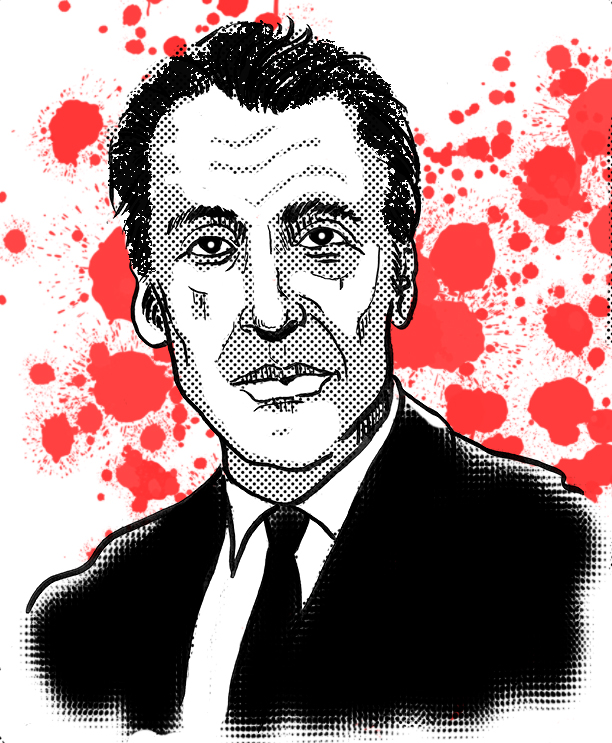
After his discharge from the Royal Air Force, Christopher Lee could see returning to his job as a switchboard operator at Beecham Pharmaceutical. Instead, he thought about the few stage roles he had in school productions and decided to pursue a career as an actor. After discouraging meetings with several producers, including one who told the young Christopher that he was “too tall” to be an actor, he was signed to a seven-year contract with the Rank Organization, a huge British film conglomeration headed by the respected Arthur Rank.

Christopher plugged along in countless stock action roles alongside such screen greats as Douglas Fairbanks Jr., Buster Keaton and Laurence Olivier. In 1957, he made his first of many films for the fledgling British studio Hammer Films. He starred as the monster to Peter Cushing’s “Dr. Victor Frankenstein.” in The Curse of Frankenstein. Christopher has met Cushing while at Rank and the two became frequent co-stars and lifelong friends. This was Hammer’s first color film and its first entry into its Frankenstein series. It was an unqualified success and kicked off Hammer’s reign as the “goriest” film studio in the horror genre. Christopher enjoyed a twenty-year run with Hammer.

In the middle 1970s, Christopher explored other genres, including action, drama and science fiction, although new never strayed far from horror. Once he moved to Hollywood, he took roles in mainstream films, working with Disney as a villain in 1978’s Return from Witch Mountain. He showed a lighter side to contrast his screen persona by hosting an episode of Saturday Night Live. Earlier he had turned down the role of “Dr. Barry Rumack” in the disaster spoof Airplane!, a decision he later regretted. (The part went to Leslie Nielsen.)

Christopher entered film history as part of two of the biggest and most beloved franchises — The Lord of the Rings and Star Wars properties. His friend Peter Cushing appeared in the first entry in the Star Wars canon, “A New Hope.” In 1999, he made his first of five appearances in films by director Tim Burton.

Christopher branched out to an unusual side project. In 2010, he released his first heavy metal album, after a few dalliances into music. He release three collections of covers, including one to acknowledge his 92nd birthday. He was also featured on the debut album by supergroup Hollywood Vampires.

Christopher passed away on June 7, 2015 just after his 93rd birthday. However, the news was not made public by his family until four days later. He was also honored at the 88th Academy Awards in February 2016 in the annual “In Memoriam” segment.

Comments

comments