DCS: alan sues

Much like his 60s contemporary Paul Lynde, Alan Sues was somewhat of an anomaly. His sexuality was prevalent in his style, actions and sense of humor, but — because of the times — it was unspoken.
After his discharge from service at the end of World War II, Alan used his GI Bill benefits to pay for acting lessons at the influential Pasadena Playhouse. He made his Broadway debut in 1953 in Tea & Sympathy — the same year he married singer/dancer Phyllis Gehrig. The pair began a vaudeville-style act that they performed first in Manhattan then on a tour of North America. They divorced in 1958.
Alan worked as a stand-up comic, bringing his manic style to many New York clubs. He also landed small roles in some films, as well as a rare, non-comedic part in a particularly dark episode of Twilight Zone. Alan shined as an original cast member on the hip comedy review Rowan & Martin’s Laugh-In. Here, Alan honed the character for which he is best remembered —the ambiguously effeminate fellow appearing in traditionally “macho” roles, like cowboys and sportscasters. Alan put his “wink-wink” spin on these characters to the delight of audiences. He even added a drag version of fellow cast member JoAnne Worley to his repertoire after Worley left the show. He also made frequent appearances on TV game shows based on his popularity.
Alan kept his sexuality an “open secret,” much the same way as Paul Lynde did. It was sort of a “Don’t Ask. Don’t Tell.” situation, years before the concept was well known.
In 2008, fifty years after their divorce, Alan was interviewed by his ex-wife for her website. He commented on comedy, his career and all things show business.
Frail and in failing health, Alan passed away in 2011 at the age of 85.
Comments
inktober52: mountain
Comments
DCS: dorothy arzner
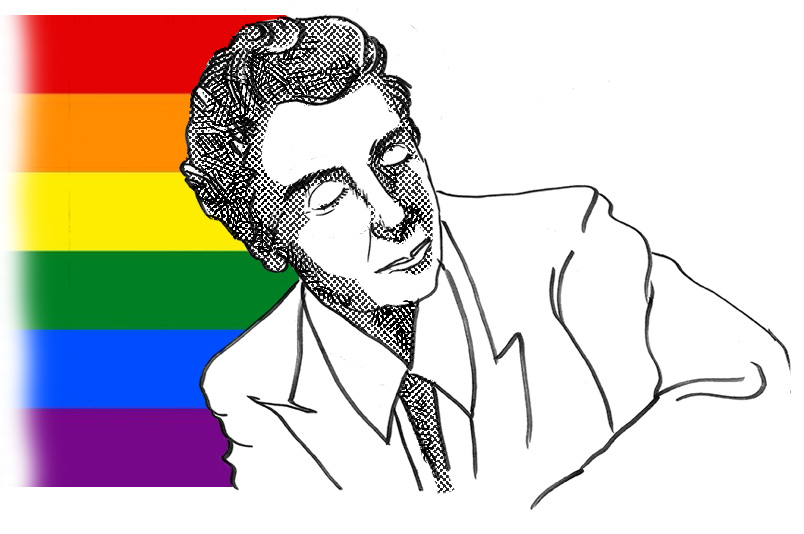
From the time of silent pictures to the infancy of the “Golden Age” of Hollywood, there was one female director. Just one…. and that was Dorothy Arzner.
Dorothy grew up in her father’s Los Angeles restaurant, where she frequently mingled with stars like Mary Pickford, Douglas Fairbanks and Mack Sennett. However, Dorothy had aspirations of becoming a doctor. She worked with a local ambulance company, but her brief internship with a prominent LA surgeon made her rethink her plans.
During World War I, the film industry was eager to hire anyone that applied, no matter how inexperienced. Dorothy showed up at the front gate of Paramount Pictures. When asked what department she had an interest in, she said “I could help dress sets.” Dorothy was questioned about the furniture in the room, but she was unprepared and without any answers. She was instructed to explore the other available departments, hoping something would spark her interest. Dorothy quietly made her way on to a set where Cecil B. DeMille was directing. She observed and concluded that the best job for her would be director, as they told everyone what to do.
Dorothy started in the script department, first typing, then editing scripts. In 1922, she edited over 50 scripts, including the Rudolph Valentino film Blood & Sand. With this film, she was offered the opportunity to direct some of the bullfighting scenes. She also edited her footage, interspersing stock footage, and saving Paramount thousands of dollars in the process. She worked closely with respected director James Cruze, who gave Dorothy more responsibilities in directing and editing.
Dorothy wanted to direct full-time, but she didn’t see that happening at Paramount anytime soon… so she threatened to leave the studio for Columbia Pictures. With Cruze singing her praises, Paramount Studios head Walter Wagner offered her the film Fashions for Women. This became Dorothy’s first picture.
Dorothy directed The Wild Party in 1927, a remake of a film she edited years earlier. It starred Clara Bow and Frederic March in his first starring role. During filming, Dorothy rigged a microphone on the end of a fishing rod to help with Bow’s awkwardness moving around the set, thus inventing the boom mic.
Dorothy’s direction output featured women in non-traditional scenarios, often depicting them as strong, powerful and assertive — a direct contract to the usual misogynistic tends exhibited by male directors. In turn, Dorothy launched the careers of several strong female actresses including Katherine Hepburn, Rosalind Russell and Lucille Ball. However, lack of commercial success and the limitations of the restrictive Hays Code forced Dorothy to leave Hollywood after directing her last film in 1943, but not before becoming the first woman admitted to the Directors Guild of America. She later taught at UCLA’s film program where future director Francis Ford Coppola was one of her students.
In the late 1920s, Dorothy began a relationship with dancer/choreographer Marion Morgan. The couple moved into a home in 1930 and, although their relationship lasted forty years until Morgan’s death in 1971, Dorothy was rumored to have had side affairs with Billie Burke, Joan Crawford and Katherine Hepburn. Dorothy never tried to hide her homosexuality and ignored any criticism. Dorothy passed away in 1979 at the age of 82.
Comments
inktober52: mouse
Comments
DCS: van johnson

Nineteen year-old Van Johnson headed to Broadway in 1935. He landed in the chorus of a few shows and became the understudy for all three male leads in George Abbott’s production of Too Many Girls. His experience with the show led him to Hollywood and uncredited role in the film version of Too Many Girls opposite Lucille Ball and Desi Arnaz.
Van had plans to move back to New York to give Broadway another chance, when Lucille Ball took him to the famous Chasen’s Restaurant and introduced him to a casting director for MGM Studios. Now, with a Hollywood “in,” Van was given screen tests with several studios, until he was offered a contract with Warner Brothers. Van was cast in a few films, but his contract was not renewed, citing his “boy next door” good looks as not fitting in with the gritty movies the studio was making at the time.
MGM offered Van a place with them. He was groomed by the studio and featured in a succession of “feel good” films supporting the USA’s involvement in World War II. He starred as pilots, sailors and soldiers in a number of MGM productions, straight war dramas as well as musicals suited to his “All-American Boy” image. In 1945, Van was among Hollywood’s top leading men and box-office draws.
In 1947, Van married actress Eve Abbott — one day after her divorce from actor Keenan Wynn was finalized. According to Eve Abbott’s posthumously-published memoir, the marriage was arranged by studio head Louis B. Mayer in an effort to squash rumors regarding Van Johnson’s homosexuality. Abbott claimed that Van’s bright and cheery on-screen persona was a direct contrast to his actual demeanor. Although the union produced a child, Abbott said Van was moody and depressed because of a difficult childhood. Their marriage broke up when Van began an affair with a male chorus dancer during a stage production of The Music Man. He divorced Abbott in 1968.
Van passed away in 2008 at an assisted-living facility in New York. He was 92 and had been estranged from his daughter for years.
Comments
DCS: urvashi vaid

June is Pride Month.
After moving to the United States from her native New Delhi, Urvashi Vaid participated in Vietnam War protests at 11 years of age. That was just the beginning of the social activism she would pursue for her entire life.
She graduated from law school in Boston and promptly founded the Boston Lesbian/Gay Political Alliance, a non-partisan political organization that endorses candidates for political office, specifically those who advocated for Boston’s gay community. For over a decade, Urvashi served as media director for the National LGBTQ Task Force before being named director of the organization. During her tenure, she famously disrupted a presidential press conference being made by George H. W. Bush, with a sign reading “Talk Is Cheap, AIDS Funding Is Not.” Later, she was a supporter of Bill Clinton’s run for president, only to become angry with him when the newly-elected president backpedaled on his promises to end the military’s ban on openly gay service members.
Urvashi was one of the first critics of the mainstream’s bias, based on race and sexual orientation. She fought long and hard for equal rights and inclusion for everyone regardless of race, class, ethnicity, age, or ability. She was recognized and honored with numerous awards throughout her career.
Urvashi passed away on May 14, 2022 from cancer. She was 63. Her work was far from completed.
Comments
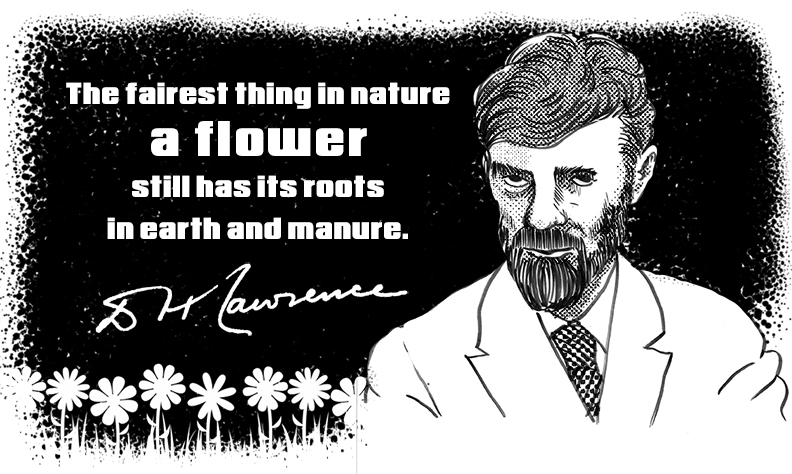
inktober52: flower
Comments
DCS: helen walker
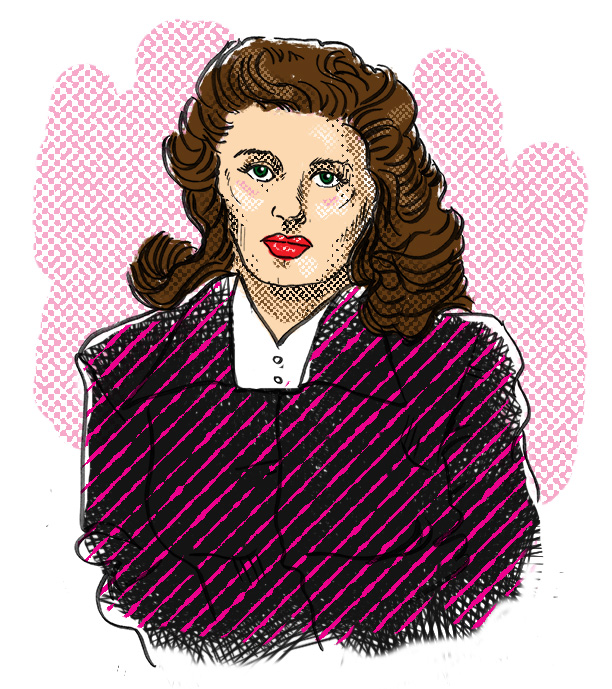
With humble beginnings in local theater, Helen Walker made her big-screen debut in Lucky Jordan in 1942, co-starring with Alan Ladd in his first “leading man” role. Helen became well-known and reliable as a foil in comedies. She appeared as the female lead in the original Brewster’s Millions with Dennis O’Keefe. She later starred in musical comedies with Jack Haley, Peter Lawford and Charles Boyer.
On New Year’s Eve 1946, Helen was driving director Bruce “Lucky” Humberstone’s car from Palm Springs to Hollywood as a favor. She stopped to pick up three young men who were hitch-hiking — a soldier named Robert Lee and two teen-age students, Philip Mercado, and Joseph Montaldo. Forty-five minutes into the trip, the car hit a highway divider and flipped over. Lee was killed instantly. Helen and the two other passengers were seriously injured. Mercado and Montaldo brought a civil suit against Helen. Lee’s family also filed a manslaughter charge against the actress. Just after the trial began, Mercado was arrested as an accomplice in an armed robbery. Montaldo admitted to an earlier narcotics charge, for which he was arrested. After Helen’s lawyer proved that Helen was not intoxicated while driving, the manslaughter charge was dismissed by the District Attorney’s office. But, Helen’s days in light-hearted comedies were over.
Her first role upon her return to Hollywood was the one for which she is best remembered. Helen garnered critical praise for her portrayal of “Lilith Ritter,” the deceitful psychoanalyst in the original “Nightmare Alley.” From that point forward, Helen was cast as darker characters. She made several film noir pictures, including The Big Combo with Richard Conte and Cornel Wilde, her last role before retiring from show business at 35.
Out of the spotlight for a few years, Helen’s house was destroyed by a fire in 1960. Her former acting colleagues staged a benefit to help her recover financially. Eight years later, Helen was diagnosed with cancer and passed away at the age of 47.
Comments
inktober52: ship