
There are some things I can no longer stomach.
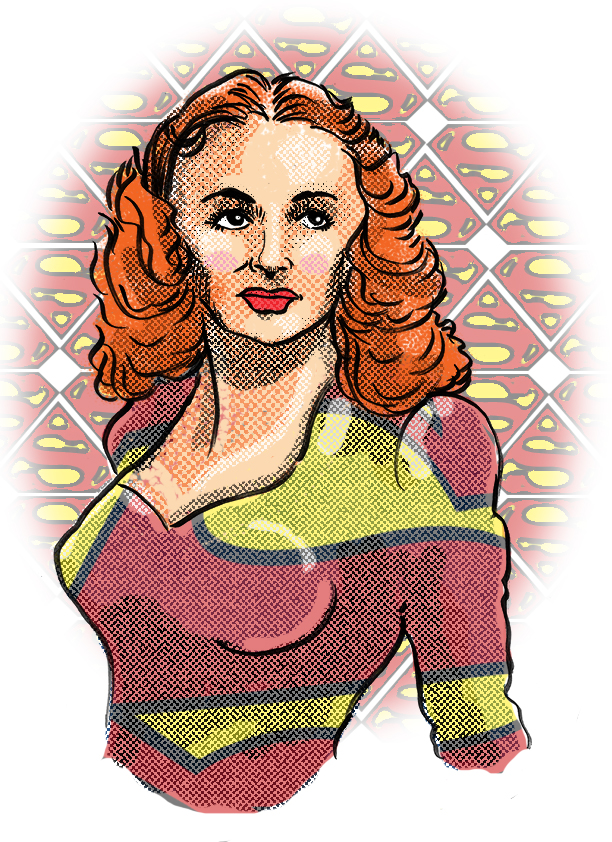
During World War II, Noel Neill was one of the most popular pin-up models, second only to Betty Grable. She was a regular player at Monogram Pictures, a movie studio known for producing low-budget pictures. Noel was featured in “wayward teen” films, as well as Westerns and one of the last Charlie Chan mysteries. She also sang with Bob Crosby’s Orchestra and performed at the Del Mar Turf Club, owned by Bob’s brother Bing.
In 1948, Noel starred as reporter “Lois Lane” opposite Kirk Alyn in a Superman serial. In 1951, the TV series Adventures of Superman debuted with George Reeves in the title role and Phyllis Coates taking the role of Lois Lane. When the second season began production, Phyllis Coates had committed to another project, so producers signed Noel to reprise her film role as the spunky Daily Planet reporter. She stayed with the series for the remainder of its six season run. George Reeves’ untimely death canceled the show’s seventh season, although there were tentative plans to continue, focusing on the adventures of Lois Lane and Jimmy Olsen.
Unlike her predecessor Coates, Noel embraced the role of Lois Lane and her association with Superman. She appeared in the 1978 big-screen version of Superman, as well as cameos in episodes of Smallville and Lois and Clark. She returned to the big screen in Superman Returns in 2006.
Noel made appearances at the annual Superman Festival in Metropolis, Illinois. She was often asked by curious fans: “Why didn’t you know that Clark Kent was Superman, just wearing a pair of eyeglasses?” Her regular reply was: “I didn’t want to lose my job!”
Noel died in July 2016 at the age of 95.
Dave wasn’t much of the partying type.
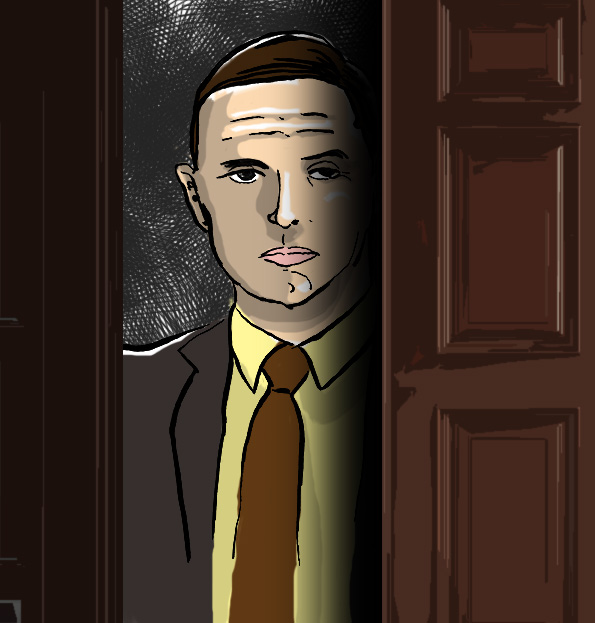
Richard Bright began his career in the 1960s in live television and on the stage. It was during a stage production in San Francisco that the 28 year old actor and his female co-star were arrested for speaking obscenities and simulating sex acts. With guidance and assistance from the ACLU, a charges were dismissed when First Amendment Freedom of speech rights were cited. The case set a precedent for actors’rights.
In the 70s, Richard took roles in a number of popular film, including Panic in Needle Park in 1971 and The Getaway in 1972. He also landed the role for which he is best remembered, Al Neri, the cop turned hit man in Francis Ford Coppola’s The Godfather. His face was the final screen image at the conclusion of The Godfather. Richard was one of only five actors to appear in all three Godfather films.
He was an in-demand character actor thought the 80s and 90s, with parts in Looking for Mr. Goodbar, Pat Garrett and Billy the Kid, Marathon Man and the big-screen adaptation of the Broadway musical Hair. He also appeared on television on Law & Order, Oz, The Sopranos as well as a recurring role on the soap opera One Life to Live.
On February 18, 2006, Richard was waiting to cross a street in Manhattan’s busy Upper West Side. He was struck and killed by the rear wheel of a turning tour bus. The bus driver was unaware of the accident until he arrived at the Port Authority depot. Although the driver’s operator license was suspended, no criminal charges were filed.
Richard Bright was 68.
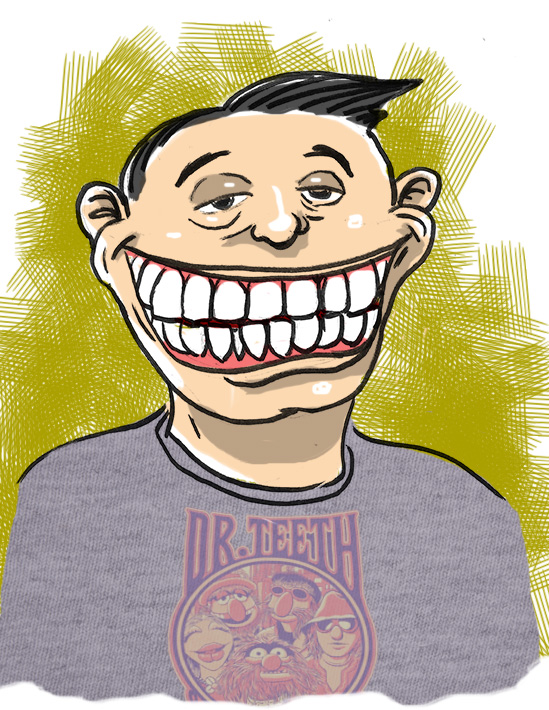
Todd reaped the benefits of visiting the dentist twice a year.
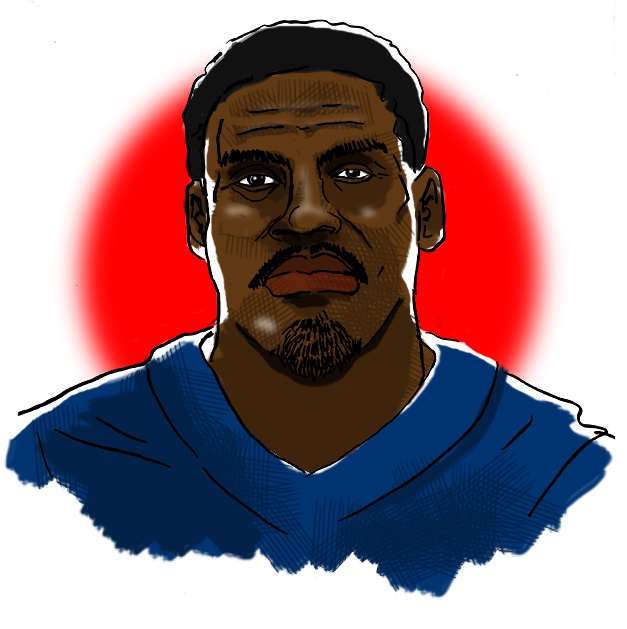
Zurlon Tipton was a running back for Central Michigan University. Although he was not picked in the 2014 NFL Draft, he was signed by the Indianapolis Colts. He was waived in September 2014, but re-signed to the team’s practice squad. He eventually made the active roster and scored his first touchdown in a game against the Dallas Cowboys on a 1-yard pass. He played in the 2014 playoffs, but was waived again in September 2015, but re-signed (again) to the practice squad on September 17, 2015. On November 26, 2015, Zurlon was again waived. Once again, he was re-signed by the Colts on November 30, only to be waived again one month later.
On Christmas Day 2015, just four days after he was released by the Colts for the last time, Zurlon was arrested and charged with criminal recklessness with a deadly weapon, after firing a single shot from his AR-15 rifle into his girlfriend’s house. He was released on $3,000 bond.
On June 28, 2016, Zurlon was removing a bag containing two guns from his car when he accidentally shot himself in the stomach. He was taken to the hospital in good condition but died soon afterward. He was 26 years old.
I’m not old, I’m vintage.
Now, get off of my lawn.
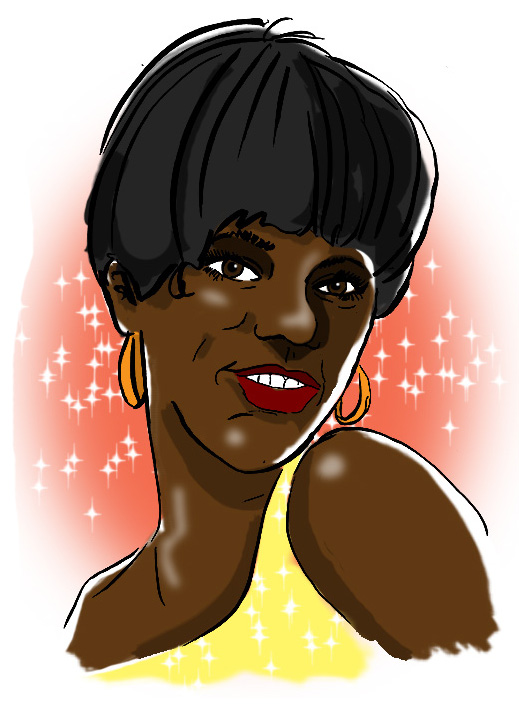
Born in Detroit, the ninth of fifteen children, Florence Ballard was introduced to music by her father. An auto worker by trade, he was an amateur musician and he taught his daughter to sing as he accompanied her on guitar. She and her high school friend Mary Wilson joined up with Betty McGlown and a petite young lady named Diana Ross, who preferred to be called “Diane.” They called themselves “The Primettes” and performed in around the Detroit area.In 1960, they auditioned for Berry Gordy’s Motown Records. Gordy advised the girls to graduate from high school before making an attempt at a singing career. All but Florence obliged.
Gordy wanted the group to change their name and, after numerous choices, Florence picked “The Supremes,” despite Diana Ross’s fear that they would be mistaken for a male singing group. The Supremes stuck, however they were derisively nicknamed “The No-Hit Supremes” as they released eight singles without ever charting. McGlown left the group before signing with Motown and the trio finally scored a hit in 1963’s “When the Love Light Starts Shining Through His Eyes.” Diana Ross became the official lead vocalist.
In 1964, The Supremes hit Number One for the first time with “Where Did Our Love Go.” Between ’64 and ’67, the group had ten Number One hits and sixteen Top Forty hits. At the height of The Supremes’ popularity, Florence became disillusioned and was unhappy with the musical direction the group was taking. She resented Ross and soon began to drink heavily to cope with her depression. She missed recording sessions, practices and even performances. Cindy Birdsong, a member of Patti Labelle’s Blue Belles, stood in for Florence on several occasions. One day after here 24th birthday, Florence showed up drunk for the evening’s performance at The Flamingo in Las Vegas. She was abruptly replaced by Birdsong. Soon after, Florence signed with ABC Records. As part of her settlement from her release from Motown, she was not permitted to promote her solo recordings as “a former member of The Supremes.” Both Wilson and Ross believed that a rape Florence suffered in 1960 played heavily on her persona, and although she presented a strong-willed personality, Florence was deeply troubled and fragile.
In 1968, Florence married Thomas Chapman and eventually gave birth to three daughters. Chapman, however, was physically abusive. The couple separated, but never divorced. With her solo career tanking, she unsuccessfully sued Motown for royalties owed. Facing poverty, she moved in with her sister. Mary Wilson invited Florence to rejoin The Supremes, now that Diana Ross had left for a very successful solo career. Florence joined to play tambourine, but told Wilson that she had no interest in singing anymore. Florence applied for welfare and entered a rehab program.
In 1975, after a five-year absense from the stage, Florence appeared with alt-rock band The Deadly Nightshade as part of a charity event. Jet Magazine reported that Florence was in a recovery program and was doing well. In early 1976, Florence entered Detroit’s Mt. Carmel Mercy Hospital complaining of numbness in her arms and legs. Late the same evening, she went into cardiac arrest and passed away. Florence was 32. She was posthumously inducted into the Rock and Roll Hall of Fame in 1988.
Really? Really? You’ve got to be kidding.
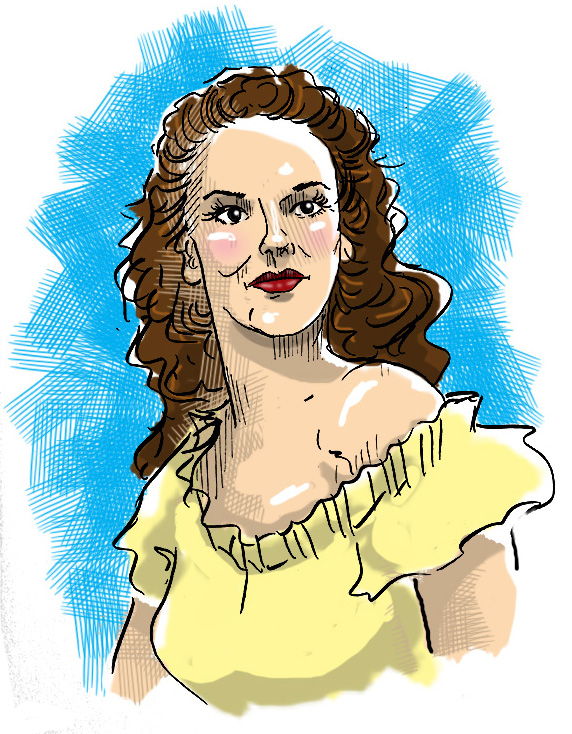
Janet Waldo’s big break came courtesy of Bing Crosby. A talent scout brought the perky teen in for an audition for the crooner and she was signed to a contract soon after. Janet played a slew of vivacious teenage girls on a variety of radio shows, including The Adventures of Ozzie and Harriet and The Red Skelton Show. She played the title character on Meet Corliss Archer, a popular teen comedy. Janet stayed with the series for eight years. Her likeness even graced the cover of “Corliss Archer” comic book adaptations.
At 32, a young-looking Janet was featured in an episode of I Love Lucy as a crazed teen with an insatiable crush on Ricky Ricardo. Ten years later, she reteamed with Lucille Ball on The Lucy Show, playing Lucy’s sister.
Janet found a niche as a voice actress, giving speech to such classic characters as “Josie” on Josie and the Pussycats and “Penelope Pitstop” on Wacky Races. Her most famous role was that of “Judy Jetson” on the futuristic cartoon The Jetsons. She voiced the teenage Judy in every incarnation of The Jetsons, including the 1990 feature film. However, after her voice work was completed, an executive decision ditched her from the project in favor of pop singer Tiffany. All of Janet’s dialogue was re-recorded by Tiffany. During the recording sessions, the voice director allegedly asked Tiffany if she could sound more like Janet Waldo. The movie flopped at the box office. Many years later, Bill Hanna of Hanna-Barbera Productions, apologized to Janet, saying the decision was wrong.
Sadly, a benign, but inoperable, brain tumor forced Janet into retirement. She passed away in June 2016 at 96. She was the last surviving cast member of The Jetsons and possessed one of the greatest and most recognizable voices.