

I want it long, straight, curly, fuzzy
Snaggy, shaggy, ratty, matty
Oily, greasy, fleecy
Shining, gleaming, streaming
Flaxen, waxen
Knotted, polka-dotted
Twisted, beaded, braided
Powdered, flowered, and confettied
Bangled, tangled, spangled, and spaghettied!
DCS: mark frechette
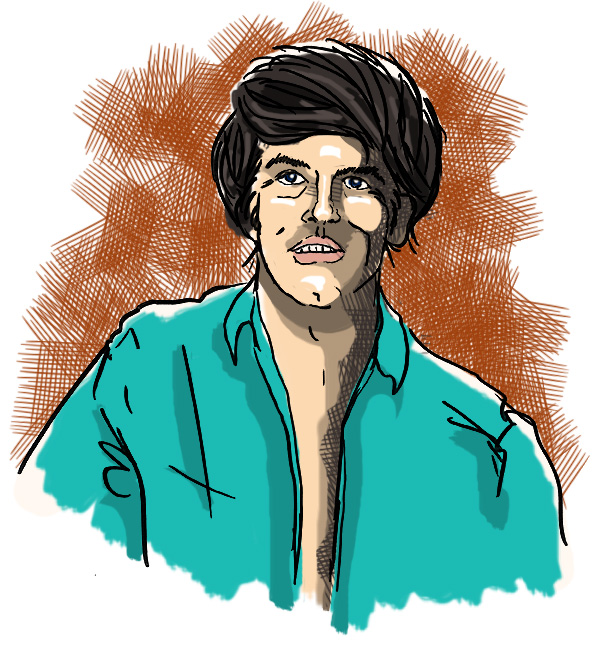
Sally Dennison, a Hollywood casting director, saw Mark Frechette, a Boston carpenter, yelling at a woman on the street. The angered Mark hurled a flowerpot at the woman from his third-floor vantage point and continued his vicious shouting. Sally was captivated. She quickly brought the young hothead to her director, Michelangelo Antonioni. She explained, “He’s twenty and he hates.” After a year-long search for the perfect actor, Antonioni cast Mark in the lead role of his up-coming film Zabriskie Point, despite having no acting experience. Mark and the director butted heads and disagreed during the entire duration of filming.
The film was a critical and box office failure (although it reached cult status many years later), but Mark enjoyed new-found fame. He appeared on the cover of numerous magazines and on various talk shows.
Later, he joined the Fort Hill commune, a notorious counter-culture organization in Boston. In late summer 1973, Mark and two members of Fort Hill attempted to rob the New England Merchant’s Bank in Boston’s Roxbury neighborhood. One of his colleagues was killed by police and Mark, along with fellow Fort Hill member Sheldon T. Bernhard, was arrested. Mark was sentenced to six to fifteen years in prison.
Three years into his sentence, Mark was working out in the prison gym. He was killed when a 150 pound barbell fell on his throat. Mark was 27 years old.
Comments
IF: neighbor
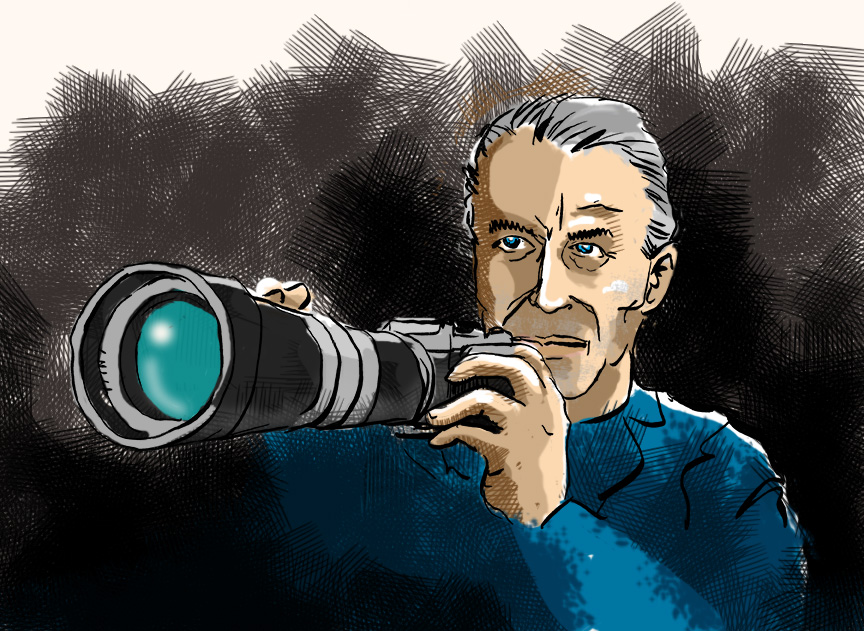
Jimmy Stewart had some pretty interesting neighbors in Rear Window.
Comments
DCS: lynne frederick

Lynne Frederick aspired to be a math teacher, but her delicate, “fairy tale princess” looks pointed her towards a career as an actress. As a teenager, she was featured in numerous films in her native England, including the historical drama Nicholas and Alexandra in 1971 and Henry VIII and His Six Wives a year later. She was named “Best New Actress” by British newspaper The Evening Standard and continues a successful run of films through the 70s. Her final film role was in 1979 in Prisoner of Zenda, opposite her husband, actor Peter Sellers.
Lynne’s marriage to Sellers was a rocky one. Sellers was 29 years older than Lynne. After a few years, Sellers began making arrangements to exclude Lynne from his will. He died from a sudden heart attack before his changes to the document were finalized. 25-year old Lynne inherited 4.5 million pounds (valued by today’s standards at nearly 18 million dollars). She then excluded Sellers’ children from previous relationships. She also successfully sued the producers of the 1982 film Trail of the Pink Panther, which was made with outtake footage and released after Sellers’ death. Lynne was awarded 1 million pounds as a result.
Lynne sunk into a deep depression after Sellers’ passing and created a shrine to her late actor-husband at her Swiss home, which she inherited. However, she briefly married talk-show host David Frost for a short 17 months in 1981-1982. In 1982, Lynne married an American surgeon. When she divorced her third husband, Lynne sunk deeper into depression. Her health deteriorated and she began using drugs and drinking heavily. On a rare visit, Victoria Sellers, Peter’s daughter with actress Britt Ekland, found Lynne barely able to move, dressed in dirty clothes and swigging vodka straight from a jug. Three weeks later, Lynne was dead at age 39, a suspected suicide. She was survived by her 11-year old daughter Cassie from her third marriage. Cassie inherited all of Lynne’s assets and possessions. None of Peter Sellers’ three biological children saw a dime of their father’s wealth.
Comments
IF: sailor

Anchors Aweigh, my boys, anchors aweigh.
Farewell to college joys, we sail at break of day-ay-ay-ay.
Through our last night on shore, drink to the foam,
Until we meet once more.
Here’s wishing you a happy voyage home.
Comments
DCS: george a. romero
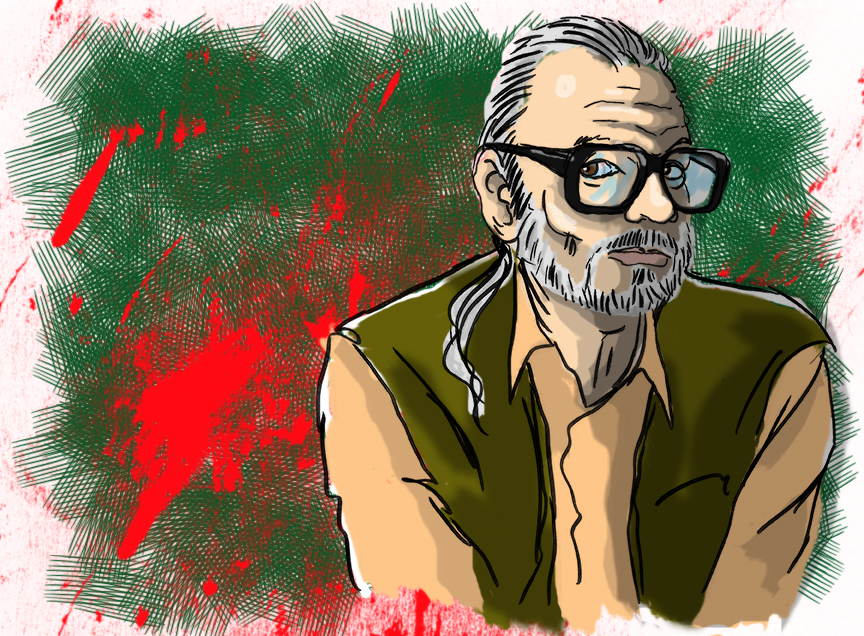
A graduate of Carnegie Mellon University, budding filmmaker George Romero was making commercials and shooting segments for the popular children’s show Mister Rogers’ Neighborhood. He teamed up with writer John Russo and wrote a script for a comedy-horror film called Monster Flick. The pair raised $114,000 and shot the film in and around their native Pittsburgh with borrowed equipment. The result was the renamed Night of the Living Dead. With its shoestring budget and improvised props (Bosco chocolate syrup substituting for blood and roasted hams standing in for human flesh), the film gained a cult following, but soon cemented itself as the origin of the modern zombie movie.
The story was actually a sly commentary on current social situations and race relations. And, considering the genre that it started, Night of the Living Dead never used the word “zombie” at all. It eventually became a financial success and was selected by the Library of Congress for preservation in the National Film Registry.
George made a series of films in the “zombie” genre, as well as several general horror films. He worked with writer Stephen King on a few projects.
George made frequent appearances at horror conventions. He loved meeting his fans. Declining health limited his appearances in later years and failing eyesight prevented him from signing autographs.
George passed away in July 2017 at the age of 77, after a brief battle with lung cancer.
He may be coming to get you, Barbara.
Comments
IF: ice cream

I scream!
Comments
DCS: albert salmi
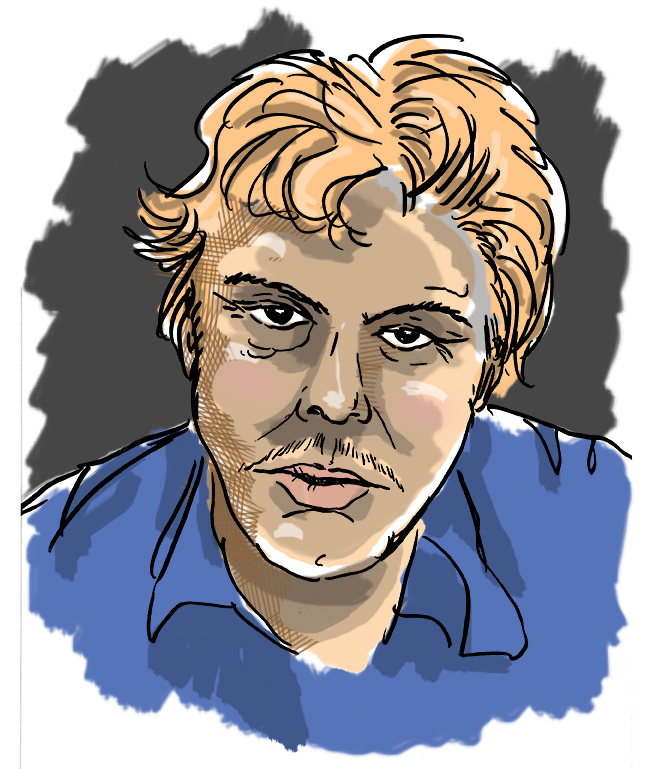
Albert Salmi loved the stage and believed that film and television roles paled in comparison to the legitimate theater. In 1955, Albert starred as “Bo Decker” in the Broadway production of William Inge’s Bus Stop. He was offered to reprise the role in the 1956 film opposite Marilyn Monroe, but declined. Don Murray took the role instead and was nominated for an Oscar. Later, Albert was cast in the lead role in Arthur Miller’s The Price (a show currently enjoying a successful Broadway revival). He starred in the show on both the Broadway stage and in London.
Despite his love for the stage, Albert relented and took numerous film and television roles. In the 60s and 70s, he became a fixture on episodic television, appearing in (mostly villainous) guest roles on such varies series as The Virginian, Have Gun — Will Travel, Combat!, Bonanza, Hawaii Five-O, Alfred Hitchcock Presents, Voyage to the Bottom of the Sea, Route 66, Land of the Giants, The Fugitive, Night Gallery, Kung Fu, The A-Team, Knight Rider and many others. In films, he co-starred in Escape from the Planet of the Apes, Viva Knievel!, Caddyshack and Dragonslayer. He played Geraldine Page’s husband in I’m Dancing as Fast as I Can and the hard drinking but loving father in Hard to Hold. Albert was part of the regular cast of the legal drama Petrocelli in the 70s, as well as companion to Fess Parker’s Daniel Boone a few years earlier.
Albert married actress Peggy Ann Garner, best remembered for her moving role in A Tree Grows in Brooklyn. The couple hit it off while performing together in Bus Stop. After seven years of marriage, they divorced and Albert married Roberta Taper in 1964. Albert retired from acting in 1983 and he and Roberta made their home in Spokane, Washington, away from the hectic Los Angeles life Albert was so accustomed to.
Roberta filed for divorce in February 1990. citing Albert’s alcoholism as a major factor. She claimed that Albert became abusive when he drank. As divorce proceedings progressed, Albert moved into an apartment on his own. On April 22, 1990, Albert drove to his one-time family home and shot Roberta to death in the kitchen. Then, he turned the gun on himself and took his own life. He was 62.
Comments
IF: portrait

Okay, Andy, are my fifteen minutes up yet?
Comments
DCS: pepi lederer
Young Josephine Lederer was a welcome and frequent guest at Hearst Castle, the guest of publishing magnate William Randolph Hearst and her aunt, Hearst’s lover, actress Marion Davies. Hearst was fond of Marion’s niece, as well as Josephine’s brother, future screenwriter Charlie Lederer. The energetic and vivacious Josephine earned herself the nickname “Peppy.” She altered the spelling and soon legally changed her name to “Pepi.”
As brother Charlie gained success in Hollywood with script refinement to The Front Page, Pepi was obligingly offered bit parts in some of Marion Davies’ films. She appeared in small roles in a few films, exhibiting only a modicum of talent. Angry at not being taken seriously as an actress, Pepi packed her bags and moved to London at 18 years of age. Instead of acting roles, Pepi discovered alcohol and drugs, cocaine in particular. She pursued numerous romantic affairs, specifically a lengthy relationship with actress Louise Brooks. She returned to the United States for an abortion when she discovered she was pregnant — quite a surprise — as Pepi was an affirmed lesbian. (It was later revealed that Pepi was raped at a New Years Eve party in 1929, while drunk.)
The abortion resulted in major health issues for Pepi. Coupled with her drug dependency, her physical and mental health were in a steady decline. Marion Davies had Pepi committed to a mental hospital. After just one day in the facility, Pepi crashed through the screened window of her sixth floor room and jumped to her death. She was 25 years old.