

Over the course of 12 studio albums, 13 EPs and 22 singles, The Beatles have few songs that are credited as a group collaboration. One of those is “Flying.”
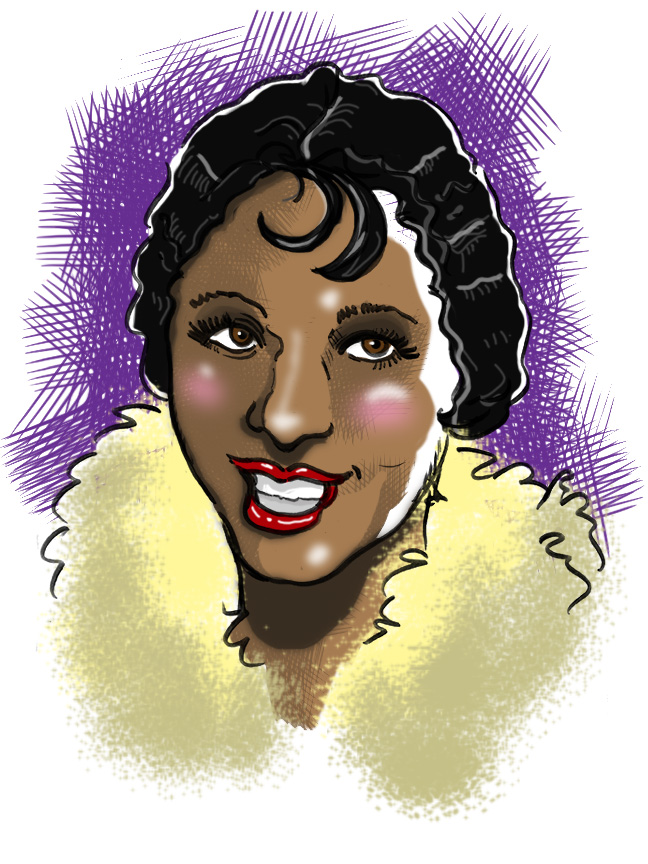
20 year-old Adelaide Hall performed with numerous all-African-American cast productions in the early 20th Century, including shows by Eubie Blake and W.C. Handy.
In 1927, Adelaide was appearing in Dance Mania with Duke Ellington. At a stop at the Standard Theater in Philadelphia, Ellington introduced a new composition, an instrumental he called “Creole Love Call.” Adelaide stood in the wings, humming along to the tune as she waited for her time to perform. Ellington stopped playing, got up from the piano and asked, “Can you do that again? That’s just what I was looking for!” Adelaide was startled and she confessed, ” I don’t know. I don’t even know what I was doing.” She gathered her thoughts and again, hummed the counter melody as Ellington played the piano. A few days later, the pair recorded the haunting tune. In 1928, the song entered the Billboard charts at Number 19.
Adelaide was wildly popular throughout the 30s, playing to a world wide audience and headlining prestigious venues like The Cotton Club, The Apollo and the Harlem Opera House. Despite her popularity and acclaim, she faced racism. She and her husband were harassed and antagonized after buying an estate in the predominantly-white suburb of Westchester, New York.
In the late 30s, Adelaide moved to England and continued entertaining enthusiastic crowds. She became the first African-American to sign a long-term contract with the BBC. She released over 70 records for the British label Decca. She was a regular on British stage and even showed up in a cameo role in the 1940 Oscar-winning film The Thief of Bagdad.
Adelaide performed well into the 80s and 90s including a one-woman show at Carnegie Hall. She was the subject of a 1990 documentary called Sophisticated Lady. At a 1992 ceremony where she was honored by the British Academy of Songwriters, Composers and Authors, Adelaide was told by attendees that she appeared to be fifty — despite having recently celebrated her 90th birthday.
Adelaide passed away in November 1993. At a memorial service, British journalist broadcaster Michael Parkinson remarked, “Adelaide lived to be 92 and never grew old.”
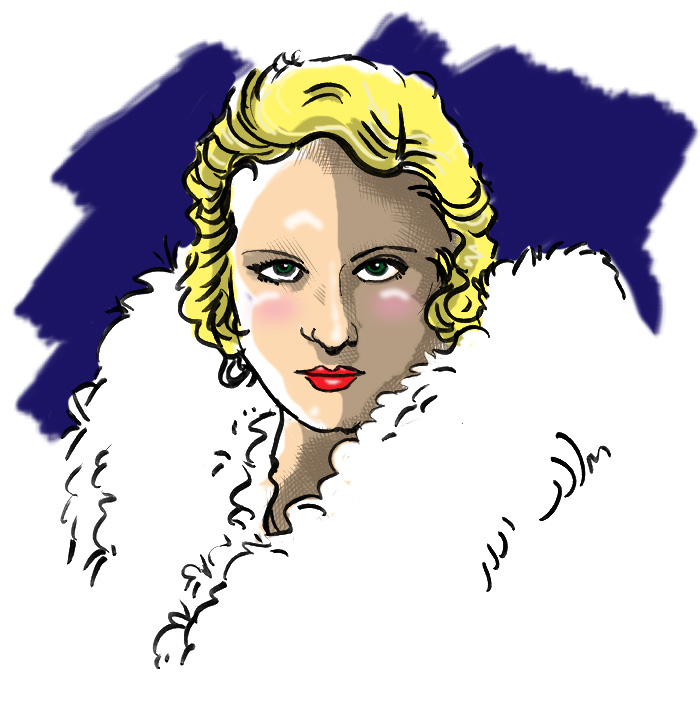
While working as an usherette at the Lyric Theater in Mobile, Alabama, Patricia “Boots” Mallory was offered a spot in the travelling show by Florenz Ziegfeld. She accepted and soon traveled with the troupe to New York where she was featured in the 1931 Ziegfeld Follies.
Moving to Hollywood, “Boots” joined Fox Films and made her screen debut in “Walking Down Broadway,” the first sound film by director Erich von Stroheim. Fox executives strongly objected to some of the films themes, including sexual escapades and an implied lesbian relationship between “Boots” and a character played by ZaSu Pitts. Another director was brought in to re-cut the film and re-shoot some scenes. It was re-released under another title and the original version is considered lost.
“Boots” was regarded for her striking looks and was photographed by famed Hollywood promotional photographer George Hurrell. She also posed for risque lingerie photographs and was painted nude by noted pin-up artist Rolf Armstrong.
In 1933, “Boots” married producer William Cagney, brother of actor James. She made mostly “B” pictures including a role with Rin-Tin-Tin. She also was cast opposite her brother-in-law in a few “Lux Radio Theater” broadcasts. She made her final screen appearance in 1938 in an uncredited role along side Laurel and Hardy.
“Boots” passed away from a throat ailment in 1958 at the age of 45. She was married to her second husband, actor Herbert Marshall.
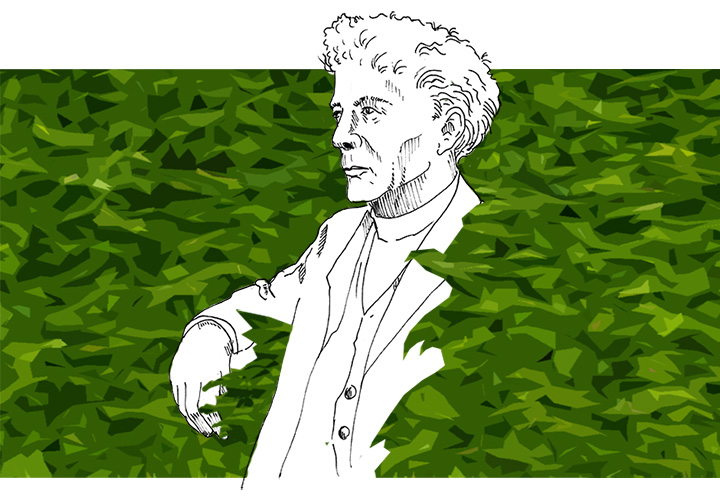
In his fifty-plus year career as a pioneer in agricultural science, Luther Burbank invented and developed more than 800 strains and varieties of plants, including fruits, flowers, grains, grasses and vegetables. Among his creations are the Shasta daisy, the freestone peach, the fire poppy, the July Elberta peach, the Santa Rosa plum, the Flaming Gold nectarine, the Wickson plum, the white blackberry and a variety of russet potato that bears his name. The “Burbank Russet” was developed as a result of the potato famine that devastated Ireland in the late 1800s.
Although Burbank is recognized for his extensive work and eventual achievements in cross-breeding and botanical experimentation, he has been criticized by contemporaries for his lack of records and documentation of his research. In 2004, Purdue University professor Jules Janick wrote: “Burbank cannot be considered a scientist in the academic sense.” In a time when there was little legal protection for inventors, Burbank was more interested in doing and getting results than writing down all of his trial-and-error processes.
Just prior to his death in 1926, Burbank instructed his wife to allow Missouri horticulturalists Stark Bros. Nursery to carry on with his inventions. After much success, Burbank’s widow and Stark Bros. came to a mutual agreement to end the partnership. Burbank’s creations were dispersed to various other companies including the Burpee Seed Company and Santa Rosa Junior College, where their gardens were filled with some of Luther Burbank’s uncompleted experiments like a thornless rose, a spineless cactus, rainbow-colored corn and a hybrid mulberry tree that Burbank had hoped would create an American silk industry.
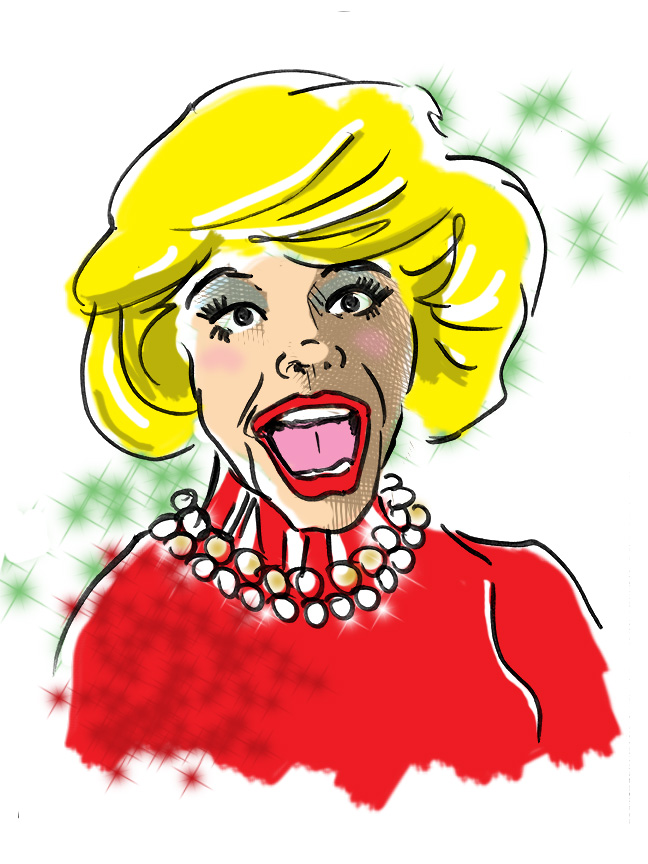
Honestly…. who didn’t love Carol Channing?
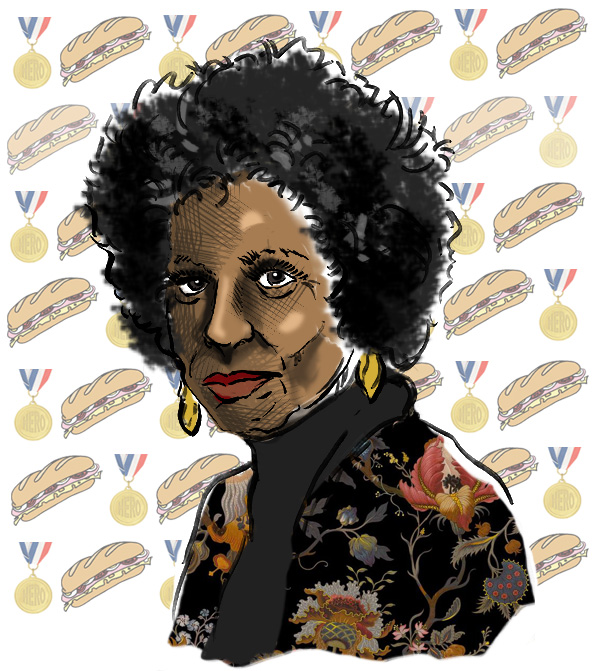
After her parents’ divorce, nine-year-old Alice Childress moved to Harlem to live with her grandmother. Despite her own lack of formal education, Alice’s grandmother encouraged young Alice to pursue her natural love for reading and writing. However, Alice had to drop out of school after her grandmother’s death. While working several low-paying jobs, Alice became active in local theater.
She joined the fledgling American Negro Theater in 1939 and stayed with the troupe for over a decade. She multi-tasked, displaying her talents as a set and costume designer as well as an actress. Alice made the jump to Broadway in the 1944 drama Anna Lucasta, for which she received critical acclaim and a Tony nomination. The play became the longest-running, all-African American cast show in Broadway history.
In the late 1940s, Alice tried her hand writing plays herself. She proved very prolific and garnered awards for several of her productions. She became the first African-American woman to win an Obie Award. Along the way, she also stirred controversy with her 1962 drama Wedding Band: A Love/Hate Story in Black and White. The story, set in the American South during World War I told of an interracial relationship. No theater in New York would present it. The play had its premiere in Ann Arbor, Michigan and was later performed in Chicago. A production starring actress Ruby Dee was filmed for television, but many stations refused to broadcast it. Many of Alice’s plays presented themes of empowerment of African-American women, equal rights and racial tensions, subjects close to her heart for which she spent much time and effort advocating. In addition, she is acknowledged as the only African-American woman to have written, produced, and published plays for four decades.
In the 70s, Alice turned to young adult novels, including her most famous work A Hero Ain’t Nothing But a Sandwich, published in 1973. It was made into a film starring Paul Winfield and Cicely Tyson five years after its initial release. Her 1979 short story A Short Walk was nominated for a Pulitzer Prize.
Alice passed away in 1994 at the age of 77. At the time of her death, she was working on telling the story of her inspirational great-grandmother, a former slave.
In 1995, Ben Folds Five included a song on their debut album called “Alice Childress.” It was not about the actress-playwright.
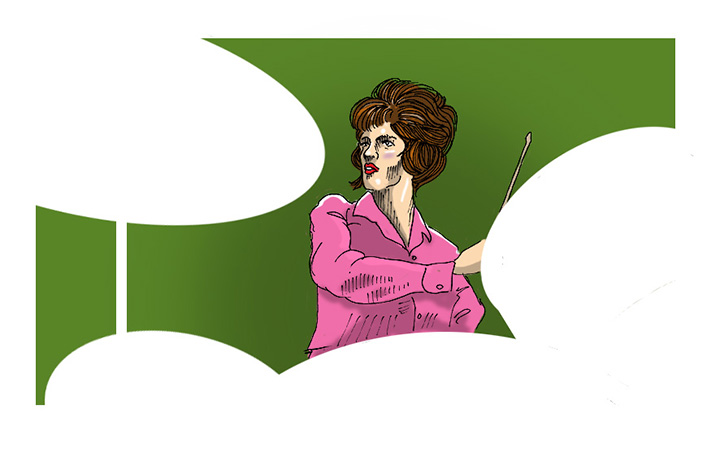
In the gimmicky early days of rock and roll and the British Invasion, Honey Lantree stood out. Not because she was a woman in a field dominated by men. It was because she refused to be a “gimmick.” Honey wasn’t sitting behind a drum kit for The Honeycombs as a novelty.
She was a very good drummer.
Honey passed away as 2018 drew to a close. She was 75 and performed with several incarnations of The Honeycombs into the 1990s.

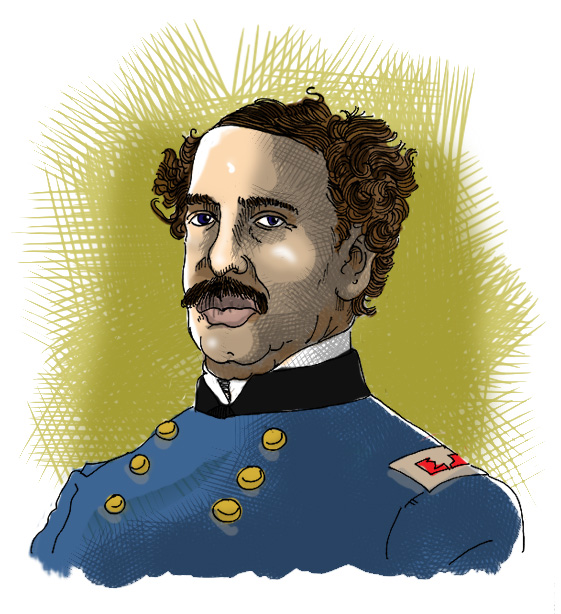
Abner Doubleday was a career officer in the Union Army during the Civil War, achieving the rank of 2-star General. In the early days of the war, Doubleday fired the first shot at the Battle of Fort Sumter. He also played a pivotal role in the Battle of Gettysburg. He was, however, relieved of his duty by Major General George Meade, causing a long enmity between the two officers.
After the war ended, Doubleday headed for San Francisco where he obtained a patent on the cable car railway system that still runs in the city to this day. He spent the last years of his life in New Jersey as a member, and later president, of the Theosophical Society, a spiritual organization. He passed away in 1893 at the age of 73. He was buried under a 7-foot tall obelisk in Arlington National Cemetery.
Do you know what Abner Doubleday didn’t do? Invent baseball.