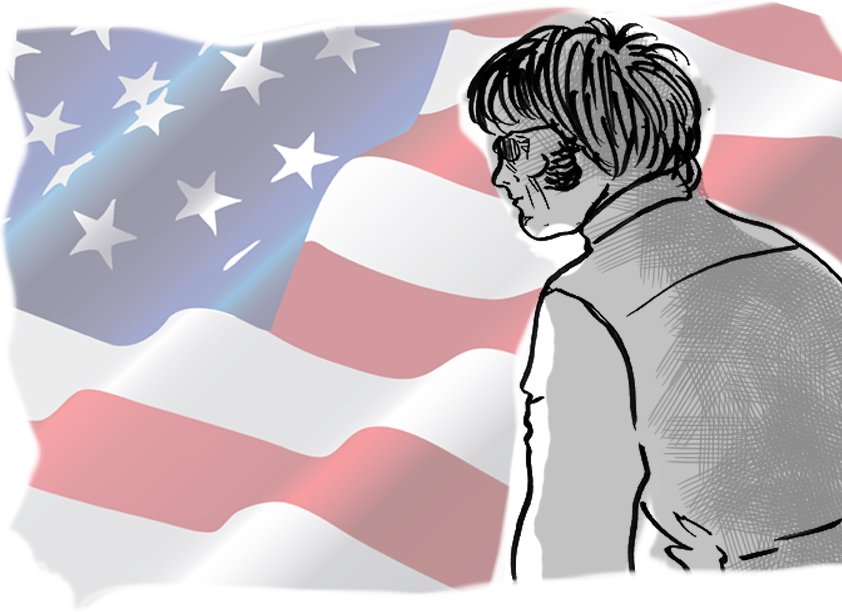
DCS: valerie harper

when you're in love the whole world is jewish

“My name is Rhoda Morgenstern. I was born in the Bronx, New York in December, 1941. I’ve always felt responsible for World War II. The first thing I remember liking that liked me back was food. I had a bad puberty; it lasted 17 years. I’m a high school graduate. I went to art school. My entrance exam was on a book of matches. I decided to move out of the house when I was 24; my mother still refers to this as the time I ran away from home. Eventually I ran to Minneapolis, where it’s cold, and I figured I’d keep better. Now I’m back in Manhattan. New York, this is your last chance!”

Comments

comments

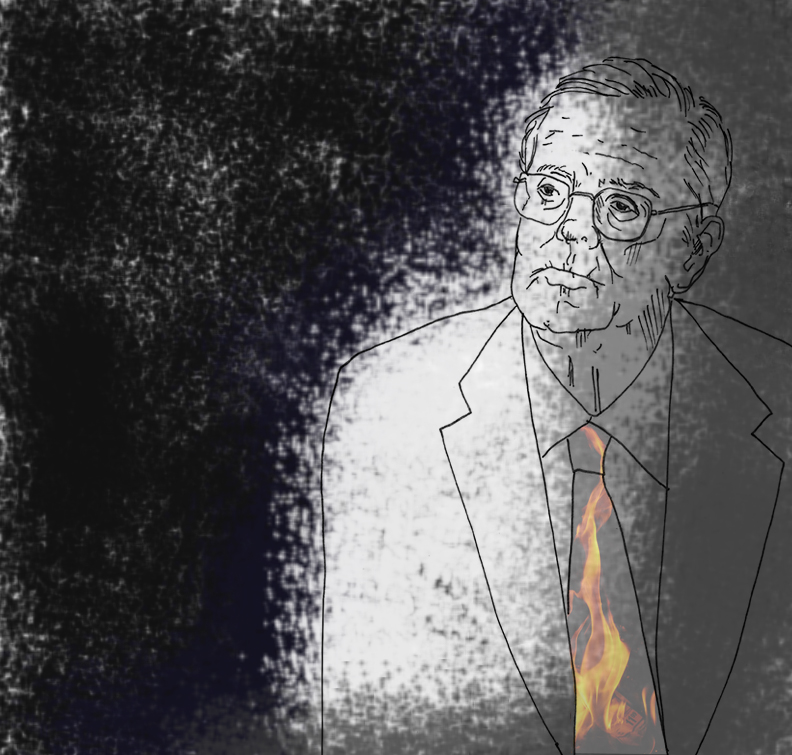
DCS: curt lowens

Curt Lowens had a successful, fifty-plus year career in Hollywood, mostly portraying German officers in World War II pictures. He played a similar role for laughs in an episode of the TV sitcom Hogan’s Heroes. Early in his career, he played the title role in the ill-conceived horror film Werewolf in a Girls’ Dormitory. Curt described the atmosphere on the set as chaotic, comparing it to the Tower of Babel, with actors speaking four different languages and not understanding each other.

However, prior to his arrival in Hollywood, Curt was part of a network of Dutch rescuers, assisting in helping Jewish children flee the Nazis during World War II. Curt’s father was a respected lawyer in his native Poland. With his governmental connections, he was able to circumvent the fate of Auschwitz for his family. Instead, Curt and his mother went into hiding and eventually joined the Dutch resistance group, leading over 150 children to freedom. Curt also aided two downed American Army Air Corps flyers, for which he later received a commendation from General Dwight D. Eisenhower. After the war, he worked with the British Army as an interpreter.

After emigrating to the United States, Curt appeared in over 100 films and television productions until his death in 2017 at the age of 91.


Comments

comments

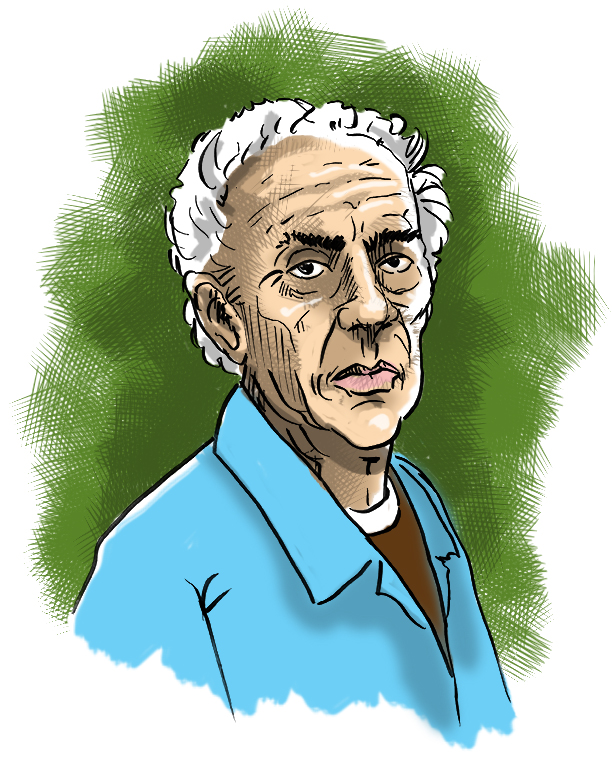
IF: folklore

freedom freedom freedom freedom

This past weekend celebrated the 50th anniversary of the legendary Woodstock music festival that took place over three days on Max Yasgur‘s 600-acre dairy farm in upstate New York. Thirty-two acts performed at various — sometimes drastically-postponed — set times, filling the days and nights with an eclectic mix of folk, rock and blues. The festival was attended by approximately 400,000 people, although over the course of time, that number has been inflated to unbelievable proportions. Exaggeration surrounding the lore of Woodstock was not limited to the attendance. It seems that many folks — performers and audience members alike — have very different recollections of the event. Recollections that have been embellished considerably as time entered the equation.

Folk singer Richie Havens opened the festival at seven minutes after five on August 15, 1969. He was not originally scheduled to be the first performer, but was recruited when planned opener Sweetwater were stuck in the heavy freeway traffic. With acoustic guitar in hand, the 28-year old singer kicked off his set with “From the Prison,” followed by several covers, including a few familiar Beatles numbers, some of which Richie didn’t know all the words. He was well received by the crowd, capping his performance with an ad-libbed version of “Motherless Child,” that was, coincidentally, tagged as the opening song for Sweetwater when they finally took the stage.

For his entire life, Richie Havens claimed to have performed at Woodstock for three hours. He stood firm on this claim until his death in 2013. In the days before the internet and the fuzzy record-keeping of the Woodstock festival, Richie’s claim was rarely disputed. The time frame and performance length wasn’t addressed in the 1970 Academy Award winning documentary nor on the sprawling three disc soundtrack album.

However in 2019, Rhino Records and producer Andy Zax meticulously compiled a real-time chronological documentation of the entire Woodstock event, including lovingly restored and enhanced recordings and a plethora of stage announcements that eerily transport the listener back to the time and place of the festival. The entire recording was replayed — in its entirety — on Philadelphia radio station WXPN, synchronized to the exact day and time from fifty years earlier. My son, an on-air host and producer at WXPN, worked with other staff members to bring this on-air event to reality — discovering some truths that contradicted folklore along the way. One thing they discovered — almost immediately — was that Richie Havens’ performance lasted a mere fifty minutes, not even close to the marathon three hours that he maintained for his entire career. Perhaps that’s how he remembered the day, but history and fact remember differently.

Comments

comments

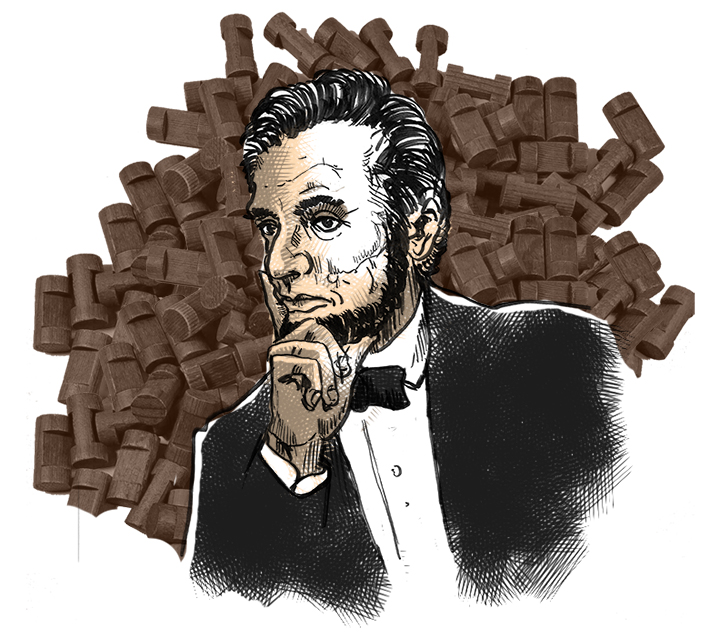
IF: politician

we can be heroes just for one day

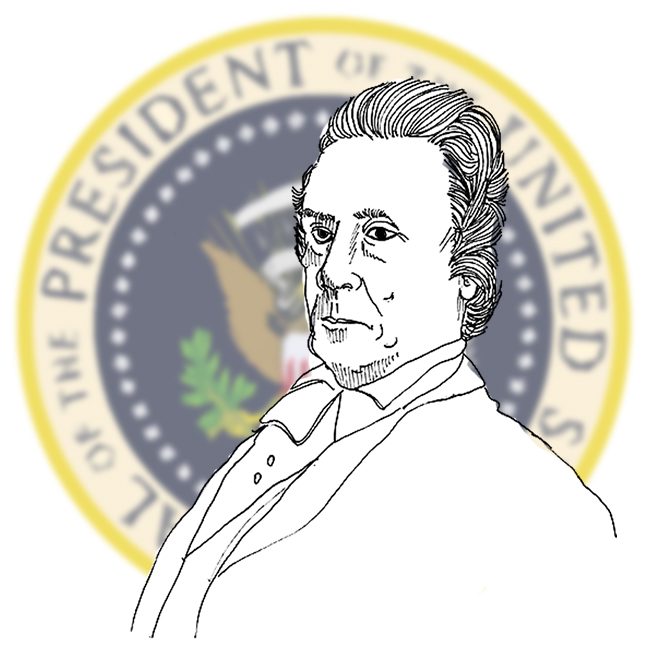
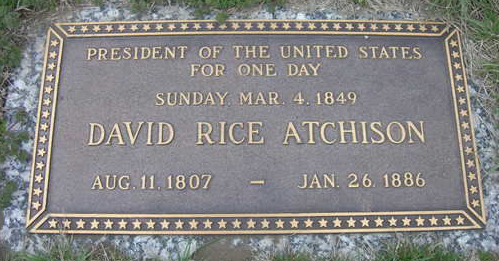
In the center of a small cemetery in Plattsburg, Missouri, there is a marker on a grave that is inscribed incorrectly. It’s the final resting place for David Atchison, and the marker inaccurately states “President of the United States for One Day –  Sunday, March 4, 1849” David Atchison was a lot of things, however, he was not President of the United States. Not even for a day.

David was appointed to as a senator from Missouri, filling a vacancy left by the death of Senator Lewis Finn. He was the youngest senator from Missouri. He was also an outspoken advocate for slavery. However, he was popular among his fellow senators and was elected “Senate president pro tempore,” presiding over the Senate in the absence of the current Vice President.

Before laws were changed in the 1930s, the line of succession put the Senate president pro tempore third in line for the Office of the President. Also, pre-1930s law called for presidential terms to begin at noon on March 4. In 1849, March 4 fell on a Sunday. Zachary Taylor, the President-Elect, refused to have the inauguration on a Sunday, as he was a religious man. At his insistence, the ceremony was postponed until Monday, March 5. The controversial belief is that, since no official oath of office was recited on the officially determined day, the established line of succession automatically made David Atchinson, the Senate president pro tempore, the President of the United States from noon on March 4 until noon on March 5.

However…

Atchison’s term as a senator also expired at noon on March 4, thereby denying his claim as president. Plus, the presidential oath of office was merely a formality. Zachary Taylor and his administration were installed at noon on Sunday, March 4 whether they liked it or not.

David Atchison went through the rest of his life claiming to have been president for one day in 1849, embellishing the story as the years went on. In later years, he campaigned for expansion of the country with the Kansas-Nebraska Act of 1854, calling on pro-slavery Missourians to uphold slavery by force and “to kill every God-damned abolitionist in Kansas” if necessary. Massachusetts Senator Charles Sumner revealed Atchison’s hateful, pro-slavery speech and Atchison was eventually defeated for re-election in 1855. He later served in the Confederate Army until he resigned his commission and retired to his Missouri home. David Atchison passed away in 1866 at the age of 78… still believing that he ran “the honestest administration this country ever had.”

Comments

comments

DCS: leah chase

cook of the house

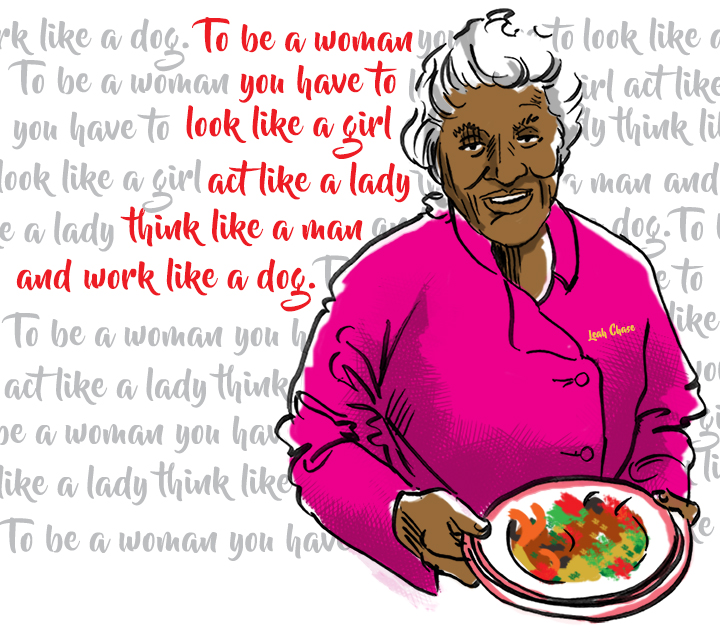
Leah Chase, the second of thirteen children, helped her family survive the Great Depression by cooking the okra, peas and greens that was grown in the family’s Madisonville, Louisiana garden. Leah and her siblings wore clothes made from rice and flour sacks, while he father worked his meager job at the Jahncke Shipyard. Wishing the children to attend Catholic school, the Chase family left Madisonville for New Orleans.

After high school, Leah worked for local bookies and then as a waitress at The Coffee Pot in the French Quarter (closed in February 2019 after 125 years). She earned one dollar a day as salary. In 1946, twenty-three year old Leah married local jazz trumpeter “Dooky” Chase. Dooky’s family owned a street corner stand in the Treme neighborhood, where they sold po-boy sandwiches and lottery tickets. Leah and Dooky took over the stand, converting it into a proper sit-down restaurant. Leah, a budding chef, changed the menu to reflect the Creole cooking she learned in her youth. She offered dishes previously available in “whites-only” establishments in New Orleans.

In the 1960s, under Leah Chase’s leadership, Dooky Chase’s Restaurant became a meeting place and sanctuary for the civil rights movement. It became became one of the only public places in New Orleans where African Americans could meet and discuss strategies. Leah and her husband would host black voter registration campaign organizers, the NAACP, black political meetings and many other civil leaders at their restaurant, including local civil rights leaders and later Martin Luther King Jr. and the Freedom Riders. Leah provided another service to the African American community. With no banks willing to accept African American customers, Leah would cash checks for patrons they knew.

Dooky Chase’s Restaurant was a staple for New Orleans cuisine for years, welcoming presidents, dignitaries and celebrities. In 2005, however, the restaurant suffered major damage as a result of Hurricane Katrina. In the aftermath, the New Orleans restaurant association held a a fundraiser for Dooky Chase’s. A check for $40,000 was presented to a grateful and humbled Leah Chase. The restaurant was re-opened, but for limited hours. Although she was 82, Leah remained active in the restaurant’s kitchen, overseeing the day-to-day operations and happily meeting with customers.

In 2009, Disney used Leah Chase as inspiration for “Tiana,” the main character in the animated film The Princess and the Frog. In a 2012 revival of Tennessee Williams‘ New Orleans set play A Streetcar Named Desire, a reference to a local restaurant was changed to Dooky Chase’s.

Leah passed away on June 1, 2019 at the age of 96. She earned herself the title of “The Queen of Creole Cooking.”

Comments

comments