IF: hatch

This week’s challenge word on the Illustration Friday website is “hatch”.
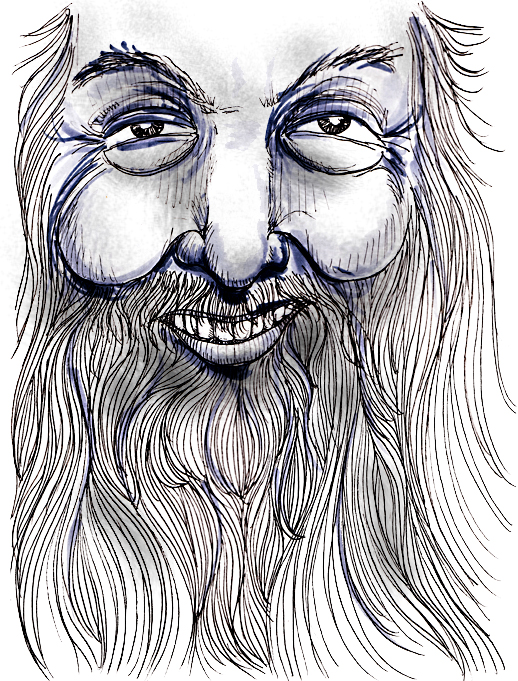
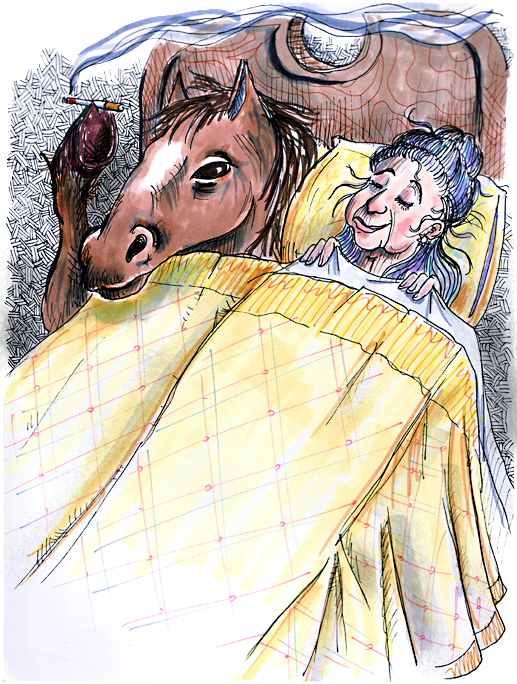
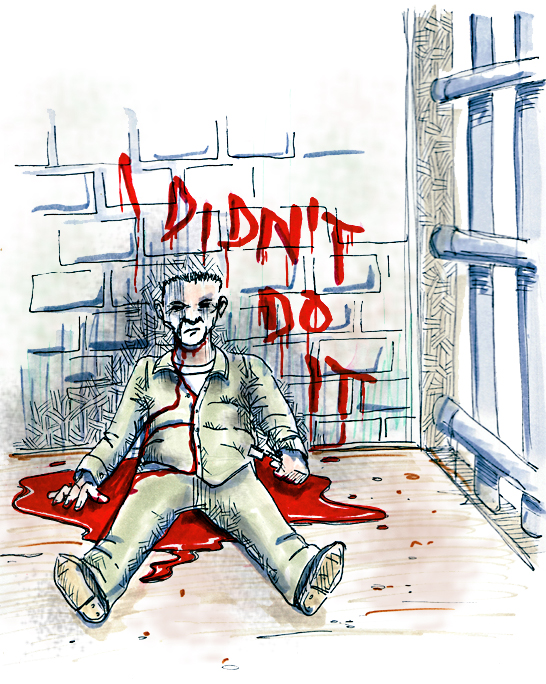
d'ya know we run to beat cha - run rings right off your feet a/run you right up your street a - & wait around the corner
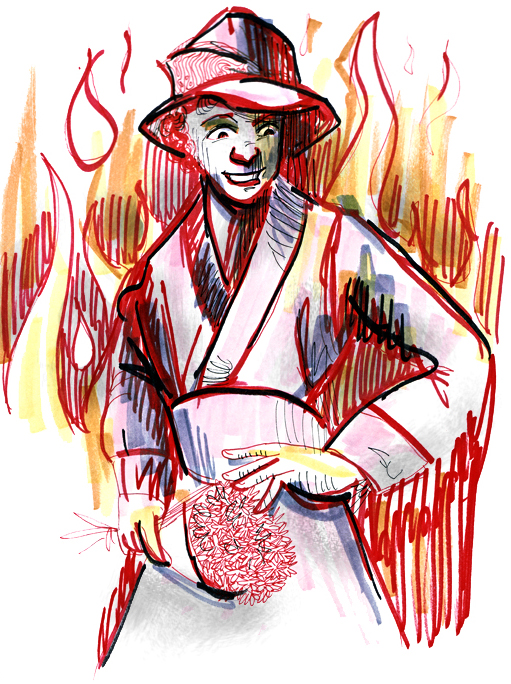
“Hurry up, Ma! Hurry before they hatch!”

A little background…
I was at a total loss for this challenge when it was announced early on Friday morning. My mind was blank. I had no ideas at all. That afternoon, I went to lunch with my boss and a supplier to a restaurant in Philadelphia’s famous Chinatown. This particular restaurant specializes in dim sum  for lunch. The dim sum ritual is quite unusual for those unfamiliar with it. Actually, it is quite unusual for those that are  familiar with it. Diners are seated at their tables and given a “scorecard”. The dining room is filled with women quickly pushing carts around the maze of tables. The carts are laden with multiple servings of various bowls and plates of exotic (and sometimes unrecognizable) tidbits of Chinese delicacies. The carts make brief stops at each table and the “driver” points to and identifies each offering in quick, broken English. If a selection is desired from that cart the “driver” plops the item down on the table and makes a notation on the table’s scorecard. To someone experiencing this for the first time, its pretty surreal.

On Friday afternoon, my two voracious and adventurous (and carnivorous) dining companions sampled fried squid and steamed buns stuffed with pork and green-and-brown-something-or-other. For me, the lone vegetarian, there was spicy eggplant, steamed vegetable dumpling and… did I mention the eggplant?  I had to resort to ordering noodle and mushroom soup from the regular menu to make it look like I was actually eating.

The inspiration for my illustration came from the first item offered, almost as we were seated. A stout young Asian woman parked her cart next to our table and displayed several steamy temptations. One of the dishes caught the attention of Howard, our luncheon partner and commercial printing vendor. It was a silver serving bowl containing four browned, bony tridents that was identified as “chicken feet”. Howard nodded affirmatively and, in one motion, the woman dropped the bowl on the table and marked off our scorecard. I noted, in an aside, to Howard that the waitress said “feet – chicken feet”  in case he had misunderstood which part of a chicken he had just ordered. He waved me off, not taking his gaze off of those shriveled glazed tootsies. My boss and I marveled as Howard jabbed his chopsticks into the bowl and transferred one to his small plate. He tore into its outer layer and sort of picked at the spare contents inside. After a “tastes like chicken” comment, he convinced my boss to try one. At first she seemed absolutely turned off by the idea, especially since she mentioned that it looked as though the appendage was giving her “the finger”. But, after Howard applied some schoolyard-style coaxing, she gave in. She prodded one of the feet and tasted a microscopic piece. She politely smiled and the unfinished portion remained on her plate for the rest of our meal.

this earns you bragging rights.

Personally, I was a little uncomfortable having that thing on the table.
I half-expected the rest of the chicken to come looking for it.

Comments

comments

Monday Artday: frog

The current challenge on the Monday Artday illustration website is “frog”.
One morning when Pharaoh awoke in his bed, there were frogs in his bed and frogs on his head. Frogs on his nose and frogs on his toes. Frogs here. Frogs there. Frogs were jumping everywhere.
“This is what the Lord says: Let my people go, so that they may worship me. If you refuse to let them go, I will plague your whole country with frogs. The Nile will teem with frogs. They will come up into your palace and your bedroom and onto your bed, into the houses of your officials and on your people, and into your ovens and kneading troughs. The frogs will go up on you and your people and all your officials. ”
— Exodus 7:1–4

The second plague of Egypt was frogs. God commanded Moses to tell Aaron to stretch his staff over the water, and hordes of frogs came and overran Egypt. Pharaoh’s sorcerers were also able to duplicate this plague with their magic. However, since they were unable to remove it, Pharaoh was forced to grant permission for the Israelites to leave so that Moses would agree to remove the frogs. To prove that the plague was actually a divine punishment, Moses let Pharaoh choose the time that it would end. Pharaoh chose the following day, and all the frogs died the next day. However, Pharaoh rescinded his permission, and the Israelites stayed in Egypt.

Hey Everyone! My annual compilation of eclectic Christmas music is now available!
That’s right! 23 songs (and a bonus track) plus a custom color cover in PDF format to print,
all convenietly zipped and ready for FREE DOWNLOAD !
Just click HERE and let the holiday fun begin!

Comments

comments

IMT: handmade holidays

This week’s inspiration at the Inspire Me Thursday website is “handmade holidays”.
...and to all a good night
I have been creating a holiday card every year for almost thirty years. Here is my card for this year.


Hey Everyone! My annual compilation of eclectic Christmas music is now available!
That’s right! 23 songs (and a bonus track) plus a custom color cover in PDF format to print,
all convenietly zipped and ready for FREE DOWNLOAD !
Just click HERE and let the holiday fun begin!

Comments

comments

IF: crunchy

This week’s Illustration Friday challenge word is “crunchy”.
...even in milk.
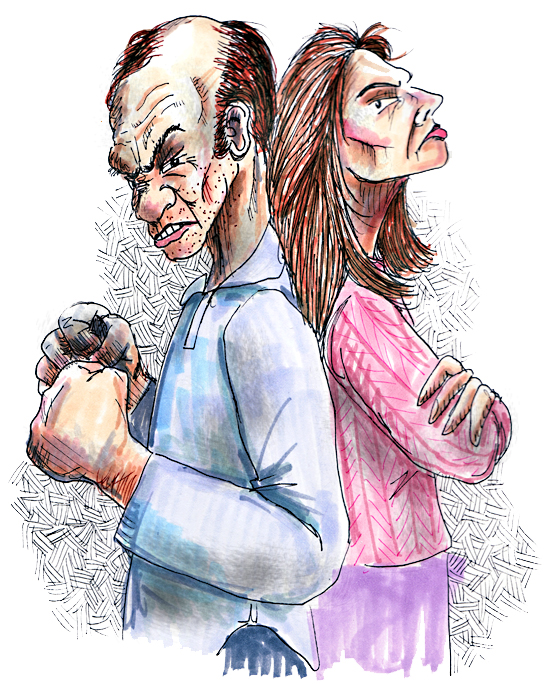
“Um, are mashed potatoes supposed  to be crunchy?
“They are when we don’t remove the bones.”

Hey Everyone! My annual compilation of eclectic Christmas music is now available!
That’s right! 23 songs (and a bonus track) plus a custom color cover in PDF format to print,
all convenietly zipped and ready for FREE DOWNLOAD !
Just click HERE and let the holiday fun begin!

Comments

comments

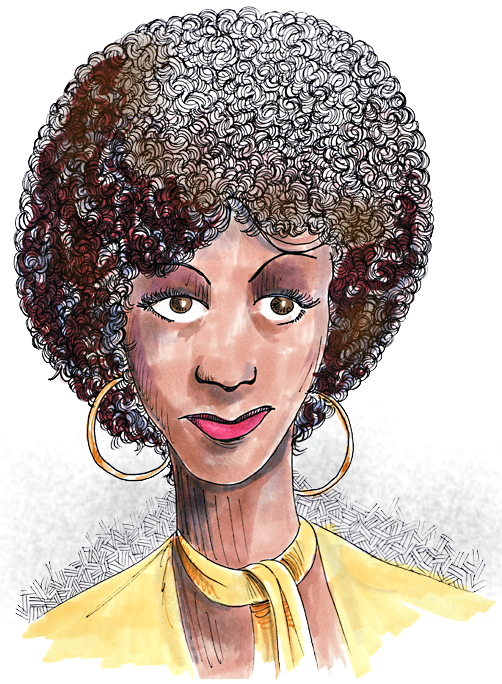
from my sketchbook: dora gerson

Arbeit macht frei
Dora Gerson was a singer and silent film actress in Berlin, Germany in the early 1920s. She was performing in an ensemble troupe when she met film director Veit Harlan. They married in 1922 and divorced in 1924. Harlan would eventually direct anti-Semitic Nazi propaganda films on orders of Nazi Propaganda Minister Joseph Goebbels.

In 1920, Dora was cast to appear in the successful film Auf den Trümmern des Paradieses (On the Brink of Paradise) and later followed that same year in Die Todeskarawane (Caravan of Death). Both films featured Hungarian actor Béla Lugosi prior to his immigration to the United States and his illustrious Hollywood career. However, both films are now considered lost films. Dora continued to perform as a popular cabaret singer throughout the 1920s as well as acting in films.

By 1933, the Nazi Party had come to power in Germany and the Jewish population was systematically stripped of rights. Dora’s career slowed dramatically. Although blacklisted from performing in “Aryan” films, Dora was able to secure work at a small Jewish record company. She began releasing Yiddish language records and her 1936 song Der Rebe Hot Geheysn Freylekh Zayn became highly regarded by European Jews in the 1930s. Her best remembered recording from this era was the song Vorbei (Beyond Recall), which was an emotional ballad, memorializing a Germany before the rise of the Nazi Party.

In 1936, Dora, her second husband and some relatives fled to the Netherlands to avoid Nazi persecution. In May 1940, German troops invaded the Netherlands and Jews became subject to the same anti-Semitic restrictions as in Germany. In 1942, after several years of living under oppressive Nazi occupation, Dora and her family planned to escape, but were captured attempting to enter Switzerland. The family was sent by railroad car to the Nazi extermination camp of Auschwitz in Poland. Dora died at Auschwitz in 1943, along with her husband and their two children.

Comments

comments

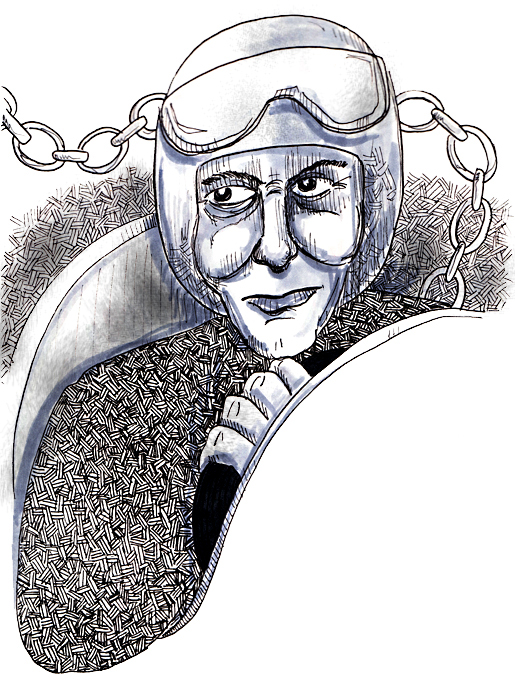
from my sketchbook: the bop bop

death on four wheels
1965 was a tumultuous time. The country was still healing from the wounds brought on by a presidential assassination. Alabama state troopers clashed with civil right activists in Selma. The first wave of US Armed Forces was being deployed to the jungles of Viet Nam. In 1965, I fought a demon of my own.

My experience growing up in a middle-class household was pretty typical. My father was the breadwinner and provided for his family. For his trouble, he expected dinner on the table when he arrived home from work. After dinner, he wanted to sit in his chair, watch his television, smoke his cigarettes and not be bothered. Being bothered was my mother’s job. My mother did her best to maintain order in the house, yet she always seemed to be one step behind the chaos. My older brother was a very well-behaved child. He could always occupy his time with a book or his little plastic army men. I, however, was the itch in the center of my brother’s back that he could not reach. I was the out-of-control wild boy. I would have been labeled “hyperactive,” if such diagnosis existed in 1965. Instead, I was just called a “royal pain in the ass.”

When I was a kid, there were two categories of toys in my house. There were the ones that belonged exclusively to either my brother or myself and were not to be handled by anyone else under any circumstances. While my brother was respectful of that unwritten rule, I never could properly grasp the concept. Everything was fair game, as far as I was concerned. I had no problem breaking a toy that was believed to be solely my brother’s possession. The other classification was something my parents designated as a “share toy.” Oh God, did I hate those words. By the expression on my brother’s face when he was informed that a new plaything was deemed “a share toy,” he hated those words, too. “Share toys” sucked. Share toys had to be stored in neutral ground in our shared bedroom. There would no doubt be loud and vicious arguments over a “share toy,” usually resulting in a punch and someone crying. That someone was usually me. I’d run and seek the corrupt judgment of my mother, who would invariably rule in my favor, since I was the younger child. More often than not, I didn’t want the toy. I just wanted the satisfaction of watching my brother get a refresher course in the rules of a “share toy.” Upon witnessing my mother berate my poor brother with a barrage of “you should know better” and “you’re the older brother,” I’d wander off to find more trouble I could get into.

In late 1957, my parents purchased a house in the far reaches of newly-developed Northeast Philadelphia. With cookie-cutter houses packed into carbon-copy neighborhoods, the Northeast was like living in the suburbs, but still within the city limits. Much to my mother’s dismay, we saw my paternal grandparents often. My grandfather, who drove a city bus for a living, complained about the distance between my parent’s house and his own. “Why the hell would you buy a house out in that farmland?” he’d angrily ask, in a phone conversation with my father, prior to a visit. He’d begrudgingly drag my grandmother (who did everything begrudgingly) into his car and drive the most indirect and convoluted route to our house. Upon arrival, he’d complain — again — about the drive and my parents’ choice of residence. My father dutifully listened to his father’s grievances. My mother remained silent, in hopes of not prolonging the visit. My mother disliked her in-laws immensely and with good reason. She correctly pegged my grandfather as an ignorant, narrow-minded bigot and my grandmother as a mean and manipulative shrew. My father had been married briefly before he was married to my mother. My grandmother would buy gifts for my dad’s ex-wife and ask my mother’s opinion of her purchases. And my grandmother was a racist to boot.

One particular visit from my paternal grandparents was quite traumatic. It was August 1965 — my fourth birthday. Birthdays meant gifts and no matter how fragile the relationship was between my mom and my grandparents — a gift was a gift. After dragging themselves up our front lawn and an overly-dramatic recounting of their journey, my grandmother, in her most flamboyant fashion, presented me with a gaily wrapped box. I eagerly accepted it and commenced on a quick and sloppy removal of the colored paper keeping me from my present. And since this was my birthday, it was not going to be a goddamn share toy.

The torn paper yielded a brightly colored box, elaborately decorated in a circus motif. Happy clowns cavorted with smiling striped tigers. Monkeys swung on cages. Balloons and confetti abounded. My mom helped with the box flap as I excitedly anticipated what lurked inside. She withdrew a wooden hippopotamus adorned with brilliant yellow paper and the same circus images from its box. Adjacent to each of the toy beast’s painted legs was a bulbous, red, plastic wheel. My mom proudly displayed the figure in her hands — just inches from my face — as my grandparents observed with a smugness cast upon their faces. My grandmother took the toy from my mother’s hands and placed it on the gold-flecked linoleum of our kitchen floor. She gave a yank on the long braided string attached just under the hippo’s exaggerated jaw. As it rolled along on its wheels, that massive jaw opened and out came the most horrendous noise. It was a noise that emanated from the pits of fiery Hell. A noise comprised of equal parts tortured anguish and pure evil. It said, “BOP BOP BOP BOP BOP BOP!” It was repulsive and vile and scared the living shit out of me. I flew into my mother’s protective arms, squirming into the sanctuary of her bosom. My grandmother’s face sank in utter disappointment. She tried to calm me by talking sweetly about how nice the hippo was. I burrowed further into my mother’s shoulder, whimpering. I wanted no parts of that wicked creature. My mother managed get my father to put out his cigarette long enough to take me from her arms. She gathered up the hippo and its packaging and disappeared into another room. Within a minute, she returned to inform everyone that everything has been taken care of. I continued to peer cautiously around corners, knowing that thing was still in my house. The day ended with dinner followed by cake and ice cream and, happily, my grandparents leaving.

My mom was appalled that my grandmother would give something so frightening to me, but it sparked an idea. My mother was wonderful, but boy, was she devious. For the next several years, she used that hippo — now known in our household as “The Bop Bop” — as a motivator. If I procrastinated with homework or lagged in picking up my Hot Wheels cars, my mom would threaten me with taunts of “I’ll get the Bop Bop.” In seconds, I’d be hard at work on my school assignment or putting those toy vehicles back in their appropriate place. If my mother didn’t want me to go to a particular room in the house (for whatever reason), she would place the Bop-Bop on guard at the room’s entrance. I’d do anything to avoid an encounter with the malevolent Bop Bop.

One day, I must have been about six years old, I gathered my courage and faced the Bop Bop. I had discovered my mother’s hiding place for the hideous brute. While getting my coat from the hallway closet, I caught a glimpse of yellow and red on the top shelf. The Bop Bop sat in silence, its dead eyes gazing off to its right, its pert leather ears standing at attention. I froze in horror. Then, I stared at the evil bastard. I pulled out the metal stepladder that was stored at the back of the closet. I marched defiantly up the steps and snatched the Bop Bop off the shelf. I leapt off the ladder and ran for the door, clutching the Bop Bop tightly against my torso, but careful not to look down at it. I ran to the backyard and dropped the Bop Bop in the grass and, turning on my heels, darted back into the house. I panted heavily and leaned against a wall. Although I was winded, I was basking in the realization that I had rid my life of the dreaded Bop Bop.

The sky outside became overcast and the clouds poured rain on that Philadelphia afternoon. I climbed up on my parents’ bed and watched out the window as the Bop Bop got drenched in the abundant downpour. A week or so later, my mother came across the empty space at the top of the hall closet. When she questioned me on the whereabouts of the Bop Bop, I sang like a government informant. My mom went into the backyard to investigate my story and discovered a gray and splintered mound of waterlogged wood, its printed paper cover peeled off — torn and curled in the wet grass. Its mud-caked wheels fixed on rusted axles. She rounded up the mess and walked back to the house, stopping briefly to deposit her findings in the trash can in the side yard. My mom came back in the house and glared at me. She was mad. It didn’t matter. And any subsequent punishment wouldn’t matter either.

I had won.

corruptor of youth
The real Bop Bop.

Comments

comments

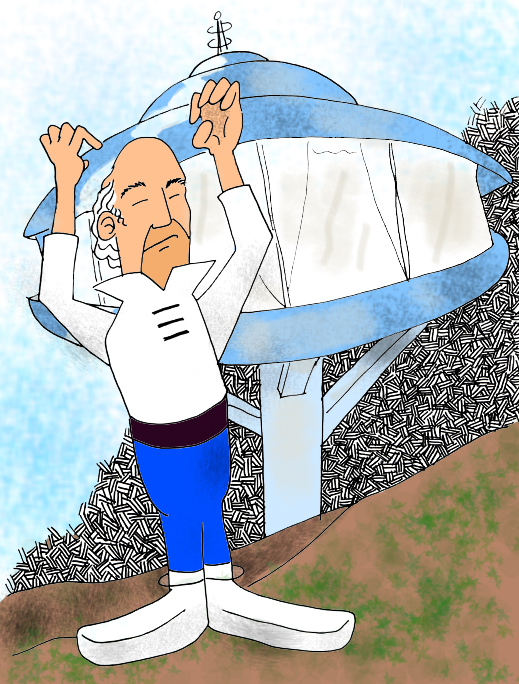
IF: entangled

This week’s Illustration Friday challenge is “entangled”.
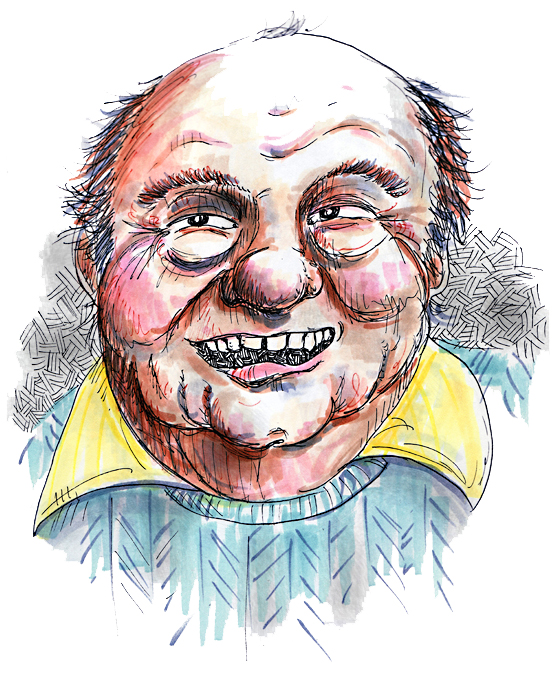
I had a job in the great north woods/Working as a cook for a spell/But I never did like it all that much/And one day the ax just fell.
Margie didn’t want to get entangled in the madness of Christmas shopping.
So, this year, everyone got a homemade gift.

Hey Everyone! My annual compilation of eclectic Christmas music is now available!
That’s right! 23 songs (and a bonus track) plus a custom color cover in PDF format to print, all convenietly zipped and ready for FREE DOWNLOAD !
Just click HERE and let the holiday fun begin!

Comments

comments

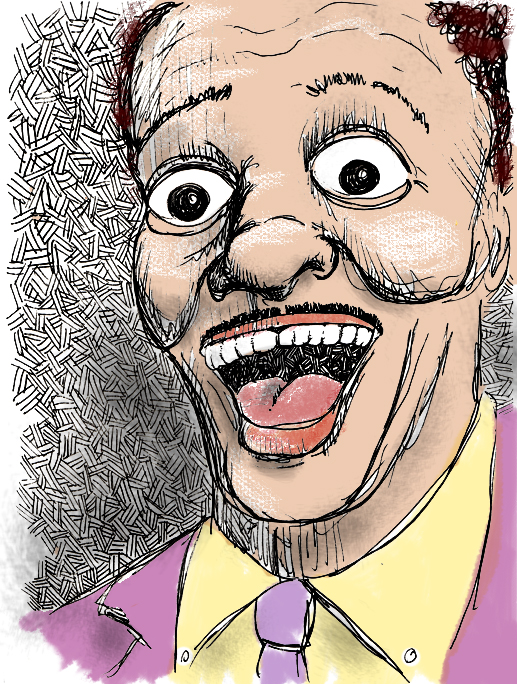
Monday Artday: gratitude

The current Monday Artday challenge is “gratitude”.
you can't know where you're going until you know where you've been.

Curt Flood spent most of his career as a center fielder for the St. Louis Cardinals. He led the National League in putouts four times. He won seven consecutive Gold Glove Awards. He also batted over .300 six times, and led the NL in hits in 1964. He retired with the third most games in center field in NL history, behind Willie Mays and Richie Ashburn.

On October 7, 1969, the Cardinals traded Flood, catcher Tim McCarver, outfielder Byron Browne, and pitcher Joe Hoerner to the Philadelphia Phillies for first baseman Dick Allen, second baseman Cookie Rojas, and pitcher Jerry Johnson. However, Flood refused to report to the Phillies, citing the team’s poor record, the fact that they played in dilapidated Connie Mack Stadium and, what Flood felt, racist fans.

With the backing of the Players Association and with former U.S. Supreme Court Justice Arthur Goldberg arguing on his behalf, Flood sought action against Baseball Commissioner Bowie Kuhn in a case that lasted from January 1970 to June 1972 at district, circuit, and Supreme Court levels. Although the Supreme Court ultimately ruled against Flood, upholding baseball’s exemption from antitrust statutes, the case set the stage for the advent of free agency.

The emotional costs to Flood as a result of his unprecedented challenge of the reserve clause were enormous. Flood’s major league career effectively ended with his legal action, and he traveled to Europe, spending much of his time there painting and writing, attempting to deal with the pain and frustration of being away from the game he loved. In 1970, prior to the Supreme Court decision, Flood published his autobiography, The Way It Is, a book which outlined his moral and legal objections to baseball’s reserve system.

At the memorial service for Curt Flood, who died of throat cancer in 1997 at the age of 59, dozens of former ballplayers gathered to pay tribute to a man whose sacrifice made him not merely a hero, but a martyr. Former major leaguer Tito Fuentes wondered why the current generation of baseball’s multi-millionaires did not attend the service to pay their respect. “He was a great man,” Fuentes remarked as he passed by Flood’s casket. “I’m sorry that so many of the young players who made millions, who benefited from his fight, are not here. They should be here.”

You call that gratitude?

This song by The Baseball Project sums it up perfectly. (Lyrics HERE.)

Comments

comments