Welcome to the grand illusion. Well, maybe not that grand.

Victor Lownes passed away at the age of 88. He spent the last few years of his life in seclusion, rarely making any public appearances. It was a sad ending for such an extroverted and influential man. You’ve never heard of Victor Lownes? I’m not surprised.
At 18, Victor married Judith Downs. He had a managerial position at Yale Locks, a company that was owned, in part, by his maternal grandfather. Victor was successful, with a home, a loving wife and two children — but he experienced a premature mid-life crisis. He abandoned his family and moved to Chicago to look for something more fulfilling.
In 1954, he met Hugh Hefner at a party. The two men shared mutual interests — drinking, women, partying — and Hefner asked Victor if he would write a few articles for his proposed magazine. Victor obliged and Playboy was launched the next year. Victor accepted Hefner’s offer to join his company as Director of Promotions. His first order of business was to convince otherwise stuffy and conservative businesses to advertise in the fledgling publication. Victor was, again, successful. His success translated to greater success for Playboy Enterprises.
Victor and his boss/friend Hugh Hefner frequented many popular bars in Chicago. Out for drinks one evening, Victor suggested to Hefner that Playboy should open its own club. Hefner liked the idea a lot. When Victor suggested that the waitresses dress in costumes patterned after Playboy‘s “rabbit” mascot, Hefner balked. He had always envisioned the rabbit as a male figure. Victor showed Hefner a prototype of the costume and Hefner was one-hundred percent on-board. The first Playboy Club opened in February 1960 and more soon followed.
In 1966, Victor opened a Playboy Club in London to instant success. The club, known as “The Hutch on the Park,” regularly hosted A-list celebrities like The Beatles, Warren Beatty, Michael Caine, Judy Garland, Sean Connery and Roman Polanski. This club featured casino gambling, which Victor speculated would rival the profits of Playboy magazine. He was right and soon the casino venture was generating more income than the company’s publishing interests. By 1981, Playboy Enterprises became the most successful casino operators in the United Kingdom.
Ensconced in the celebrity lifestyle, Victor was the executive producer of the Monty Python film, And Now For Something Completely Different. he insisted to animator Terry Gilliam that his credit be in a font larger than all the others. Gilliam refused, so Victor hired an outside animator to complete the credit, giving it to Gilliam to insert into the film. In the meantime, Gilliam changed the style for the credits, making Victor’s name look awkward and out of place.
Victor was persuaded by his pal, director Roman Polanski, to finance his production of Macbeth in 1971. Victor gave Polanski $1.5 million. The production went $600, 000 over budget and was an eventual flop. Then, Polanski publicly mocked Playboy’s, specifically Victor’s, generosity — leading to the end of the friendship.
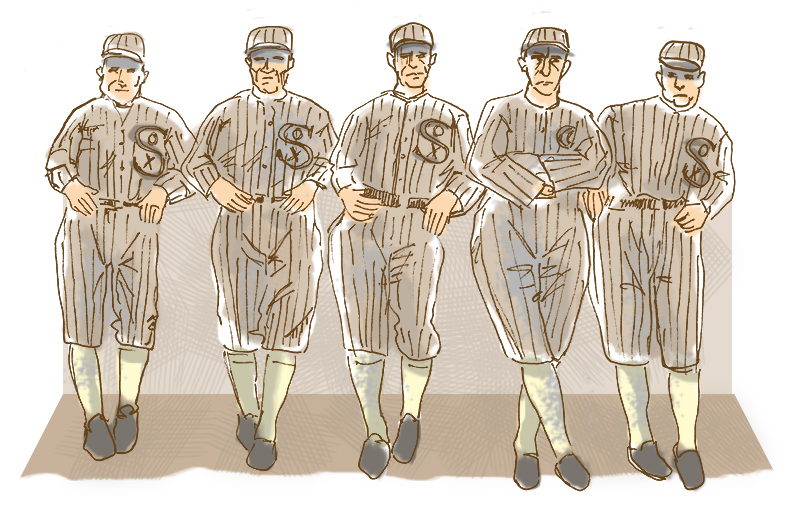
Victor was brought back to the United States to head up Playboy’s domestic casino endeavor. However, British gaming authorities were investigating Victor’s business “irregularities,” prompting Hefner to unceremoniously sever all ties with his one-time “golden boy.” It was too late, though. Playboy’s British gaming licenses were revoked and their US permits were not renewed. Playboy’s once-thriving casinos had lost more that $51 million by June 1982.
Victor, on the other hand, came out smelling like a rose. He had amassed a fortune as Britain’s top paid company executive. He owned a large mansion and married “Playmate” Marilyn Cole, over whom he and Hef actively competed. He even reconciled with Roman Polanski, but remained estranged from Hefner.

Who’s that yonder laughing at me
Up jumped the Devil 1, 2, 3

When the extension cable disconnected from the lightning rod at the top of the clock tower, Doc Brown could only exclaim, “Great Scott!”

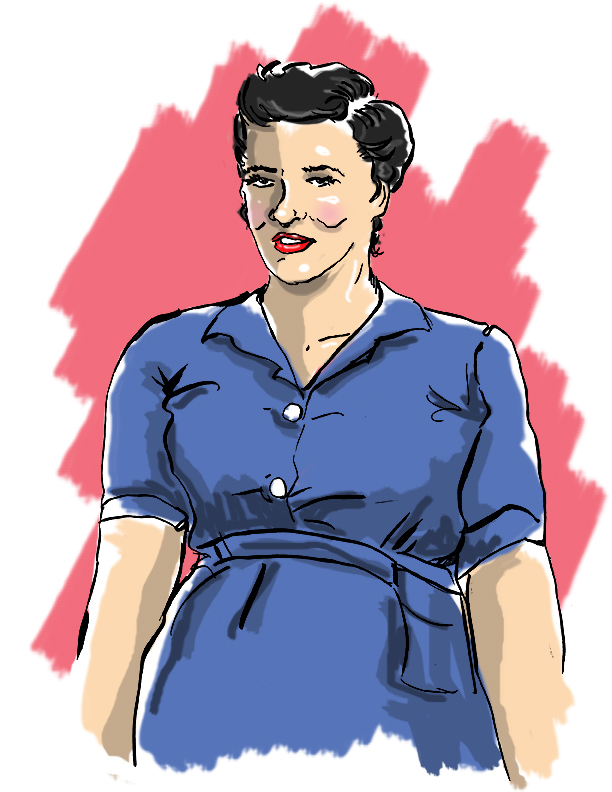
Phyllis Haver, a small-town Kansas girl, moved to Los Angeles at a young age. Upon her graduation from high school, she played piano to accompany silent films in local theaters. She was bitten by the show business bug.
She got an audition with producer Mack Sennett. Taken by her charm and beauty, Sennett hired her as one of his original “Sennett Bathing Beauties,” an assembly of young ladies featured in comedy shorts and promotional appearances. The “Sennett Bathing Beauties” also included Gloria Swanson and Mabel Normand. Soon, Phyllis was a leading lady at Sennett Studios. After signing a contract with rival DeMille-Pathé Studios, Phyllis was cast as “Roxie Hart” in the first film adaptation of the play Chicago. She received rave reviews, with critics calling her performance “astounding,” and “a most entertaining piece of work.” Later she worked with legendary director D.W. Griffith and famed silent film actor Lon Chaney.
In 1929, Phyllis married millionaire William Seeman in the home of popular cartoonist Rube Goldberg. The couple were married by then-New York City Mayor James Walker. Phyllis retired from acting soon after, but the marriage ended in divorce after 16 years. Phyllis wanted a quiet life and she felt Seeman’s lifestyle was too erratic.
Years later, Phyllis moved to secluded Sharon, Connecticut. In 1960, at the age of 61, Phyllis took her own life with a lethal dose of barbiturates.

“Hey. Nice twirl you got there. You know who invented that, don’t you?”

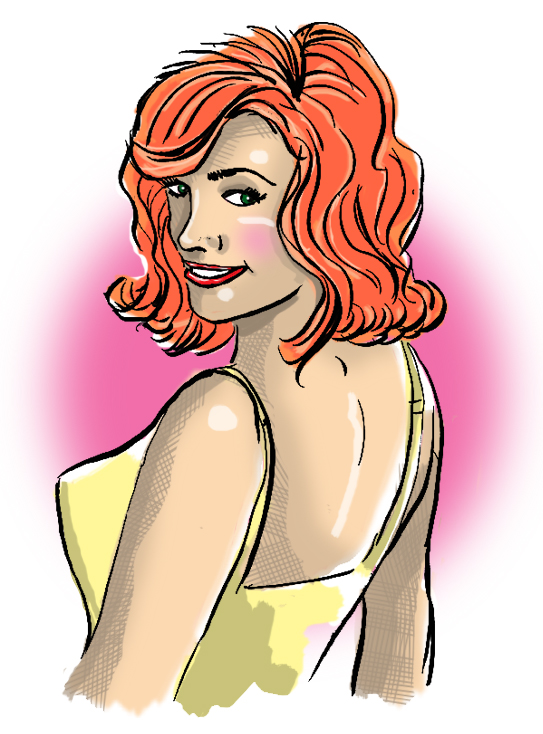
Glamorous Jane Harker enjoyed a whirlwind career in Hollywood in the middle 1940s. She was featured in 20 different roles, but was only given on-screen credit for three. The others, including her long-standing role of the suffering “Alice McDoakes” in the popular series of “So You Want To…” short subjects opposite George O’Halloran as the hapless “Joe McDoakes,” were all uncredited.
Jane was usually cast as characters without a name, like “Bar Patron,” or “Cigarette Girl,” or the classic “Redhead Snob with Sid at Party.” However, in 1947, Jane starred alongside Ann Sheridan in The Unfaithful (along with Peggy Knudsen), a film for which she was listed in the credits.
In 1948, Jane called it a career and left Hollywood behind. She settled in Minneapolis where she lived in near obscurity until her death in 2000 at the age of 77.

A guy is sitting in his living room, watching television, when he hears a knock at the door. He gets up and opens the door to find a snail on his front porch. The guy looks around and sees no one. Angered by the interruption to his TV watching, he reaches down, grabs the snail and throws it, in a wide arc, across his front lawn. He slams the door and goes back to his program.
Seven years later, the guy hears a knock at his front door. He opens the door and there’s the snail, screaming, “What the hell did you do that for?!?!”

Vickie Hogan was born in Houston, Texas, but was shuffled around with a family of half siblings, the result of several of her mother’s relationships. Vickie was briefly raised by an aunt until she was reunited with her estranged mother. Vickie was soon known as “Nikki Hart,” choosing a new first name and pairing it with her new stepfather’s surname. A poor student, she failed her freshman year of high school and dropped out soon after. In 1985, the 18-year-old was working at Jim’s Fried Chicken Restaurant in Mexia, Texas when she married Billy Smith, a cook at the same restaurant.
In 1992, now calling herself “Vickie Smith,” she appeared on the cover of Playboy magazine and was featured in the centerfold of the May issue. As a result, Vickie, now calling herself “Anna Nicole Smith,” was signed as the replacement for supermodel Claudia Schiffer as the “face” of Guess Jeans. Photographers exploited Anna Nicole’s resemblance to 50s movie bombshell Jayne Mansfield and shot her in similar poses made famous by the late screen siren. Giant billboards of Anna Nicole’s provocative ads for Guess were plastered everywhere and full page ads graced the pages of the most popular fashion magazines. She soon became an international representative for H & M stores, appearing in oversized outdoor ads in Norway and Sweden.
In 1994, at the height of her modeling career, New York magazine ran a story about “white trash” in America. A candid, unflattering shot of Anna Nicole appeared on the magazine’s cover. In the photo, a smirking Anna Nicole is seen in a short skirt with a bag of Cheez Doodles between her spread legs. Through legal representation, Anna Nicole sued the magazine for five million dollars, claiming unauthorized use of the photo. New York claimed that it was one of dozens of photos shot specifically for the cover. “I guess she just didn’t like the one we chose.,” stated the editor. The case was settled out of court.
In 1991, while working as a stripper, Anna Nicole met 89 year-old oil tycoon J. Howard Marshall, whose net worth was over one billion dollars. After a quick divorce from Billy Smith, 26 year-old Anna Nicole married the octogenarian Marshall. She never lived with her new husband and rarely kissed him, but, nevertheless, claimed that she loved him. Thirteen months after the marriage, Marshall died and Anna Nicole assumed she had just inherited a fortune. Marshall’s grown children, specifically E. Pierce Marshall, disputed her claim to half of Marshall’s estate. After a decade long battle, during which Anna Nicole filed bankruptcy, awards were granted and rescinded and Marshall’s son passed away, a final decision was still never reached.
Anna Nicole enjoyed a brief foray into movies and television. She appeared in a popular E! Network reality show that focused on her outrageous behavior and her personal relationships. After two seasons, America grew bored with her over-the-top antics and the series was canceled.
Anna Nicole gave birth to a daughter, sparking a tabloid controversy over the the identity of the father. Everyone from a photographer to her attorney to Zsa Zsa Gabor’s husband claimed to have fathered the child. While visiting Anna Nicole in the hospital, her 20 year-old son Daniel died in her room. It was determined the caused was a lethal combination of various drugs.
Anna Nicole herself was addicted to painkillers and she was allegedly receiving rehabilitation treatment. On February 8, 2007, Smith was found dead in Room 607 at the Seminole Hard Rock Hotel and Casino in Hollywood, Florida. Emergency personnel were unsuccessful, despite their quick response. The cause of death was attributed to the huge amount of many different prescription drugs, most of which were prescribed to her attorney. Anna Nicole was 39 year-old. Legal battles delayed her burial and, due to the lack of embalming and some of the drugs in her system, her body began to decompose at a faster-than-normal pace. She was finally buried at a cemetery in The Bahamas, one month after her death.
A 2014 ruling denied a request from Anna Nicole Smith’s estate to sanction the estate of E. Pierce Marshall.

one-two-three-four!