
DCS: marc blitzstein
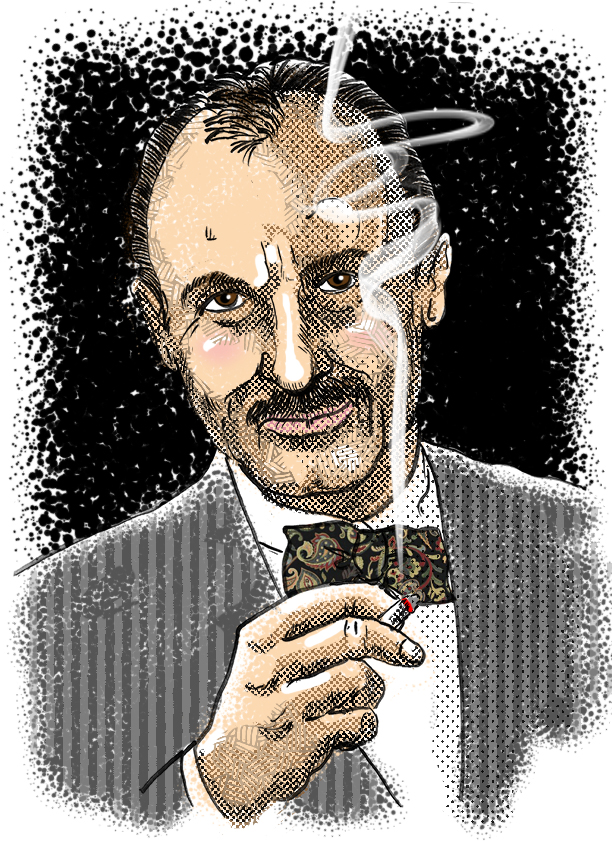
Born to an affluent Philadelphia family, Marc Blitzstein was something of a child prodigy. He displayed a natural talent to for the piano, playing Mozart pieces at age 7. Later, he studied under Alexander Siloti (himself a student of Tchaikovsky and Liszt) and made his professional debut with the Philadelphia Orchestra at 21.
Marc’s musical studies took him to Europe, where he became a student of Nadia Boulanger, the respected and influential teacher of some of the greatest composers of the 20th century, including Aaron Copland, Philip Glass, Burt Bacharach, Quincy Jones and many others. In addition to developing his talent and ability, Marc also developed a superiority complex, publicly belittling other composers. He often denigrated contemporaries like Kurt Weill, accusing them of compromising their musical integrity for the sake of making a buck.
Marc composed a number of piano pieces and eventually wrote and scored musical theater. His pro-union musical, The Cradle Will Rock, received widespread praise. However, it could have been the trigger for his later investigation by the House Un-American Committee in 1958. Marc was accused of being a Communist… an allegation that was, most likely, true.
Considering his negative feelings regarding Kurt Weill, Marc is best known for translating Weill’s Threepenny Opera into English for a 1954 revival. His words to songs like “Mack the Knife” are the ones that are so familiar today.
In 1964, on a vacation in Martinique, Marc met three sailors in a bar. After some brief conversation, he solicited the trio for sex. Marc was taken outside, where he was severely beaten and robbed by the three. He was found in an alley near the bar and taken to a local hospital, where he died from his injuries. He was 58.
Comments
DCS: helen grayco
Born the tenth of eleven children to a grocery store owner in Tacoma, Washington, Helen Greco, as they say, came out singing. She began belting out songs at the age of 4 and by 8, little Helen was singing on local radio. While performing on a Seattle variety show, a young Bing Crosby caught Helen’s act, prompting him to exclaim “That girl sings Hollywood!” Helen and her family moved to Los Angeles and the young singer was given a job in Hollywood, earning $75 a week.
In 1935, eleven-year old Helen (now using the last name “Grayco”) appeared in a non-speaking role in the Marx Brothers’ film A Night at the Opera. A few years later, producer Joe Pasternack signed Helen to replace teen sensation and Universal Studios leading child star Deanna Durbin. Helen was cast in a supporting role in That Certain Age, a Durbin picture.
In the 1940s, Helen began a string of featured vocalist positions with a number of popular big bands, including Red Nichols’ ensemble. She met wildly popular “murderer of modern music” Spike Jones backstage at the Hollywood Palladium. Jones offered the songstress a job with his group, The City Slickers. Familiar with the type of music the Slickers performed, Helen lamented, “But I’m no comedian. How will I fit in?” Jones promised her that nothing would change. She would be given her own spotlight between comedy bits, to allow the audience to calm their fits of laughter. It was a perfect match and audiences loved it. Helen also worked with Jones’ other band, appropriately named Spike Jones’ Other Orchestra. This group played things straight, offering so-called “pretty” music that differed greatly from the City Slickers’ raucous on-stage antics. However, the public preferred the Slickers’ crazy tunes and The Other Orchestra broke up after a year. Along the way, Helen married Spike Jones.
Helen moved on to a solo career, releasing several albums. She also was a featured performed on her husband’s network television variety show The Spike Jones Show. The show ended in 1961. After Jones’ untimely death in 1965, Helen began singing in various nightclubs for the next decade. She met and married successful restaurateur Bill Rosen. After a few television appearances, including her final public performance on The Dean Martin Show, Helen stepped out of the spotlight for good.
She passed away in August 2022 at the age of 97.
Comments
inktober52: map
Comments
DCS: murray roman

Murray Roman… the man who would be Lenny Bruce.
Murray was a clean-cut observational comedian much in the same vein as George Carlin. And like Carlin, Murray’s act changed when he began dabbling in and experimenting with LSD and marijuana. He managed a few small roles in episodic television, including brief appearances on The Monkees, Batman, That Girl and Rat Patrol. In 1968, he released a comedy album entitled You Can’t Beat People Up and Have Them Say I Love You on Tetragrammaton Records. Tetragrammaton Records was a subsidiary of a production company of which Bill Cosby was a principal partner. The album was a strange amalgam of comedy routines in the style of Lenny Bruce, interspersed with psychedelic music. Murray was able to land a stint on the Pat Boone Show, as Boone also recorded for Tetragrammaton. A fixture on the LA comedy scene, Murray was signed to open shows for The Doors. His comedy album was released through Polydor Records in England. The Who’s Keith Moon became a big fan and supporter of Murray’s.
In 1969, Murray secured a spot on the writing staff of the popular Smothers Brothers Show, alongside such notable writers as Steve Martin, Carl Gottlieb and Bob Einstein. According to his fellow writers, Murray wasn’t much of an actual “writer” per se. He was more of a “talker,” explaining his concepts and having the other writers jot them down. Einstein remembered that Murray idolized Lenny Bruce and lived his life like the controversial comedian.
In late 1969, Murray was featured in 2000 Years Later. The film featured Terry Thomas, Pat Harrington Jr, Edward Everett Horton, Casey Kasem and The Reverend Monti Rock III. It was a typical, nonsensical 60s film that joined the cult status of Otto Preminger’s head-scratcher Skidoo.
Murray’s life was cut short by a car crash that left him in a coma for months. He had been working on a spoof of the Marlon Brando film Last Tango in Paris called Last Foxtrot in Burbank. His costar was Sally Marr, mother of his idol Lenny Bruce. Murray passed away in November 1973 at the age of 43, having never regained consciousness.
Comments
inktober52: wood
Comments
DCS: mary hartline

At nineteen, aspiring model Mary Hartline was cast in a fifteen-minute radio series called Teen Town. Shortly after its start, the title was changed to Junior Junction. It featured the vivacious blond as the leader of a town inhabited my teenagers — eight boys and eight girls — along with the town’s mayor, played by future Bewitched star Dick York. During the show’s run, she married producer Harold Stokes, who was twenty years her senior.
In 1949, Mary was cast in the ABC television series Super Circus. Amid a cast of clowns and jugglers, Mary was groomed into a sex symbol to appeal to young boys. Super Circus moved production to New York from Chicago, and Mary was replaced… but not before she parlayed her popularity into a lucrative marketing deal. She lent her name and likeness to dozens of products including dolls, clothes and boots, making her one of the first TV stars to capitalize on their popularity and public appeal.
Mary was married four times, including 8 years to John Paul “Woolworth Donahue, heir to the Woolworth retail fortune and cousin of troubled philanthropist Barbara Hutton. Mary lived in Palm Beach, Florida after Donahue’s deatIh, where she was part of the “old money” society.
She lived out her last days in her hometown of Hillsboro, Illinois. Mary passed away in August 2020 at the age of 92.
Comments
DCS: olivia newton-john

Let me be there in your morning
Let me be there in your night
Let me change whatever’s wrong and make it right
Let me take you through that wonderland
That only two can share
All I ask you is let me be there
Comments
inktober52: robot

“Yours is not to question why; yours is to do as I say or die.”
— Dr. Zachary Smith to the Robot
Lost in Space
Comments
DCS: mary philbin

In early 1920, teenage Mary Philbin won a beauty contest in her native Chicago. The contest, sponsored by Universal Pictures, put Mary on the road to stardom. She was signed to a contract by famed producer-director Erich Von Stroheim, touting the young actress as “A Universal Super Jewel.”
Mary made her film debut in a supporting role in the 1921 melodrama The Blazing Trail. She made eight films that year. She worked constantly through the 20s, making several pictures per year. In 1925, she was cast opposite Lon Chaney in the classic horror film The Phantom of the Opera. She was the critics’ darling, often being compared to some of the great dramatic actresses of the stage. Later she was featured in The Man Who Laughs to great acclaim. However, in 1929, Mary called it a career, leaving the spotlight to care for her elderly parents. She did, however, dub her lines for a talkie re-release of The Phantom of the Opera.
Mary remained a recluse for the rest of her life. She rarely made public appearances, preferring to stay locked up in her Huntington Beach home. She never married, despite early relationships with Paul Kohner and cowboy star “Big Boy” Williams. Mary’s relationship with Kohner was broken up by her parents who were strict Catholics. They were appalled that their daughter had taken up with a Jewish man. (Kohner later married actress Lupita Tovar and was the father of actress Susan Kohner.)
In 1989, Mary attended the premier of the Los Angeles production of Andrew Lloyd Weber’s The Phantom of the Opera. It was her final public appearance. She passed away four years later from pneumonia at the age of 90.