
DCS: evelyn west
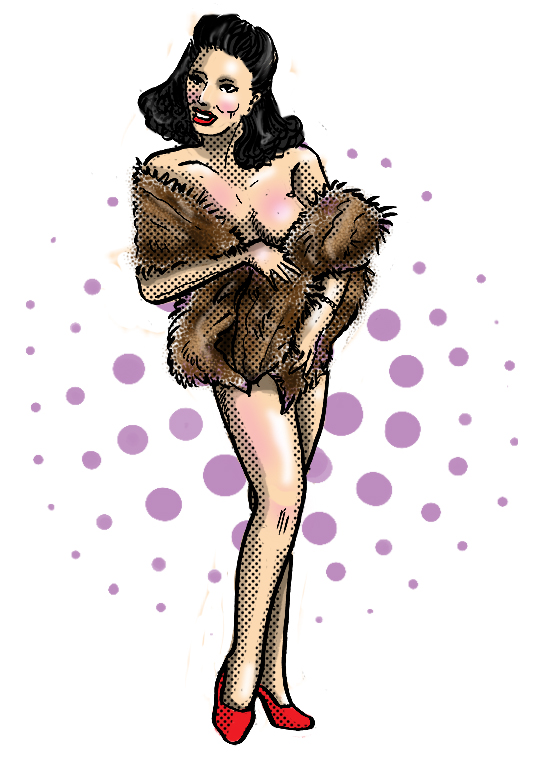
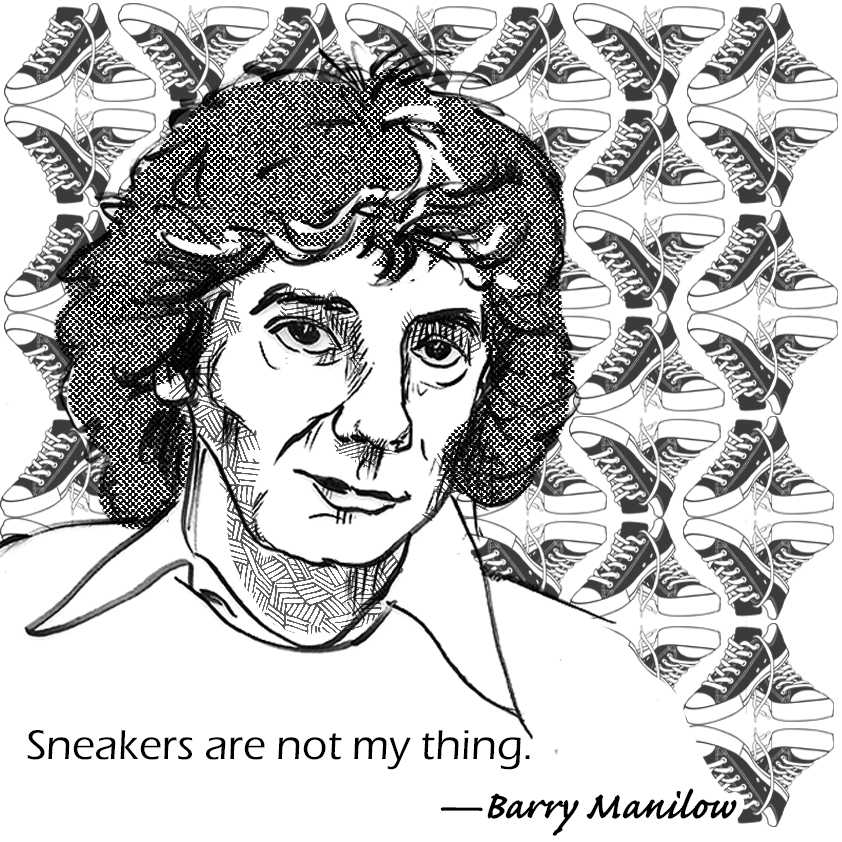
Evelyn West was a pioneer… sort of a Hernando de Soto of Burlesque. In the early days of the art form theater, the emphasis for titillation was placed on sexy walks and suggestive pelvic gyrations. Evelyn, with her reputed 39 1/2 inch bust line, moved the focus upward. She employed her own style of publicity, insuring her breasts with famed Lloyd’s of London in excess of $50,000. She insisted on being billed at appearances as “Evelyn West — the $50K Treasure Chest.” She started off her career in traveling sideshows, but soon gained recognition and was playing the popular President’s Club in San Francisco.
Evelyn loved publicity. She often challenged and teased her fellow strippers. Once she spotted actress Anita Ekberg leaving the venue during a performance. The always-prepared Evelyn hurled a ripe tomato from the stage, squarely hitting Miss Ekberg. She regularly antagonized colleague Tempest Storm as well as threatened legal action against actress Jane Russell. Evelyn was very critical of Jayne Mansfield and Marilyn Monroe, making public accusations that their respective physical attributes were greatly exaggerated and — daring to hint — even fake. She loved making guest appearances at nudist colonies and even served as a bridesmaid at a nudist wedding in Denver, where she carried a sign reading “Park your Fig Leaves Upstairs.” Not leaving any media untouched, Evelyn was a popular pin-up model and often posed for noted photographer Bunny Yeager. She loved meeting her fans and would slyly inscribe pictures “Bust Wishes!”
After her husband, promoter Al Charles, passed away, Evelyn stepped out of the spotlight. She assumed her birth name — Amy Coomer Charles — and moved to Hollywood, Florida to live a quiet life. In 1981, the sixty-year old Evelyn was approached by the owners of a San Francisco strip club to come out of retirement and perform alongside fellow strippers Tempest Storm and Blaze Starr. Although flattered, she turned the offer down. She was happy with her lifestyle change — selling memorabilia on eBay and rooting heartily for the Florida Marlins.
Evelyn died in November 2004 at the age of 83.
Comments
inktober 52: scorpio

Australian actor Tristan Rogers played the character “Robert Scorpio” on the ABC soap opera General Hospital for twelve years. His character was killed, but Rogers returned for a series of episodes in which he played Robert Scorpio’s spirit. He returned again, this time playing a very much alive Robert Scorpio in early 2006. He popped up again at the end of 2006. Two years later, Rogers reprised the role on a night time spin-off of the popular daytime soap. He finished the year playing Robert Scorpio in another series of episodes. Over the next thirteen years, Rogers showed up here and there on General Hospital, even while playing another character on another soap opera on a rival network. He appeared on the final episode of General Hospital broadcast on October 2, 2025 — recorded shortly before his death in August 2025.
By the way, Tristan Rogers was a Gemini.
Comments
DCS: pierre robert
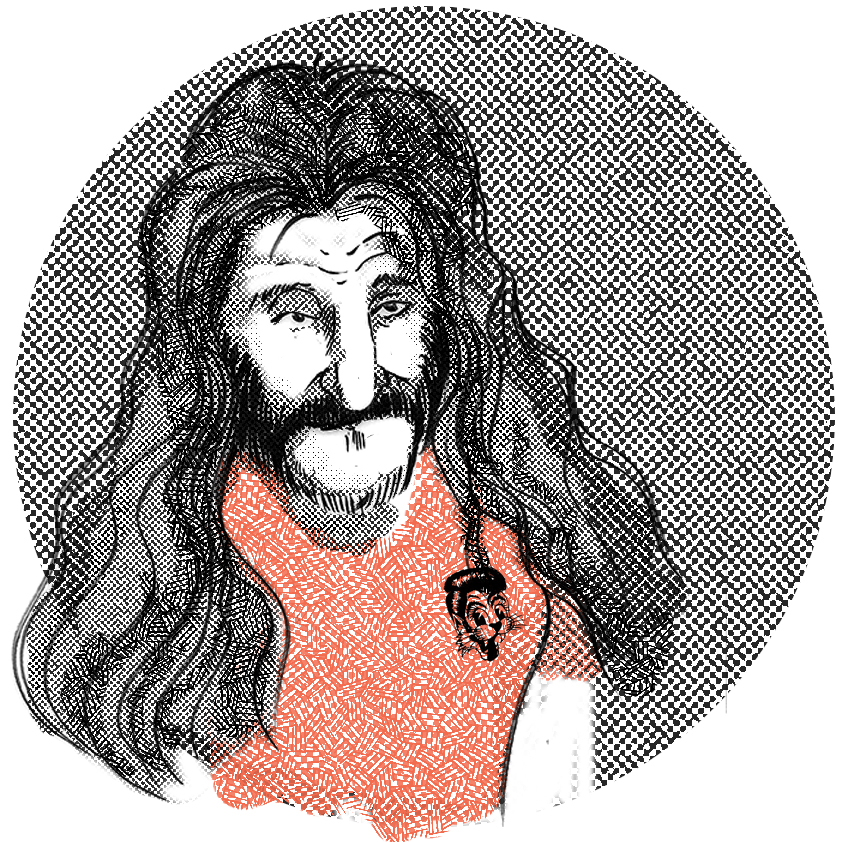
In 1981, I was a student attending a small but respected* art school in Philadelphia. To help pay my tuition, I worked three evenings a week at my cousin’s health food restaurant. Each Wednesday, Thursday and Friday, I would sneak out of class a bit early and rush to the restaurant to get there in time to begin my 4:00 shift.
One afternoon, a tall, lanky guy with a thick beard and very long hair came in for an early dinner. Seeing a guy of this description was not unusual. The clientele of a health food restaurant — one with an exclusively vegetarian menu — was chock full of characters who looked like this guy. I greeted him as he approached the service counter and allowed him time to peruse the evening’s dinner offerings on display in a hot table behind protective glass (It was cafeteria-style.) He smiled and gave the various entrees the ol’ “once-over.” I noticed his bright orange t-shirt was emblazoned with the logo of up-and-coming rockabilly band The Stray Cats. I pointed to the logo and said, “That’s a pretty cool shirt. Where would one get a shirt like that?”
He glanced down at his chest and smiled. “This?,” he replied, “I got this where I work.” His voice was deep and commanding and mellifluous. I was surprised for a moment.
“Where do you work?,” I pressed. And then I answered my own question. “What a second! I know that voice! You’re Pierre! Pierre Robert!”
His smile widened. “You know me?,” he shyly asked.
“I sure do! I listen to you nearly every night when I’m up doing homework.,” I proudly explained. At the time, Pierre was doing the dreaded 2 AM to 6 AM overnight shift and I often found myself awake at ungodly hours drawing or painting some sort of class project that was due the following day. Pierre’s mix of rock and roll and homey commentary kept me awake and aware and able to finish my school assignments. Pierre was flattered that he was recognized. Genuinely flattered. He ordered something for dinner and, after I fixed him a heathy platter, he found a quiet corner of the small dining area to enjoy his meal. Pierre came in often and we always had a nice conversation and then I always allowed him go off and eat in peace.
In the summer of 1982, WMMR — the radio station where Pierre worked — was sponsoring an exclusive premiere of the teen comedy Fast Times at Ridgmont High. At any given time, a random caller would be selected to receive two passes to the film as well as a paperback copy of the book on which the film was based. In the middle of the night, I paused my work and called Pierre on the station’s request number. He answered the phone. “Hey, Pierre,” I began, “I sure would like to see Fast Times.” He chuckled and said he’d happily add my name to the “Winners List.” He told me I could pick up the tickets the next day.
Around the time I met Pierre, I also met the future Mrs. Pincus. After a whirlwind nine months of dating, I asked Mrs. P to marry me. I felt our friendship was at a level where I could invite Pierre to our up-coming engagement party. He graciously accepted. It was amusing to see Pierre nursing a Coca-Cola at a picnic table in my future in-law’s backyard while he carried on a conversation with my family and friends.
Over the years, I saw less and less of Pierre. I finished art school. I left my cousin’s restaurant and found employment elsewhere. And I even switched my radio listening loyalties to a station that would eventually employ my son. I would run into Pierre here and there, as he grew to be a beloved and accessible celebrity in the Philadelphia area. Each time our paths would cross I would do my best to refresh his memory as to how exactly we knew each other. He’d try to fill in the blanks and I was never convinced that he fully placed me correctly in his past. But, Pierre was friendly and everyone was Pierre’s friend. He greeted everyone with a smile and a comforting arm around your shoulder and his signature salutation of “Greetings, citizen!”
This past July, Mrs. P and I ventured out to see Rod Stewart on his final tour of large-scale arenas. At the show’s conclusion, I spotted Pierre among the crowd of folks making their way up the aisle. I waved and squeezed myself between the exiting concert-goers to say a quick “hello.”
“Hey Pierre!,” I announced.
“Greetings, citizen!,” he replied.
As I got closer to him, I explained who I was and how we knew each other. He sort of followed my explanation. He called me by my cousin’s name and I corrected him. His eyes darted around as he gathered bits of internally-stored information about events that transpired between us over 40 years prior. He got some details wrong, but I think it finally hit him as to who he was talking to. He gave me a warm handshake and a friendly pat on the shoulder. He waved to Mrs. Pincus and then disappeared into the crowd.
Pierre died on Thursday, October 30, 2025. He had just turned 70.
My art school has closed.
My cousin’s restaurant has closed.
And Pierre — a voice on Philadelphia radio for 44 years — has been silenced.
Rest in peace, citizen, from that guy behind the counter… from the restaurant… you remember.
* I like to tell myself this.
Comments
inktober52: vacant
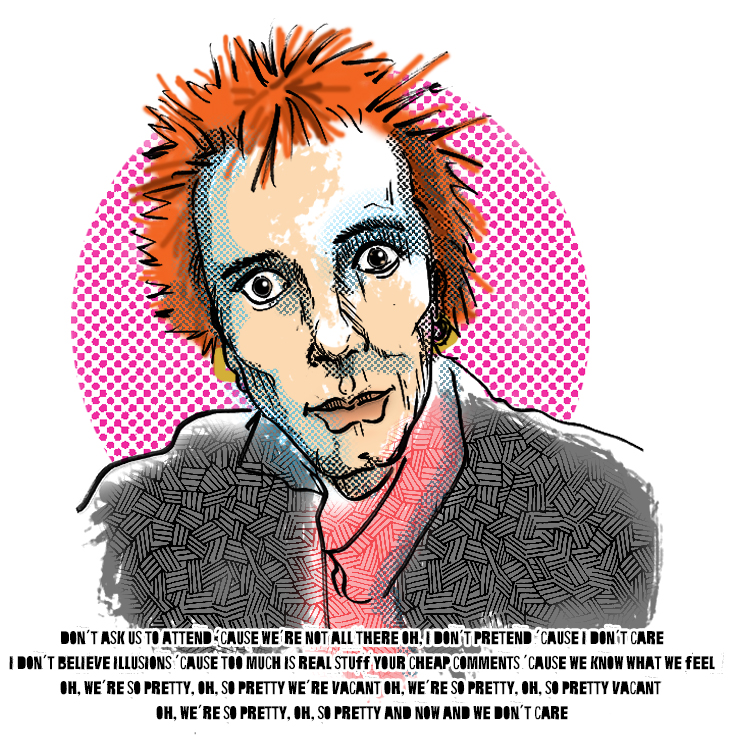
In a 2007 interview, 51-year old John Lydon — former punk rock poster boy Johnny Rotten — said this about second wave punk band Green Day:
“I think Green Day fucking stink. I think they’re the biggest load of fake nonsense I have ever seen. This lot really irk me. They’re everything that’s wrong.”
John Lydon, trying to stay relevant in a music world that has moved on from his snot-nosed antics.
Comments
DCS: june lockhart
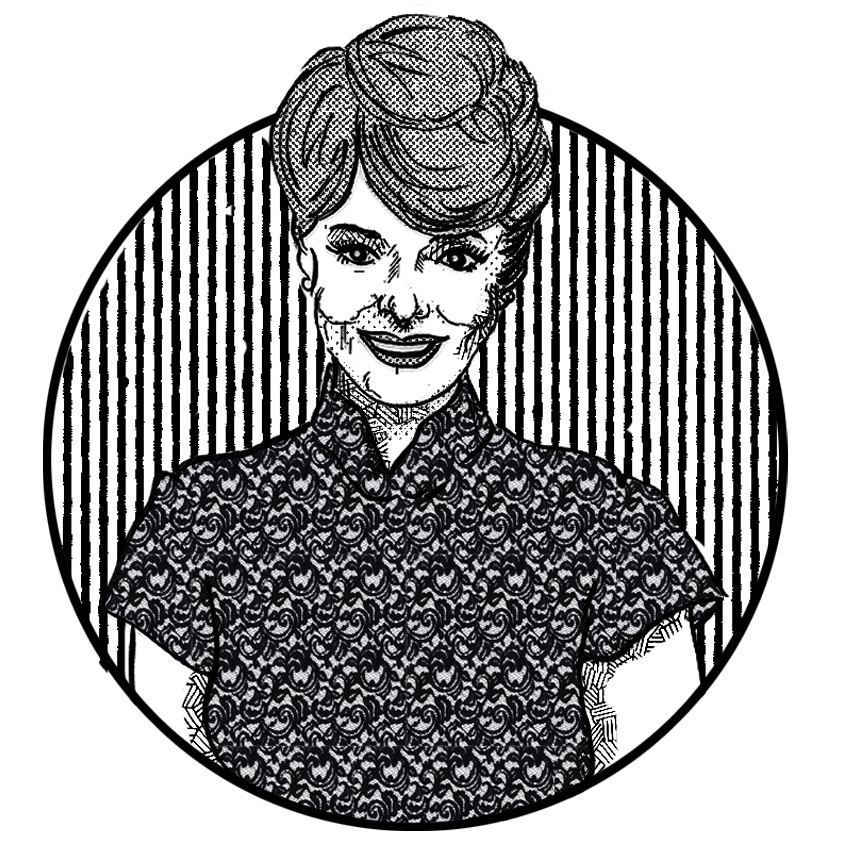
June Lockhart passed away on October 23, 2025 at the age of 100. 100 — boy! what a run!
June was most identified as the all-American wholesome model Mom, playing the definitive role in — not one but two — popular TV series, Lassie and Lost in Space. Well, I never watched Lassie and I’ve seen only a handful of episodes of Lost in Space. I remember June Lockhart from several other of her 179 screen credits over a career that spanned an impressive and productive nine decades.
I have always loved Charles Dickens’ holiday novella A Christmas Carol. I loved to check the sole copy out of the library at my elementary school and read and re-read about the transformation of miserly Ebenezer Scrooge into a benevolent and humbled servant of the winter holiday season. As a fan of horror movies, I loved the juxtaposition of a ghost story for Christmas, years before Tim Burton claimed the idea for himself. I watched (and enjoyed) every single incarnation and reimagination of the classic tale. From the creepy 1935 version starring Seymour Hicks to the musical interpretation of Scrooge starring Albert Finney to Mr. Magoo’s animated antics, the first animated special produced for television to the more recent productions with George C. Scott and the Disney CGI take with Jim Carrey. My favorite, however, is the 1938 version featuring Reginald Owen in the main role. Countering Mr. Owen’s “Scrooge,” is formidable character actor Gene Lockhart as the beleaguered but jovial clerk “Bob Cratchit.” Gene’s real-life wife, actress Katherine Lockhart portrays “Mrs. Cratchit” and their 13-year old daughter June, making her uncredited screen debut, plays “Belinda Cratchit,” sister of the perennial optimist “Tiny Tim.” Up until June’s death, she and actor Terry Kilburn (whom played “Tiny Tim”) were to only cast members still alive from the 1938 production.
Despite its sappy sentiment, I have always been a fan of the TV series Family Affair. Gruff Brian Keith played gruff “Uncle Bill Davis” to his brother’s orphaned children. At first reluctant to care for the kids, he grew to love them, as they did him. They series presented gentle lessons in growing up alongside light comedy, mostly at the expenses of exasperated “Gentleman’s Gentleman” “Mr. Giles French,” memorably portrayed by the late Sebastian Cabot. June Lockhart popped up a Season 3 episode of Family Affair as a substitute teacher that young Jody Davis becomes infatuated with. In class, Jody can’t concentrate, as he stares dreamily at June Lockhart as “Miss Evans.” In an effort to get to the bottom of thing, Uncle Bill invites the substitute to dinner at his sprawling New York apartment, and for a post-meal discussion. When she arrives, older sister Cissy nearly shits herself when she gets an eyeful of June Lockhart. It seems June is the spitting images of Jody’s late mother and Jody is getting “motherly vibes” from his sub, even though he was very young at the time of his mother’s death (off-screen death, of course). With the conflict solved, everyone smiles, Jody thanks Uncle Bill, hugs June Lockhart, and she is never seen in Family Affair land again.
When I used to collect autographed photos and frequently attended collector shows top expand my collection, I was told an interesting story about June Lockhart by one of her Lost in Space co-stars. (I can’t remember if it was Marta Kristen of Mark Goddard, but it was one of them.) While inscribing a group shot of the cast of the 60s sci-fi adventure, either Marta or Mark told me that June Lockhart (at the time) was signing photos with her signature as well as that of Guy Williams, the ruggedly handsome actor who played her husband on the show and has passed away in 1989 at the age of 65. According to the story, June claimed that she was duly authorized by the family and estate of Guy Williams to sign photos with his name. I was warned to be extra wary of any Guy Williams autographed I may come across because it could be one from the forged pen of June Lockhart.
Here’s to you, Mrs. Robinson.
Comments
inktober 2025: week 6
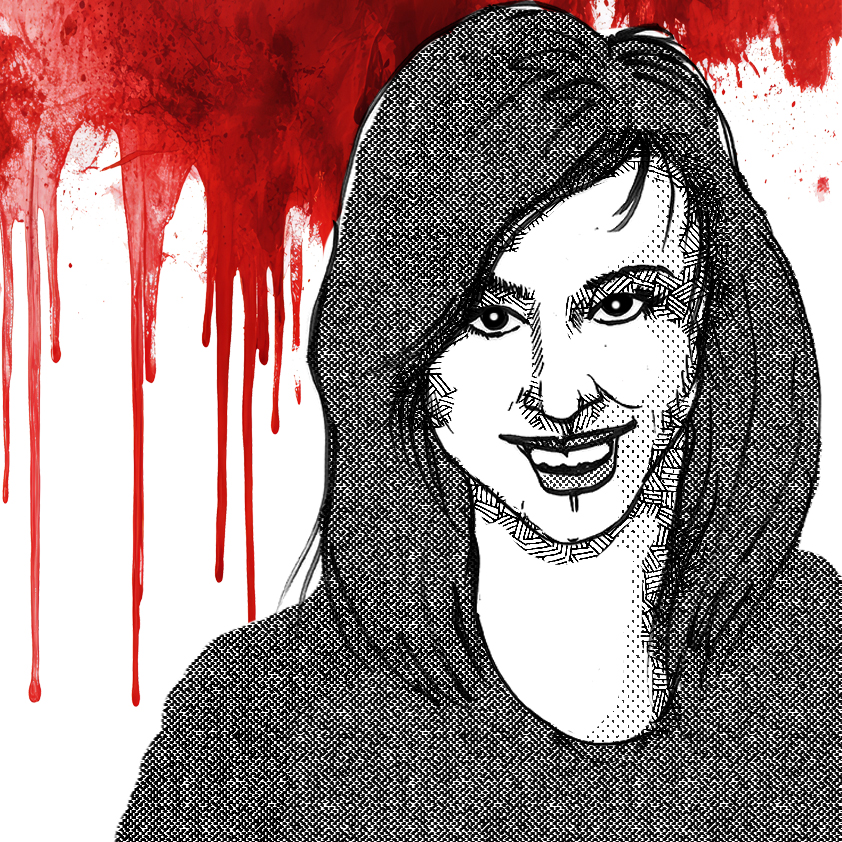
Inktober 2025 draws to a close with the final entry in my “Scream Queens” series — Danielle Harris.
I used to attend fan conventions on a regular basis back when I used to collect autographed photos. I no longer add to my collection, because — in my opinion — the shows and participating celebrities have priced themselves out of the bracket that I am willing to pay.
Many years ago, I went to the Monster Mania convention on the Friday night of its three-day weekend run. The hotel that was hosting the event was packed, with long lines of folks waiting for celebrity autographs snaking through hallways. I found my way to a narrow walkway that led to a large ballroom. A very long queue of costumed attendees lined one side of the hallway. I stopped a staff member and asked: “Is this the line to get into the room?” “No,” he answered, “This is the line for Danielle.” “Who?,” I replied.” He frowned and angrily repeated, “Danielle! DANIELLE! You know… Danielle Harris!” and he stomped off.
I didn’t know who “Danielle” was. I was there to see Louise Fletcher, the Academy Award-winning actress known for her chilling portrayal of “Nurse Ratched” in the 1975 film One Flew Over the Cuckoo’s Nest. I was able to by-pass the “Danielle” line and just stroll up to Miss Fletcher. I had a lovely conversation the the elegantly-reserved actress. I walked away from our interaction with a personalized photo (she wrote “Take your meds!” above her swirly signature) and it only cost me a very reasonable twenty bucks.
I caught a quick glimpse of “Danielle” as the top of her head bobbed above a throng of fans who obviously knew more about her than I did. When I got home I “Googled” her. Evidently, Danielle Harris is a pretty big deal in the current crop of horror films. She appeared in four entries in the Halloween series, several of the Hatchet franchise films and a bunch of stand-alone films of the spooky variety… none of which I have seen.
This brings us to the end of Inktober 2025. Thanks for playing. Happy Hallowe’en.
Comments
inktober 2025: week 5
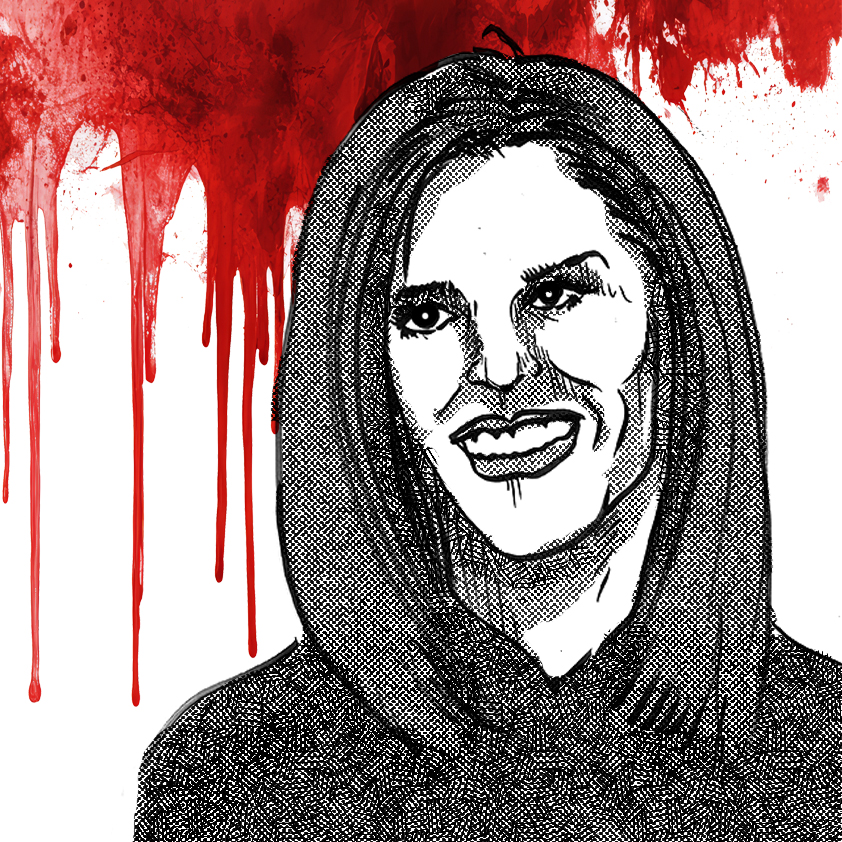
Starting her stage career as a ballet dancer, Neve Campbell danced in productions of The Nutcracker and Sleeping Beauty in her native Canada. She did some modeling and appeared in a 1991 commercial for Coca Cola.
In 1994, Neve was cast as orphan “Julia Salinger”” in the teen drama Party of Five. The show, and especially her work, was praised by critics and the media. In 1996, she made her first “horror”-leaning film, The Craft, which was a surprise success. Impressed by her role in The Craft, director Wes Craven asked her to audition for a role in his new project Scream, a sort-of self-aware spoof of slasher films. Neve embodied the role of “Sydney Prescott” and she was thrust into the “scream queen” spotlight. She took roles in other films and other genres, including voice-over work, but returned to several sequels in the Scream canon.
Comments
inktober52: firefly
Comments
DCS: ace frehley
I was a KISS fan for a few months when I was in 10th grade. I was one of the first people to wear a KISS t-shirt in my high-school. It was a big plastic-like iron-on decal of KISS’s debut album cover that I selected from a wall of designs on display at a local record store. A month or so later, my interest in all things KISS disappeared and I became a fan of… some other band.
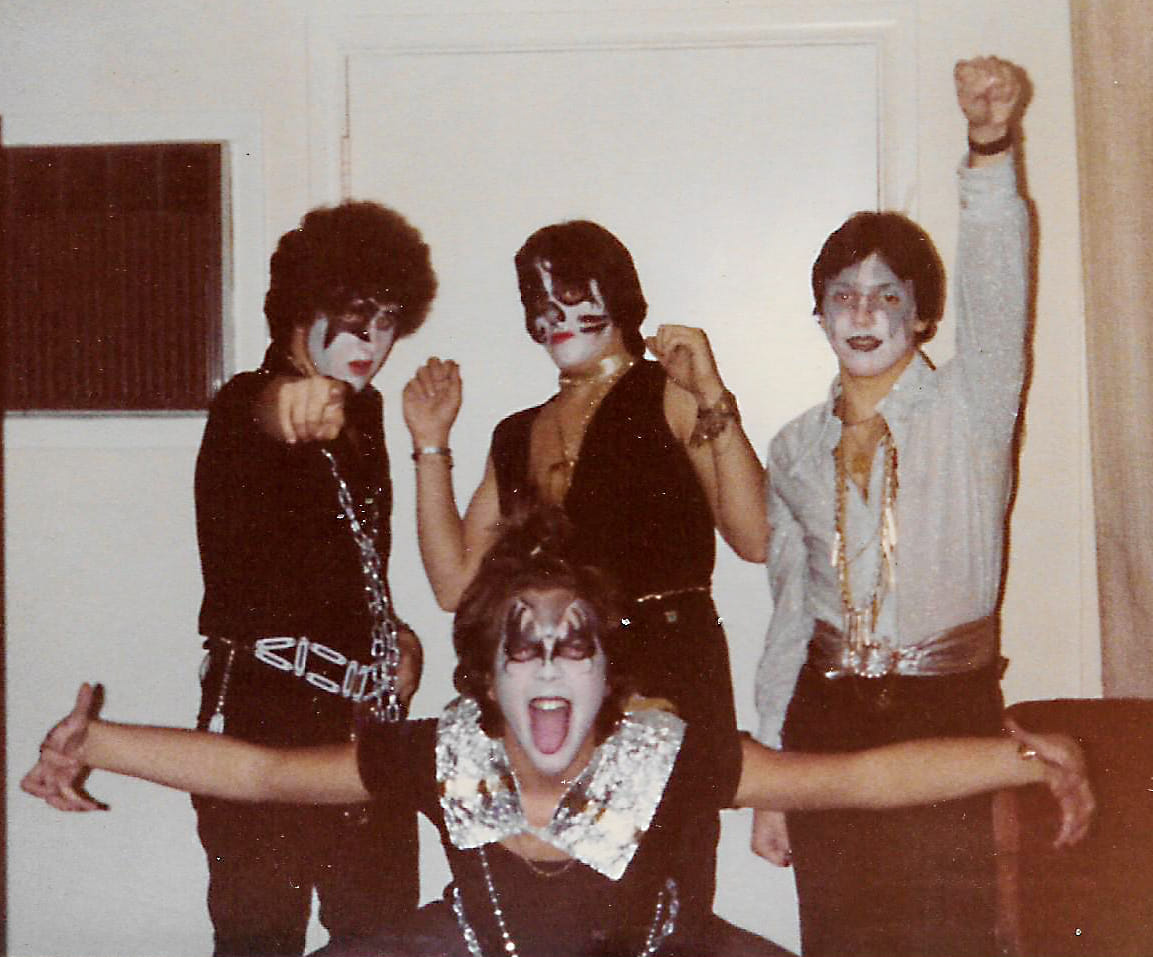 In my junior year, in a final hurrah, three of my friends and I attended a Halloween party in full, homemade KISS regalia, complete with dead-on make-up expertly applied by my artistic mother. Our costumes were really an inside joke, as none of us were KISS fans.
Many, many years later, I was intrigued when I discovered that my wife’s soft-spoken aunt — a teaching assistant at an elementary school — was a closeted KISS fanatic. I was floored when she revealed that she paid an unheard of twelve hundred bucks for a backstage, pre-show intimate encounter with KISS at a local stop on their then-current concert tour. (That story is related HERE.) I certainly didn’t begrudge her for what she chose to spend her money on. What confounded me was her interest in KISS in the first place. Some quick calculations brought me to the conclusion that she was not the right age to have been a KISS fan in their initial wave of fame, let alone in any subsequent resurgence in popularity. The appeal didn’t make sense… to me, anyway.
A couple of years ago, my wife — the illustrious Mr. P — accompanied her Virginia-contingency of cousins to an outdoor show featuring 80s rockers Def Leppard and KISS. Mrs. P, an affirmed Dead Head, is the last person you’d expect to find at a KISS show. Her cousins were all set to leave after Def Leppard’s set, but Mrs. Pincus was adamant about staying. She stood firm, saying that she paid her twenty bucks and she was determined to see what this “KISS thing” was all about. She was not impressed, but she did like when they performed “Beth.”
My brother-in-law was briefly married to a woman who was considerably younger than he. She admitted to being a fan of the face-painted purveyors of pop-metal. My brother-in-law, just like my wife, is a long-time devoted follower of the Grateful Dead. But, as an obedient husband, he agreed (albeit reluctantly) to attend a KISS concert at a casino showroom in Atlantic City. I saw them a few weeks later and asked, “How was the show?” My sister-in-law gushed and she began to tell me all about the experience. I stopped her and said, “No. Not you.,” then I pointed to my brother-in-law. “You.,” I said, “I want to know how you liked the concert.” He shrugged, “I don’t know. I left before it began and spent the time in the casino until it was over.”
KISS founding guitarist Ace Frehley passed away this week at the age of 74, after some health issues related to a fall he’d taken in his home recording studio. I really don’t have any KISS stories…. just some funny anecdotes. If you think about it, KISS, as a band, had become just a bunch of funny anecdotes.