

DCS: mădălina manole

Heavily influenced by her parents’ love of traditional Romanian folk music, teenage Mădălina Manole began taking guitar lessons and joined a local youth choir. After college, Mădălina worked as an air traffic controller while performing at festivals in her free time. She met and married fellow singer Şerban Georgescu, who took an interest in furthering his wife’s career. Through connections with Romanian radio, Mădălina got airplay with a song composed by her husband that became very popular. She signed a recording contract and a favorable article in Billboard magazine boosted her popularity. She played hundreds of shows in her native Romania, including a bill with Los del Rio, the band famous for the international dance hit “Macarena.”
On July 14, 2010 — her 43rd birthday — Mădălina took her own life by drinking a half-liter of carbofuran, a highly toxic pesticide.
Comments
inktober52: villain

Comments
DCS: june wilkinson

June Wilkinson was a born performer. She danced on stage at twelve and, at 15, became the youngest topless dancer at London’s venerable Windmill Theater. While on a promotional tour of the United States, the young star-to-be caught the eye of publisher Hugh Hefner. He immediately arranged for a photoshoot for the 18-year old and June made her first of seven Playboy pictorials in 1958. Hef christened her “The Bosom” and exaggerated June’s already impressive measurements in promotional material as “45-22-35.” (June later admitted that the actual figures weren’t that far off.)
In 1960, June was cast in the low-budget voodoo adventure Macumba Love. She followed up with roles in the stage productions of Norman, Is That You?, The Marriage-Go-Round and Come Blow Your Horn. Director John Cassavetes cast her in a small role in the 1962 biopic Too Late Blues with Bobby Darin.
Although she made her final appearance in Playboy in 1962, June’s photos appeared in men’s magazines, newspapers and advertisements for over twenty years, making her one of the most photographed women of the era.
In 1972, June met NFL quarterback Dan Pastoirini and the two were married the following year. They had a daughter before divorcing in 1982. June never remarried. In 1997, at the age of 57, June posed nude for Playboy one final time for a special “Then and Now” feature.
After many years out of the spotlight, June passed away in July 2015 at the age of 85.
Comments
inktober52: gator

Comments
DCS: john scott harrison
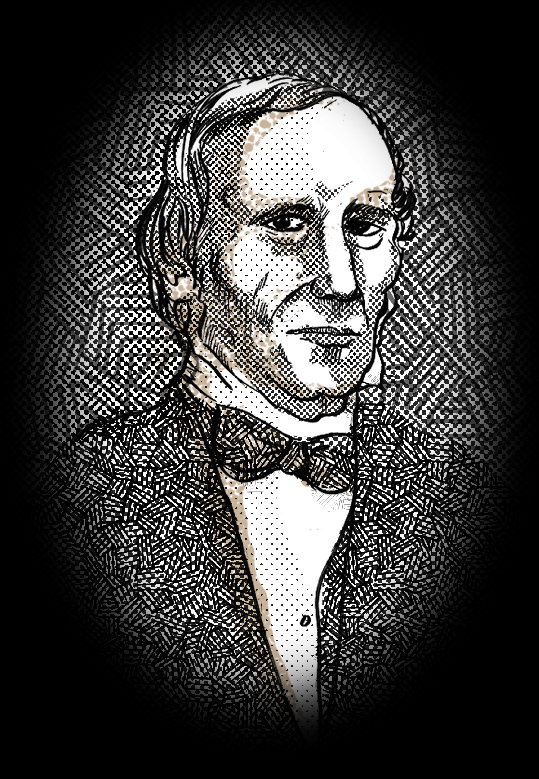
John Scott Harrison was one of ten children born to Indiana Territory Governor (and future United States President) William Henry Harrison. John was elected to and served in the U.S. House of Representatives from 1852 to 1857. After he was defeated for a third term, he retired to his farm in Ohio. John and his second wife Elizabeth, were the parents of ten children, including future United States President Benjamin Harrison. (John had three children with his first wife Lucretia.) John Scott Harrison is the only person to have been both a father and son of a U.S. President.
John Scott Harrison died in 1878 at the age of 73. He was buried in a family plot in North Bend, Ohio – from where his body was stolen. Grave robbing was a common practice at the time, as fresh corpses were purchased by medical schools from shady characters with no questioned asked. On the day of John Scott Harrison’s funeral, it was discovered that the body of Augustus Devlin, who was interred in an adjacent grave, was stolen. The next day, John’s son Benjamin and a colleague went — with search warrants — to Ohio Medical College in hopes of finding Devlin’s body. Their investigation brought them to a delivery chute where they discovered the naked body of John Scott Harrison hanging from a rope. Devlin’s body was later discovered preserved in a vat of brine at the University of Michigan’s medical college. The Harrison family brought charges against the Ohio Medical College. This eventually contributed to the passage of the Ohio Anatomy Law of 1881, a landmark statute, whereby medical schools were provided with unclaimed bodies in a more regulated and documented fashion, discouraging grave robbers.
Comments
inktober52: sagittarius

Comments
DCS: the kessler sisters

Alice and Ellen Kessler were born performers. The pretty twin blonds joined the Leipzig Opera Company in their native Germany as children. Later, they were featured performers at famed Le Lido on the Champs-Élysées in Paris. There, met even met Elvis Presley while he was on leave from the US Army.
Alice and Ellen went on to represent West Germany in the 1959 Eurovision Song Contest. They moved to Italy in the 1960s and were regular performers on Italian television. They posed for the Italian version of Playboy, in what became the fastest selling issue of the European magazine. They eventually made their way to America, where their popularity blossomed on variety shows like The Ed Sullivan Show, The Red Skelton Show and The Danny Kaye Show. The sisters appeared as dancers in the 1962 film Sodom and Gomorrah and found themselves on the cover of Life magazine the same year. They moved back to Germany and continued performing for adoring crowds.
The Kessler sisters experienced declining health in their later years. Ellen suffered a stroke in October 2025. They made it very clear that they did not wish to be dependent on nursing care, and wanted to die together. They agreed upon and arranged for an assisted suicide. Alice and Ellen Kessler were born on August 20, 1936. They died on November 17, 2025.
Together.
Comments
inktober52: goose

Abe Saperstein, the founder of the world famous barnstorming basketball team The Harlem Globetrotters, discovered one of his biggest stars in a very unlikely place — a baseball field.
Goose Tatum was playing for Birmingham Black Barons, a professional baseball team in the Negro League. Saperstein thought the athletic fielder’s 6-foot-plus frame and 6-foot-plus arm span would translate perfectly on the basketball court. Goose was signed to a contact with the Globetrotters and spent the next eleven years as the original “Clown Prince of Basketball.”
Goose loved to make people laugh and a lot of the “shtick” he invented still shows up during Harlem Globetrotters’ exhibitions today. Goose is also credited with inventing and perfecting the hook shot, still used in professional basketball. At the top of his game, in 1955, Goose was making a reported $55,000 per year — an unheard-of salary at the time.
His fame went to his head, however, and Saperstein released Goose from his contract for missing too many games and violation of team rules. Unfettered, Goose, along with Globetrotters’ teammate Marques Haynes formed a rival basketball club called The Harlem Magicians. Saperstein eventually sued Goose for trademark violation, a case that was settled out of court.
Goose fell into a state of depression after the 1966 death of his son in a car accident. He began drinking heavily and his health began to decline. He passed away in January 1967 at the age of 45.
Comments
DCS: angela aames

Angela Aames had a handful of roles in both B pictures and Hollywood blockbusters. Relegated to roles reserved for dimwitted buxom bombshells, Angela made her big screen debut in Harry Hurwitz’s Fairy Tales, an adult take on familiar bedtime stories, as “Little Bo Peep.” She also appeared in Scarface, Bachelor Party, All The Marbles and several mindless sex romps that tried to capitalize on the success of Animal House. The most notorious of these was H.O.T.S., a favorite of Cinemax which eventually gained a loyal cult following. Angela was also cast in episodes of Cheers, Mork & Mindy, The Love Boat and Night Court.
In 1988, Angela was found dead in a friend’s San Fernando Valley home. The cause of death was determined to have been a deterioration of the heart muscle, brought on by an undetected virus. She was 32 years old.