
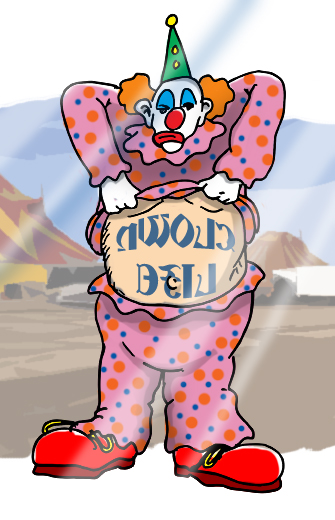
After taking a long hard look at himself in the mirror, Stanley reconsidered some of the choices he made in life.
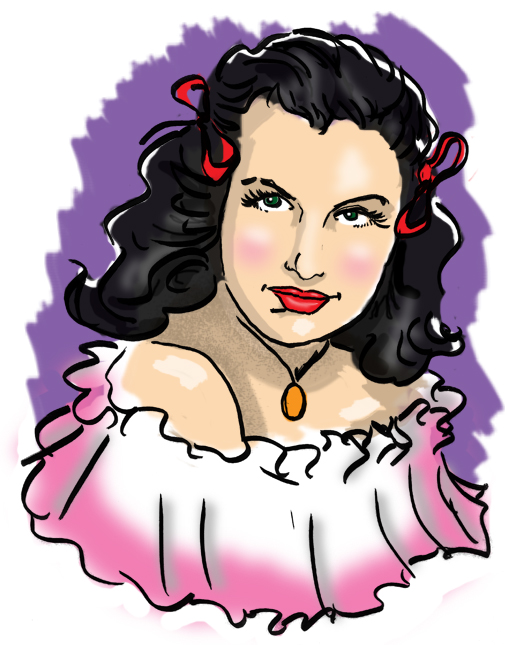
A 1940 newspaper article called Sheila Ryan “an actress whose alluring curves alone might have disqualified them from screen careers not so long ago.” The petite, dark-haired beauty made 60 films during her thirty-year career.
She innocently auditioned for a small role in a locally-produced show for LA station KCBS. She got the role immediately. Sheila went on to roles in several Laurel and Hardy comedies, as well as parts in a few Charlie Chan and Michael Shayne mysteries. But, eventually, she only appeared in bit parts in Western B-movies, alongside Roy Rogers and Gene Autry. She was briefly married to Western actor Allan “Rocky” Lane, the future voice of TV talking horse Mr. Ed.
While working with Autry, she met actor Pat Buttram and married him in 1952. She retired from show business in 1968, three years into Buttram’s stint as the shifty “Mr. Haney” on the TV sitcom Green Acres.
Sheila entered the Motion Picture Hospital in 1975 suffering from chronic lung disease. She passed away in 1975 at the age of 54.
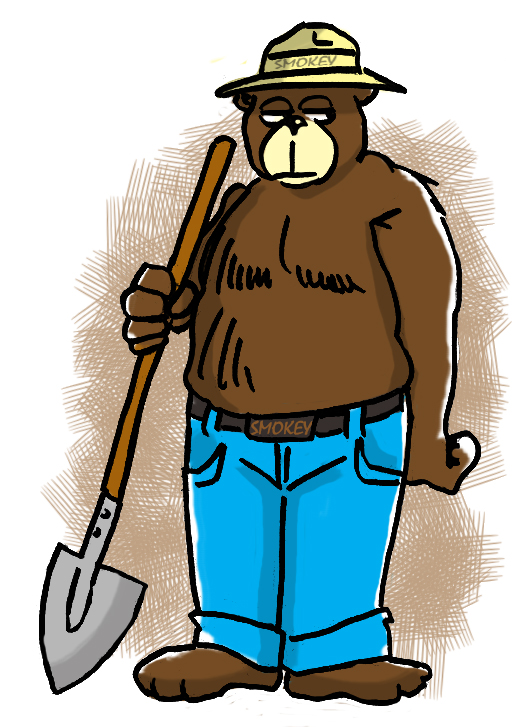
Ugh! Campers!

Debbie Stone’s celebrity status is of an unfortunate nature. The 18 year-old Santa Ana High School graduate holds the distinction of being the first Disneyland cast member killed while working in the theme park.
At the end of the summer of 1973, The Carousel of Progress, Disney’s innovative and entertaining chronology of technological advancement was packed up and shipped to Walt Disney World in Florida. The huge circular building at the rear of Tomorrowland remained quiet for nine months, while, inside, Imagineers readied a new attraction to take the place of the departed show.
On June 29, 1974, the jovial America Sings welcomed its first guests. The new presentation, an upbeat showcase of the history of American music, utilized the same staging mechanics that made The Carousel of Progress so unique. America Sings, hosted by Eagle Sam and Ollie Owl, a pair of Audio-Animatronic birds, took guests on a musical journey in a series of scenes that began in the nineteenth century South, traveled through the Old West and the turn of the twentieth century, right up to the birth of rock and roll. The scenes were bookended by our hosts serenading the audience with “Yankee Doodle.” The show — “performed” by a large cast of Audio-Animatronic animals — sat in the center of the building, with the individual stages assembled as wedges of a pie. While the stages remained stationary, the seating area would rotate — with audience members seated — until it lined up with the next appropriate scene. At the conclusion of each “act” (which were all the same duration), the theaters would once again rotate, bringing a roomful of guests to the next segment of their particular show. Essentially, six shows ran simultaneously. It was quite an undertaking, but totally “Disney” nonetheless.
Nine days after America Sings opened, newly-hired hostess Debbie Stone was assigned a shift at the attraction. Just before the excited teenager reported to her post, she phoned her parents to asked permission to get married. Debbie and her parents were exuberant. Debbie soon took her assigned place at America Sings.
At 10:30 pm, a guest in one of the theaters heard a hair-raising scream and saw what looked like a child between the walls that separated the theaters. It is unclear whether Debbie fell or stepped backwards or attempted to leap from one stage to another, but the result was she became caught — trapped — between the moving wall and the stationary wall and she was crushed to death.
America Sings closed for two days while workers installed safety lighting and breakaway walls. Debbie’s parents eventually brought a wrongful death lawsuit against Disney, which was settled within a few months of Debbie’s passing. Santa Ana High School placed a plaque at the school’s swimming pool in Debbie’s memory.
America Sings closed in 1988. The elaborate stage mechanisms were disassembled and removed. A number of its Audio-Animatronic cast were reassigned to Splash Mountain and Star Tours. The building was gutted and eventually housed the faux-futuristic Innoventions and, later, a Marvel character meet and greet. Today, it is the home of Star Wars Launch Bay, a preview center for Disneyland’s expansive Star Wars Land project.
First was Kevin, then came Lucy, third in line was me.
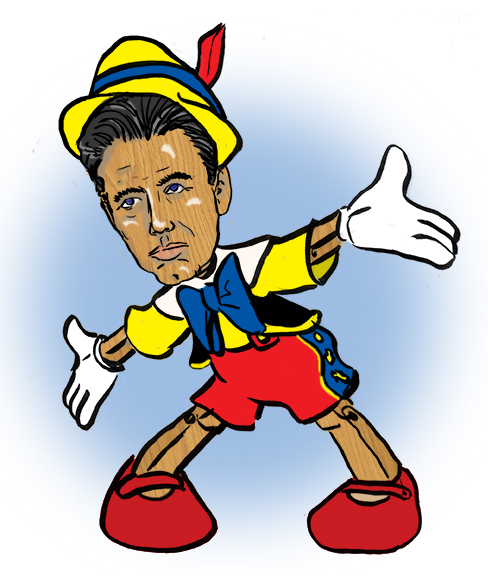
Once upon a time, a kindly old toymaker carved a little boy out of wood and named him Ben Affleck. Little Ben wished upon a star that one day he’d be a famous Hollywood actor. One night, a good fairy granted him that wish and he grew up to become a famous actor. However, he was never able to shake the fact that he was made of wood.
And his acting shows it.

Pete Duel landed a role in the touring company of the play Take Her, She’s Mine. Hoping to use the part as a springboard for film roles, Pete’s mother drove him across the country to Hollywood, sometimes sleeping in a tent along the way.
The good-looking 25 year-old found work in bit parts on episodic television in the middle 60s, including a few lines here and there in Gomer Pyle, USMC, Combat! and Mickey. Pete appeared in 22 episodes of the sitcom Gidget starring a young Sally Field. He played the title character’s (Field) brother-in-law, a psychology student. Gidget lasted one season, but Pete was soon cast in a starring role in his own sitcom, Love On a Rooftop, with Judy Carne as his wife. Despite good ratings, Love On a Rooftop was canceled after one season. Pete made more guest appearances in shows like Marcus Welby, MD and The F.B.I.
In 1970, Pete was cast in the light-hearted Western Alias Smith and Jones. He and co-star Ben Murphy played a pair of outlaws who signed a secret amnesty deal with a politically-shifty governor. The show was a hit, owing a portion of its popularity to the theatrical release Butch Cassidy and The Sundance Kid.
In December 1971, Pete and his girlfriend watched the evening’s episode of Alias Smith and Jones. After they went to bed, Pete awakened and told his girlfriend, “I’ll see you later” and he left their bedroom. Suddenly, she heard a gunshot and jumped from bed to discover Pete’s body. She later revealed that Pete had suffered from depression and had a drinking problem.
Although it has been debated, Pete’s death was ruled a suicide. He was 31.

Can’t do the work without the proper tool. Or cigar.
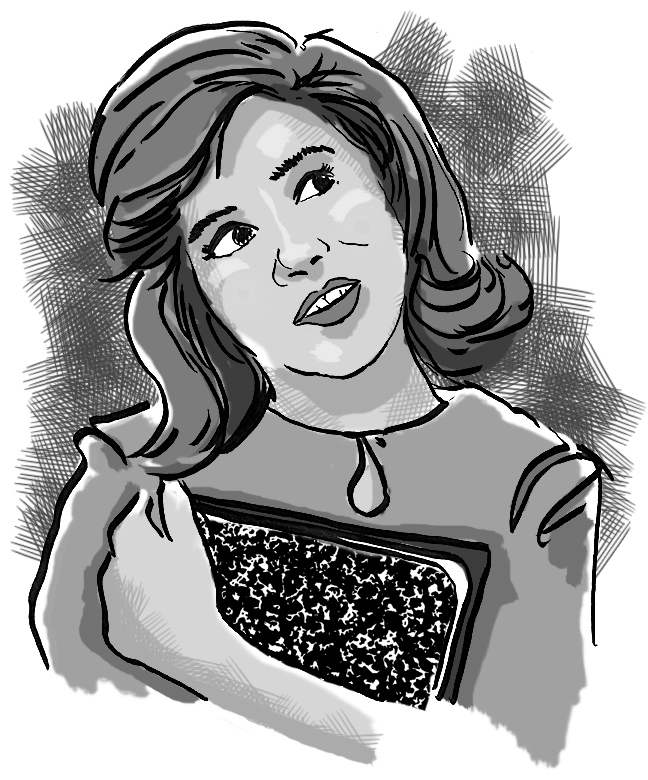
I met Patty Duke in 2011. I was at the Mid-Atlantic Nostalgia Convention in Cockeysville, Maryland, seventeen miles north of Baltimore. (That’s right… Cockeysville!) She was sitting behind a table filled with glossy black and white and color photographs that chronicled her long and illustrious career. I waited patiently as she engaged each and every autograph seeker in lively conversation. She was shorter and more frail than I expected, but she was animated and cheerful and friendlier than a lot of celebrities that I have met at similar shows. When it was my turn, I selected a group promotional shot from The Patty Duke Show. She smiled and inscribed it “Love to You, Patty Duke” in a swashy hand. I told her that I had met actor William Schallert, who played her father “Martin Lane” for three seasons on her self-titled sitcom. She beamed. Through a wide smile, Patty waxed lovingly about the esteemed veteran character actor, speaking as though reminiscing about her own father. She nearly welled up with tears.
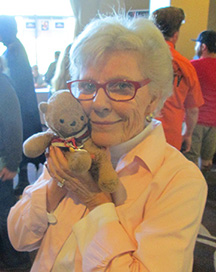 Two years later, Mrs. Pincus and I went to another memorabilia convention. This one was in northern New Jersey and, once again, we met Patty Duke. The line for Miss Duke snaked around the crowded convention floor. Patty was in front of her table this time, interacting with fans and looking like she was sincerely enjoying herself. We approached her at our turn and she greeted us warmly with that familiar grin stretched across her weathered face. We brought Pudge, our well-traveled, celebrity hob-nobbing plush bear, and Patty was smitten. She cuddled the bear to her cheek and she listened intently as Mrs. P explained the story of Pudge. We lauded Patty with praise for her acting and her wonderful, comfortable personality.
As a frequent attendee at conventions of this type, I have met many, many celebrities over the years. Some have been nice. Some have been jerks. Some have really been jerks. And then there are the ones who stand out and are remembered as personable, charming and genuine. Patty Duke was one of those.
She was a great talent and a sweet lady. She will be missed.
Click here to see the original color version of the above illustration.
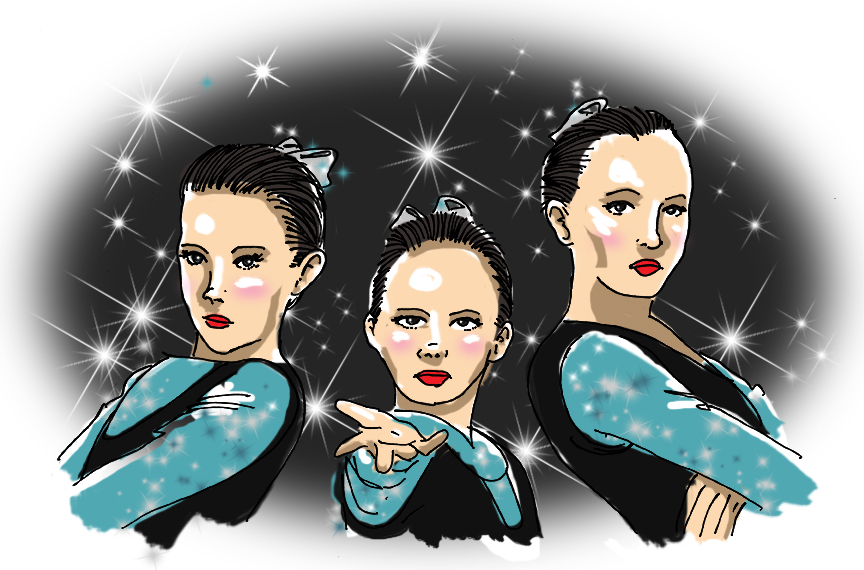
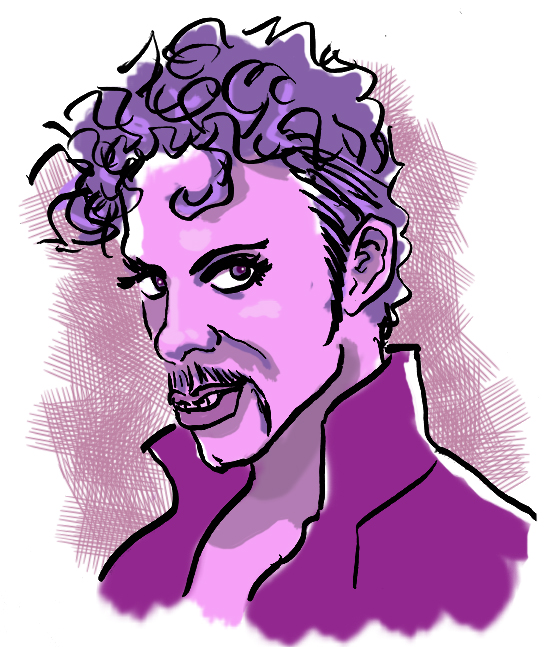
Sometimes I doubt your commitment to Sparkle Motion!