
DEEEEEEEEE-licious!

Joan Blondell placed fourth in the 1926 Miss America Pageant, but used the opportunity to get jobs as a model and eventually a Broadway actress. She caught the eye of Al Jolson, who cast her opposite James Cagney in the musical Penny Arcade. It was the first of several films in which Joan would appear with Cagney. She most famously starred as Cagney’s pal Matt’s (as played by Edward Woods) gilrfriend in 1931’s The Public Enemy. It was around this time that Joan cemented her standing as one of Hollywood’s “Blonde Bombshells.” She posed for a discreetly shot, though nude, publicity photo that was soon banned by the rules of the strict Hays Code that ruled Hollywood well in the 1950s.
Joan appeared in nearly 100 films in her career, garnering an Oscar nomination in 1951 for The Blue Veil. She returned to Broadway several times as well, appearing opposite Tallulah Bankhead in the play Crazy October and playing the nagging mother, Mae Peterson, in the national tour of Bye Bye Birdie. Joan took numerous roles on television, including guest appearances in Twilight Zone, Family Affair, The Real McCoys and Petticoat Junction. She was set to take the role of Lucy’s best friend on The Lucy Show, until she walked off the set after Lucille Ball humiliated her in front of a live audience. She received two consecutive Emmy nominations for her ongoing role as “Lottie Hatfield” on the series Here Come the Brides.
Joan continued to act into the 1970s, changing her persona from “sex symbol” to “brassy broad.” She had supporting roles in the big-screen musical Grease and the remake of The Champ, the latter being her final screen appearance. Joan died of leukemia on Christmas Day 1979. She was 73.
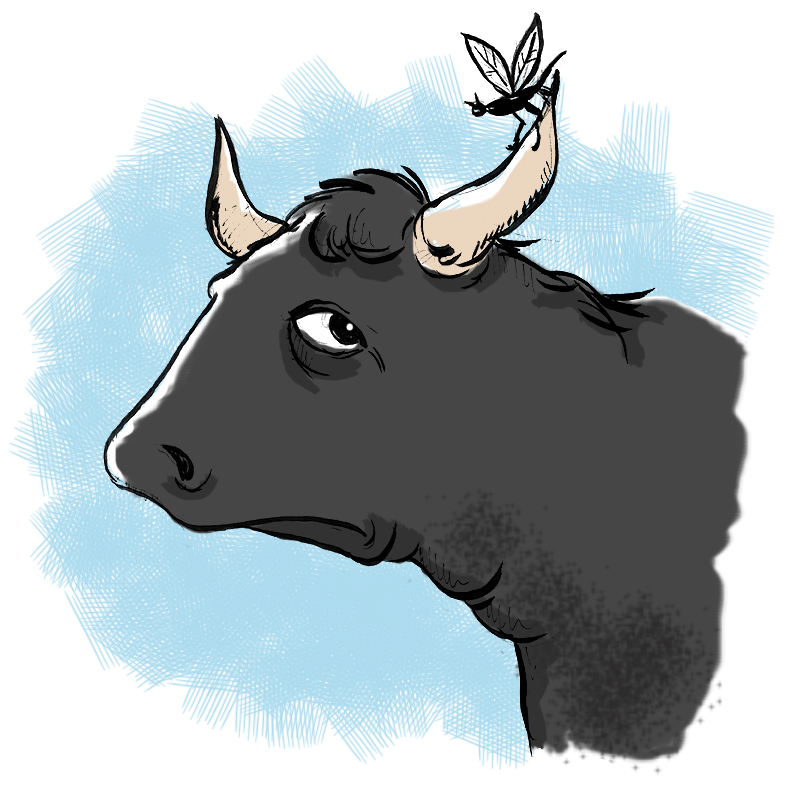
A gnat flew over the meadow with much buzzing for so small a creature and settled on the tip of one of the horns of a bull. After the gnat had rested for a short time, he got ready to fly away. But before he left, he begged the bull’s pardon for having used his horn for a resting place.
“You must be very glad to have me go now,” the gnat said.
“It’s all the same to me,” replied the bull. “I did not even know you were there.”
As the gnat flew away, the bull muttered under his breath, “Asshole.”
Moral: The smaller the mind the greater the conceit.
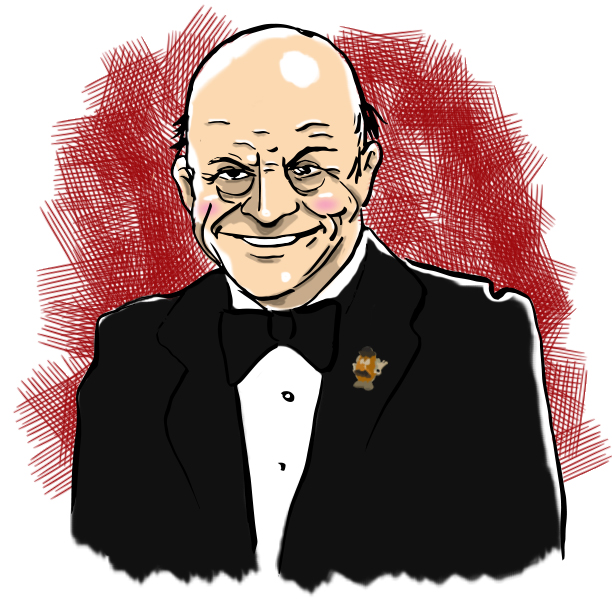
I remember watching Don Rickles on the Tonight Show with Johnny Carson in the 70s. He was funny. He was very funny and very unlike all of the other comedians of the time. While guys like Bob Hope told corny jokes and Milton Berle did goofy slapstick shtick, Rickles was visceral. He insulted people. All people. It didn’t matter if you were some guy in the audience, a stage hand or Frank Sinatra. Nobody was off-limits to Rickles’ insults. It was always a treat to see him on the Tonight Show, even though he did the exact same act every time he was on. My brother, also a fan, fantasized about attending a live performance by Don Rickles with the goal of heckling him. He reassessed his desire, figuring he’d be treading on thin ice.
When my son was in high school, he discovered an infomercial that was being shown regularly on television. It was a half-hour devoted to selling DVDs of the Dean Martin Celebrity Roasts, an NBC series that ran, in one form or another, for ten years. The format of the show was blatantly lifted from the renowned, yet private, Friars’ Club roasts, where celebrity members of the Friars’ Club gathered to amiably poke fun at a fellow member for one evening. With the noted singer serving as Master of Ceremonies, the likes of Jimmy Stewart, Orson Welles and Ronald Reagan were kidded and mocked by a dais of their contemporaries. And no roast would be complete without the “King of the Insults” — Don Rickles. My son watched this infomercial with riveted attention. It was his first exposure to the comedy of Don Rickles.
When my wife was enjoying a fleeting, yet lucrative relationship with the casinos in Atlantic City, she was offered tickets to see Don Rickles in the main showroom of the Tropicana. While she occupied herself with the slot machines, my son and I, along with my father-in-law, went to the show. We took our complimentary seats and excitedly waited for the faux-Frank Sinatra to finish up his short opening act. Soon Don Rickles took the stage. He was a little older and a little slower than the guy I remember from the Tonight Show, but it was Don Rickles just the same. He wasted no time spewing his insults at the front row, the orchestra, his wife, other comedians, previous audiences, politicians — everyone. And he was funny. He was doing the same act I saw him do a thousand times before on television, but, he was funny. Between our laughter, I leaned over and asked my son: ” Is he really that funny or is it funny because it’s Don Rickles right there on stage?” We couldn’t decide. Maybe it was a little of both.
I saw Don Rickles two years later, on New Years Eve, this time at Harrah’s in Atlantic City. Again, he did the exact same act, nearly word for word, insult for insult. But was he funny? You bet he was.
Don Rickles passed away on April 6 at the age of 90. He took his inimitable style of humor with him. There will never be another Don Rickles.
Welcome to the grand illusion. Well, maybe not that grand.
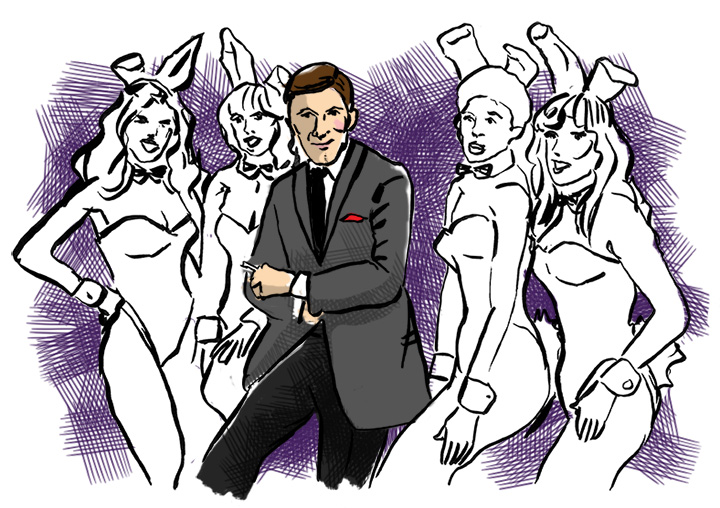
Victor Lownes passed away at the age of 88. He spent the last few years of his life in seclusion, rarely making any public appearances. It was a sad ending for such an extroverted and influential man. You’ve never heard of Victor Lownes? I’m not surprised.
At 18, Victor married Judith Downs. He had a managerial position at Yale Locks, a company that was owned, in part, by his maternal grandfather. Victor was successful, with a home, a loving wife and two children — but he experienced a premature mid-life crisis. He abandoned his family and moved to Chicago to look for something more fulfilling.
In 1954, he met Hugh Hefner at a party. The two men shared mutual interests — drinking, women, partying — and Hefner asked Victor if he would write a few articles for his proposed magazine. Victor obliged and Playboy was launched the next year. Victor accepted Hefner’s offer to join his company as Director of Promotions. His first order of business was to convince otherwise stuffy and conservative businesses to advertise in the fledgling publication. Victor was, again, successful. His success translated to greater success for Playboy Enterprises.
Victor and his boss/friend Hugh Hefner frequented many popular bars in Chicago. Out for drinks one evening, Victor suggested to Hefner that Playboy should open its own club. Hefner liked the idea a lot. When Victor suggested that the waitresses dress in costumes patterned after Playboy‘s “rabbit” mascot, Hefner balked. He had always envisioned the rabbit as a male figure. Victor showed Hefner a prototype of the costume and Hefner was one-hundred percent on-board. The first Playboy Club opened in February 1960 and more soon followed.
In 1966, Victor opened a Playboy Club in London to instant success. The club, known as “The Hutch on the Park,” regularly hosted A-list celebrities like The Beatles, Warren Beatty, Michael Caine, Judy Garland, Sean Connery and Roman Polanski. This club featured casino gambling, which Victor speculated would rival the profits of Playboy magazine. He was right and soon the casino venture was generating more income than the company’s publishing interests. By 1981, Playboy Enterprises became the most successful casino operators in the United Kingdom.
Ensconced in the celebrity lifestyle, Victor was the executive producer of the Monty Python film, And Now For Something Completely Different. he insisted to animator Terry Gilliam that his credit be in a font larger than all the others. Gilliam refused, so Victor hired an outside animator to complete the credit, giving it to Gilliam to insert into the film. In the meantime, Gilliam changed the style for the credits, making Victor’s name look awkward and out of place.
Victor was persuaded by his pal, director Roman Polanski, to finance his production of Macbeth in 1971. Victor gave Polanski $1.5 million. The production went $600, 000 over budget and was an eventual flop. Then, Polanski publicly mocked Playboy’s, specifically Victor’s, generosity — leading to the end of the friendship.
Victor was brought back to the United States to head up Playboy’s domestic casino endeavor. However, British gaming authorities were investigating Victor’s business “irregularities,” prompting Hefner to unceremoniously sever all ties with his one-time “golden boy.” It was too late, though. Playboy’s British gaming licenses were revoked and their US permits were not renewed. Playboy’s once-thriving casinos had lost more that $51 million by June 1982.
Victor, on the other hand, came out smelling like a rose. He had amassed a fortune as Britain’s top paid company executive. He owned a large mansion and married “Playmate” Marilyn Cole, over whom he and Hef actively competed. He even reconciled with Roman Polanski, but remained estranged from Hefner.
Who’s that yonder laughing at me
Up jumped the Devil 1, 2, 3
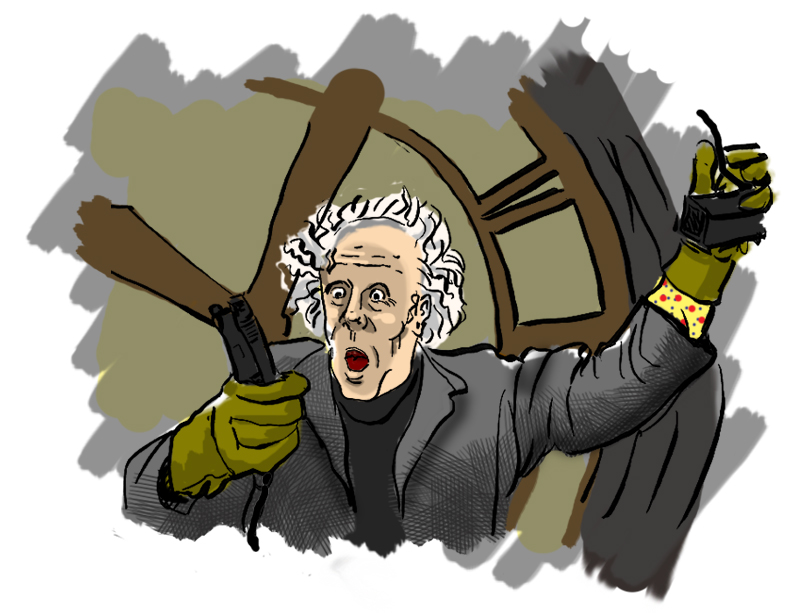
When the extension cable disconnected from the lightning rod at the top of the clock tower, Doc Brown could only exclaim, “Great Scott!”
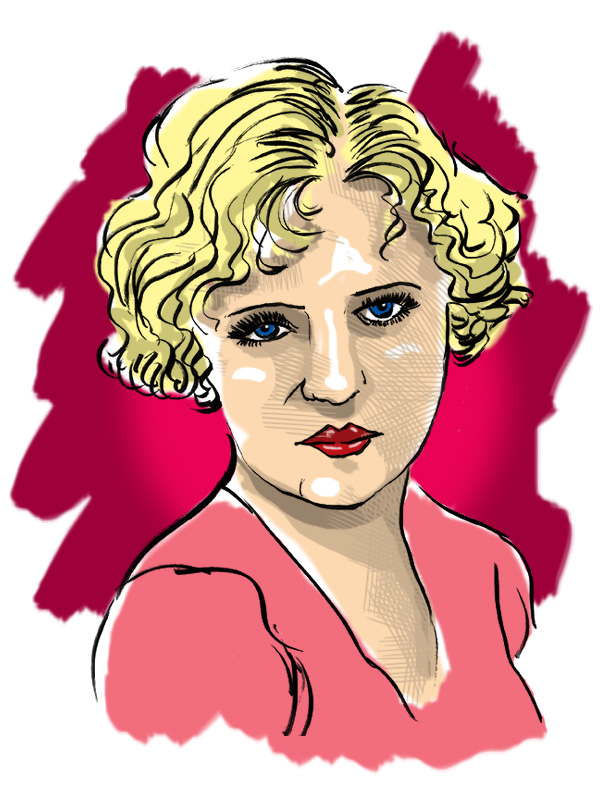
Phyllis Haver, a small-town Kansas girl, moved to Los Angeles at a young age. Upon her graduation from high school, she played piano to accompany silent films in local theaters. She was bitten by the show business bug.
She got an audition with producer Mack Sennett. Taken by her charm and beauty, Sennett hired her as one of his original “Sennett Bathing Beauties,” an assembly of young ladies featured in comedy shorts and promotional appearances. The “Sennett Bathing Beauties” also included Gloria Swanson and Mabel Normand. Soon, Phyllis was a leading lady at Sennett Studios. After signing a contract with rival DeMille-Pathé Studios, Phyllis was cast as “Roxie Hart” in the first film adaptation of the play Chicago. She received rave reviews, with critics calling her performance “astounding,” and “a most entertaining piece of work.” Later she worked with legendary director D.W. Griffith and famed silent film actor Lon Chaney.
In 1929, Phyllis married millionaire William Seeman in the home of popular cartoonist Rube Goldberg. The couple were married by then-New York City Mayor James Walker. Phyllis retired from acting soon after, but the marriage ended in divorce after 16 years. Phyllis wanted a quiet life and she felt Seeman’s lifestyle was too erratic.
Years later, Phyllis moved to secluded Sharon, Connecticut. In 1960, at the age of 61, Phyllis took her own life with a lethal dose of barbiturates.
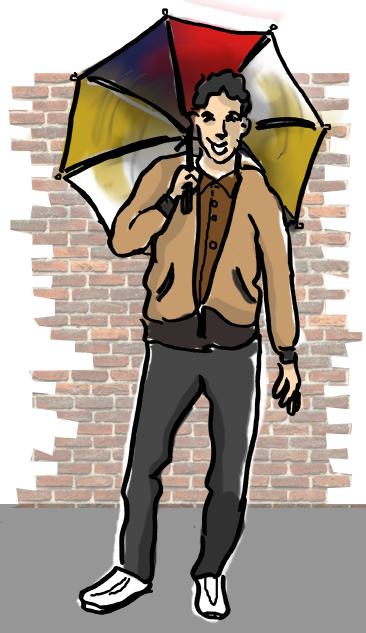
“Hey. Nice twirl you got there. You know who invented that, don’t you?”