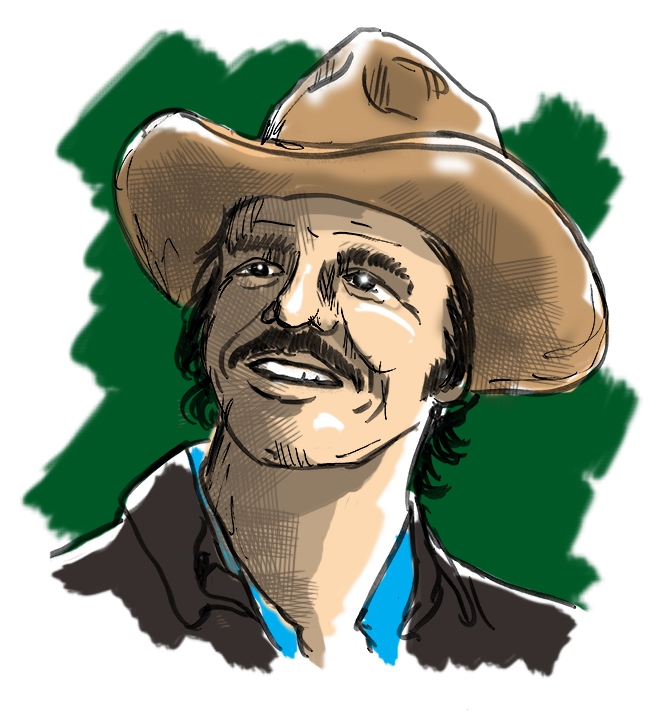
DCS: francis hopkinson

you're a grand old flag

Please open your American History books and turn to the chapter about Francis Hopkinson. What? You can’t find that chapter? You can’t even find a mention of his name? Disgraceful. Francis Hopkinson’s contributions to the fledgling United States were as important and as symbolic as the Liberty Bell or the bald eagle. Oh…. wait a second…. you probably know that made-up story about Betsy Ross, don’t you? Well, let me set you straight…

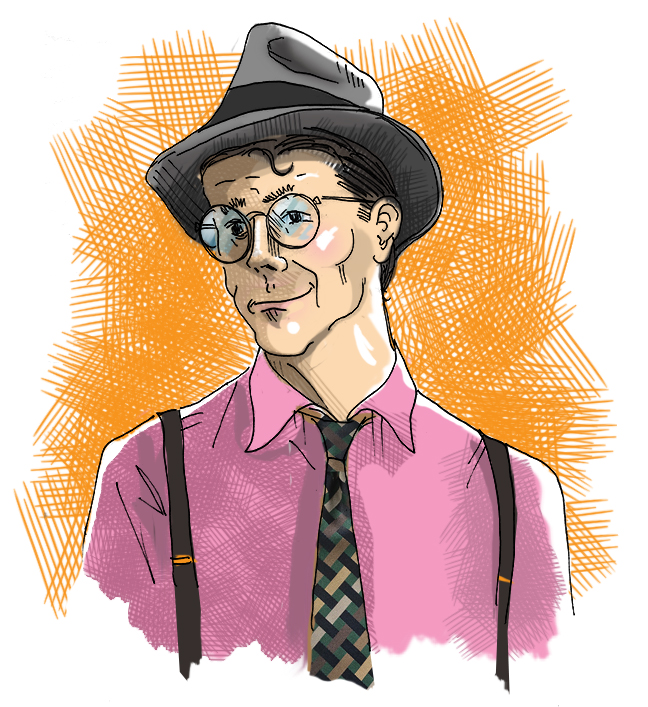
Philadelphia native Francis Hopkinson  enrolled in the first class at the College of Philadelphia (now the renowned University of Pennsylvania) and graduated in 1757. As a member of the Provincial Council of Pennsylvania, Francis drafted treaties with the Delaware and Iroquois tribes. Later, he was appointed customs collector in Salem, New Jersey with hopes of hopes of becoming commissioner of customs for North America. After an unsuccessful bid for that position, Francis left public service, married and eventually opened a dry good business in Philadelphia.

He returned to government as a member of the New Jersey Provincial Council, representing the Second Continental Congress in 1776, where he signed the Declaration of Independence. Later in the year, he resigned his provincial position to serve on the Navy Board in Philadelphia. Francis was soon named the Navy Board’s chairman. He was present at the convention in 1787 as one of the many to ratify the Constitution. During his time in the service of the government, Francis found time to publish a series of satirical pamphlets and essays, commenting and criticizing English rule in order to stir up support for the American movement towards independence. He was also a talented and prolific musician and composer, credited as the first American composer to commit a composition to paper. He was happily recruited as the organist at Philadelphia’s Christ Church.

Perhaps Francis Hopkinson’s most noted achievement came in the infancy of the United States. Based on a large amount of documentation and numerous examples of corroboration, Francis was informally selected by the Second Continental Congress to design a flag to represent the country. Using elements from previous designs for the U.S. Navy, Francis presented a flag with 7 white stripes alternating with 6 red stripes and blue field filled with thirteen six-pointed stars. The flag was officially adopted by the country on June 14, 1777 with a huge celebration. However, three years after the celebration passed, Francis found himself with no compensation — or even acknowledgment — for his efforts. He composed a letter to Congress in a decidedly “tongue-in-cheek” tone. In his letter, Francis specifically requested “a quarter cask of wine in payment for designing the U.S. flag, the Great Seal of the United States [which he also designed], and various other contributions.” His initial request was ignored, prompting a second letter. This one was more to the point and far less jovial. He asked outright for  £2,700 — cash. A report from the commissioner of the Chamber of Accounts said that the bill was reasonable, but Congress, once again, balked and stalled. They asked for an itemized list of services and when it was provided, they stalled again. Francis was fuming. Congress then determined that since Francis Hopkinson was already a public servant when his design for the flag was submitted, he was already compensated for all services that he provided and therefore not entitled to any further remuneration of any form. Essentially, he was screwed.

Francis Hopkinson suffered from a sudden apoplectic seizure and died at the age of 53, just a few years into his appointment as a federal judge. He is buried in Christ Church Cemetery in Philadelphia, along with six other signers of the Declaration of Independence.

In 1876, as the United States was gearing up for its Centennial celebration, one William Canby, grandson of a Philadelphia upholsterer named Betsy Ross, invented a story about his ancestor designing and sewing the first U. S. flag for Continental Army General George Washington. The story was supposed to show an example of women’s contributions towards the goal of American independence. The familiar flag — the one with a circle of stars in the blue field — didn’t come into use until after the end of the Civil War. William Canby’s story was just a good piece of marketing.

Unfortunately, while the story of Betsy Ross hogs the spotlight, true female heroes of the American Revolution — like Nancy Hart, Sybil Ludington, Deborah Sampson, Mary MacCauley (better know as “Molly Pitcher”), Margaret Corbin and many others — have yet to get their rightful recognition.

Comments

comments

DCS: barry bremen

oh yes, I'm the great pretender

Barry Bremen was an insurance salesman, a happy husband and father of three from West Bloomfield, Michigan, a suburb of Detroit. In high school and after, he regularly played football, softball and basketball with guys from work and the neighborhood. He loved sports, but playing them on an amateur level wasn’t enough. He wanted more.

On February 4, 1979, 32-year-old Barry put on a Kansas City Kings jersey (the team has since moved to Sacramento) and made his way — unnoticed — onto the playing floor of the NBA All-Star Game, held in the Pontiac Silverdome. While mingling with the players during pre-game warm-ups, Barry was given the “once-over” by King’s point guard Otis Birdsong, who narrowed his eyes and said, “You’re on my team, and I don’t even know who you is.” Barry was escorted off the court by security.

Six months later, Barry donned a New York Yankees uniform and shagged flies in the outfield of the Seattle Kingdome for a full thirty minutes before the Baseball All-Star Game. It was only when he attempted to include himself in a pre-game team photo that he was spotted and ushered off the field. However, he didn’t leave the stadium. Instead, he sneaked into the home team clubhouse, hiding the the whirlpool bath. A Mariners trainer called security to have Barry removed… again.

Next, Barry showed up at the U.S. Open and played an unquestioned practice round with pro golfers Wayne Levi and Jerry Pate. He followed up with a course appearance at the 1980 U.S. Open where he played so poorly in a practice round that a spectator was overheard wondering how he made it to the qualifying round.

In December 1979, Barry, decked out in a full replica Dallas Cowgirls cheerleader costume, complete with blond wig, joined the real cheerleading squad on the field before a Cowboys-redskins game at Texas Stadium. Barry had practiced routines in preparation for this stunt, but only managed a single “Go Cowboys!” before he was handcuffed by authorities and led off the sidelines. The Cowboys organization sued Barry for $5000 and threatened to ban him from Cowboys games for life.

The 1980 World Series found Barry back on a baseball diamond, this time in an MLB umpire uniform. The other actual umpires noticed one extra man when the gathered at home plate. This incident ended in a similar fashion as the previous ones.

Barry appeared at the 1981 NBA All-Star Game in a Houston Rockets jersey and, later in the season, at Boston Gardens, posing as a game official. The same year, saw Barry dressed as a line judge at Super Bowl XV in Louisiana’s Superdome.

Barry attempted to enter the Silverdome once again in 1982, this time dressed as renowned mascot The San Diego Chicken. He made it past security but was arrested soon after.

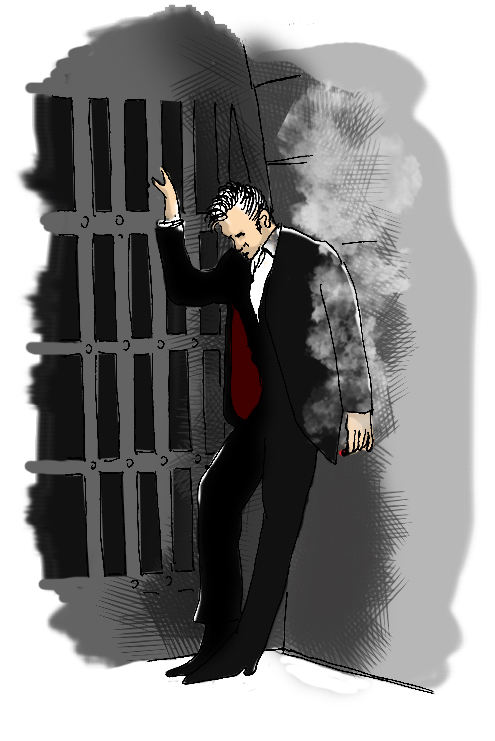
Not content with conquering the sports world, Barry dressed in a tuxedo and managed to gain access to the  1985 Emmy Awards. He brazenly took the stage to accept the award for Betty Thomas, who had been announced as “Best Supporting Actress” for her work on the police drama Hill Street Blues. Thomas, who was in attendance at the event, was confused and angered when she approached the podium to find Barry Bremen holding her award. He relinquished the statuette, apologized to Thomas and was arrested. He was released after paying a fine of $175. Later in 1985, Barry took to the U.S. Open again, playing a practice round with a group of professional golfers. This time, Barry went completely unnoticed.

At the Houston Astrodome for the 1986 All-Star Game, Barry was once again chasing batting practice fly balls in the outfield, this time dressed in a New York Mets uniform. he was recognized by Dodgers manager Tommy Lasdora, who blew the proverbial whistle. Barry later revealed that he was treated so poorly in jail after his latest stunt that it would be his last.

And it was.

In 1993, tennis pro Monica Seles was attacked and stabbed by a deranged “fan” of contemporary Steffi Graf during a match in Hamburg, Germany. From that point forward, security was tightened at all sporting events worldwide. Taser wielding stadium guards and the suspicious feelings towards “unidentified” people in the post-9/11 days made the decision regarding an “anticipated comeback” an easy one for Barry. He felt the risks were too great and the fun had left his “exploits.”

A short-form documentary about Barry’s “infamy” premiered on ESPN in 2005 as part of the network’s 30-for-30 shorts series. Barry stayed far from the spotlight and passed away from esophageal cancer on his 64th birthday in 2011.

Comments

comments

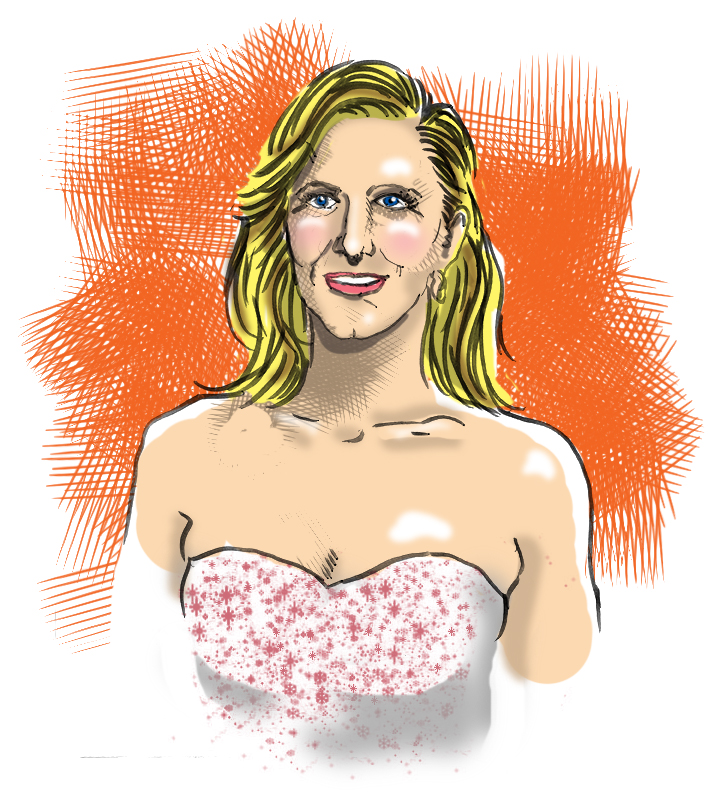
DCS: ina ray hutton

The Blond Bombshell of Rhythm

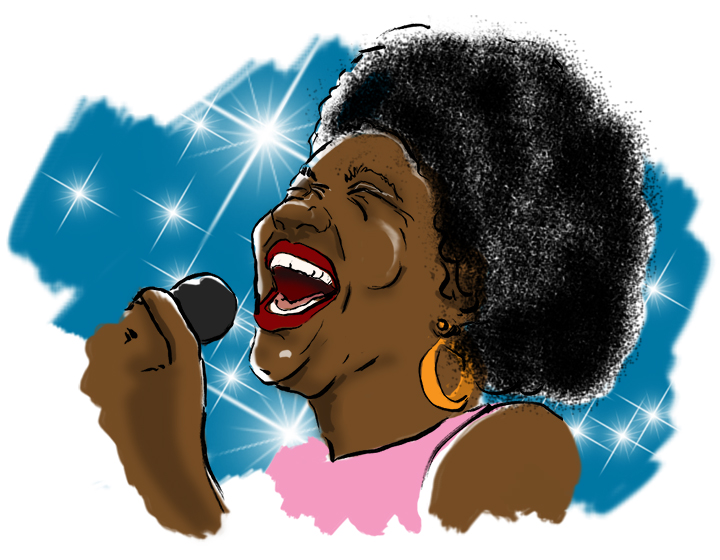
Odessa Cowan was born in 1916 in a predominantly African-American neighborhood on Chicago’s south side. She studied dance and her performances received rave reviews in local newspapers. Soon she was starring in dance reviews, landing on Broadway at 14 years old. Jazz producer Irving Mills assembled an all-girl orchestra and signed Odessa as their leader. The eighteen-year-old “Blonde Bombshell of Rhythm” took to the role and became very popular among her fans and her peers. Mills gave her the stage name “Ina Ray Hutton,” taking the surname of notorious Woolworth heiress Barbara Hutton. Ina Ray bleached her hair and passed as white, despite early census records identifying her as “negro” and “mulatto.”

Ina Ray often appeared in glamorous gowns and changed outfits several times during her performances with The Melodears, a band she fronted and toured with for five successful years. She was even featured in several musical short subjects for Paramount Pictures in the 1930s. In 1939, Ina Ray abruptly disbanded The Melodears and formed a traditional all-male band. She was tired of being viewed as a “novelty act.” She dyed her hair brunette, but continued to appear in slinky evening wear, dancing provocatively while she led the band.

In 1950s, Ina Ray hosted The Ina Ray Hutton Show, shown on KTLA in Los Angeles and briefly on NBC nationally. She reformed her all-girl band for the show and won several Emmy Awards for her efforts.

Ina Ray passed away in 1984 from complications of diabetes. Very few recordings from her career remain and, despite being a groundbreaking performer, she is largely forgotten.

Comments

comments

DCS: jim nabors

shazam!

In the early 70s, a group of Hollywood friends — all homosexual — gathered for an annual party in Huntington Beach. According to actor Rock Hudson, invitations were printed announcing the marriage of Jim Nabors and Hudson, explaining that the heartthrob would be taking Jim’s TV character’s surname, the popular “Gomer Pyle,” the naive yet endearing Marine recruit, to be known henceforth as “Rock Pyle.” This, of course, was a joke, but the invitation slipped out to the mainstream press. At the time, Jim, Rock Hudson and all of their friends were hiding their homosexuality, fearing the truth would be detrimental to their careers. Rumors began to fly, forcing Jim to avoid his friend Rock Hudson. The two never spoke again.

Jim Nabors passed away in November 2017 at the age of 87. Upon his death, The United States Marine Corps released a statement: “Semper Fi, Gomer Pyle. Rest in peace Jim Nabors, one of the few to ever be named an Honorary Marine.”

Comments

comments