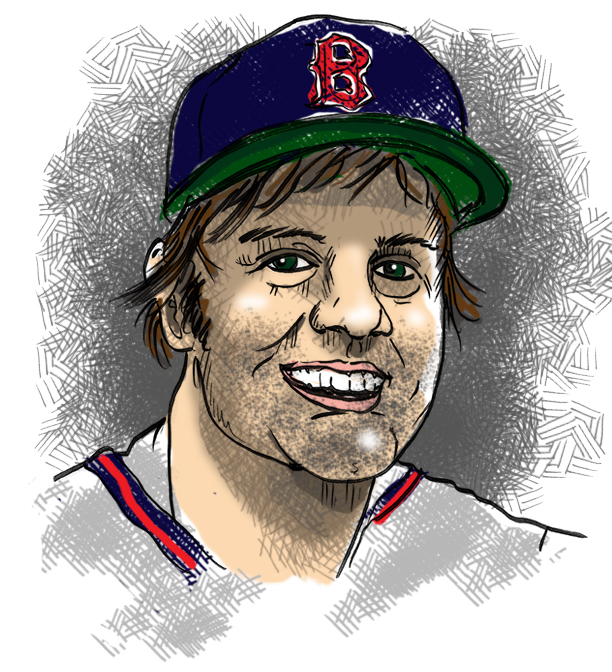
DCS: nipsey russell

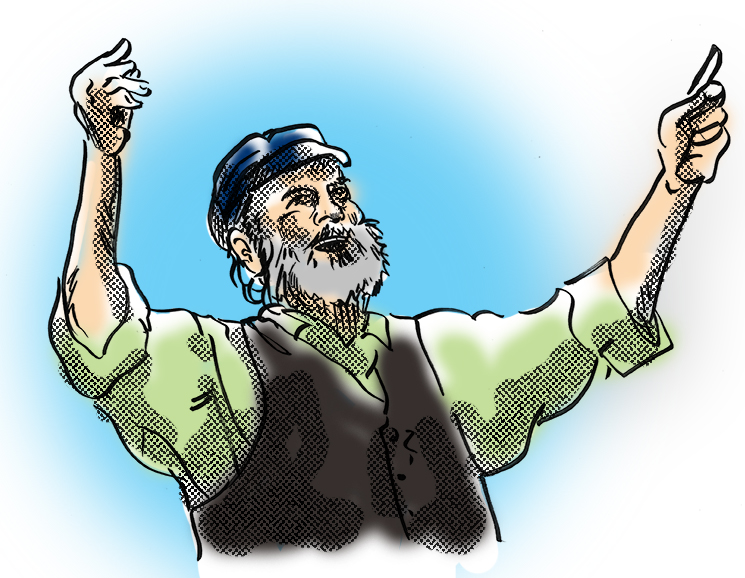
Julius “Nipsey” Russell was born in Atlanta, although it’s not very clear exactly when. Various sources claim various dates between 1918 and 1925. He served as a medic in World War II, returning home in 1945. He got a job as a carhop at the famed Varsity, a wildly popular hot dog stand that takes up two city blocks and is recognized as the largest fast-food drive-in in the world. While at the Varsity, he honed his comedic skills. He found the more he made the customers laugh, the bigger his tips were.
Nipsey soon joined up with vaudeville comedian Mantan Moreland, replacing Moreland longtime straight man. The pair became famous for the oft-performed “interruption routine,” in which they would engage in a conversation, interrupting each other and never completing a sentence. It was a well-received vaudeville staple and led to appearances on TV variety shows. Nipsey caught the attention of a casting director for the sitcom Car 54, Where Are You? and he was cast as “Officer Dave Anderson” in 15 episodes. His popularity led to more guest appearances, including a stint opening for singer Sergio Franchi in Las Vegas. Eventually, Nipsey landed a co-starring role in the sitcom Barefoot in the Park. Nipsey was a fixture on 70s television, frequently seen on Laugh-In, The Dean Martin Show, The Ed Sullivan Show and an array of game shows. He was the first African-American performer to be featured as a regular panelist on a game show. On shows like The Match Game and What’s My Line?, he delighted audiences with his off-the-cuff humorous poems — which became his trademark. On his appearances of To Tell the Truth, while always jovial, he exhibited an unusually articulate and deductive line of questioning. He even hosted a revival of the game show Juvenile Jury for BET in the middle 80s.
In 1978, Nipsey was cast in the film version of the popular Tony Award-winning musical The Wiz. As “The Tin Man,” Nipsey displayed his dancing prowess, a talent heretofore unknown to fans. Later, he reprised his role as “Dave Anderson” in the big screen adaption of Car 54, Where Are You? Nipsey gained popularity with a new generation, thanks to numerous appearances on Late Night with Conan O’Brien. He even returned to game shows in 2003, as a panelist on a new version of the venerable Hollywood Squares. He passed away in 2005, possibly at the age of 87.
Comments
inktober52: odd

Comments
DCS: clara smith
Teenage Clara Smith began performing in tent shows and vaudeville stages in 1910. By the 20s, she was headlining for the Theater Owners Bookers Association circuit, a promoter working exclusively with African-American talent. After appearing all across the United States, Clara settled in New York City, topping the bill at speakeasies and cabarets. She was signed to Columbia Records where she made recordings accompanied by Fletcher Henderson and Louis Armstrong. She also recorded duets with contemporary Bessie Smith, though the two ladies were not related. Although she had a lighter, sweeter vocal style, Clara earned herself the nickname “Queen of the Moaners.” Clara cut 122 songs for Columbia. Her records sold very well, only being topped in sales by Bessie Smith.
During her career, she met 13-year-old budding singer named Josephine Baker. Clara became Josephine’s mentor, hiring the young girl as her dresser. A romantic relationship soon developed between Clara and Josephine.
In 1935, while playing a theatre in Detroit, Clara succumbed to heart disease. She was just shy of 41.
Comments
DCS: avon long
Avon Long was a talented singer and dancer. He appeared as “Sportin’ Life” in the 1942 Broadway revival of Porgy and Bess. He appeared with Lena Horne in Beggar’s Holiday and with Thelma Carpenter in the 1952 revival of Shuffle Along. He originated the role of “John” in Bubbling Brown Sugar and was nominated for a Tony Award for Don’t Play Us Cheap in 1973. He reprised his role of “Brother Dave” in the film version.
Avon was cast in small, but memorable, roles in a number of popular Hollywood films. In Trading Places, he played the recipient of Ralph Bellamy’s meager Christmas bonus. In Harry and Tonto, he played Harry’s (Art Carney) friend, garbage collector “Leroy.” In The Sting, Avon played “Benny Garfield,” the man from whom the bogus betting parlor was rented, uttering the line “Flat rate!” with venomous disdain. He was a favorite for the role of “George Jefferson” on All in the Family, but the role was recast after negative feedback from series star Carroll O’Connor. Avon’s final role was in a science-fiction comedy called Nothing Lasts Forever, which was never released. The film was supposed to star John Belushi, but the comedian died six weeks before production began.
After enjoying two nearly separate careers, Avon passed away in 1984 at the age of 73.
Comments
inktober52: skull (part 2)
Comments
inktober52: skull (part 1)

Comments
DCS: mudcat grant

Jim “Mudcat” Grant, Major League pitcher with 14 seasons under his belt, had a career filled with firsts.
Despite being awarded a scholarship to play football and baseball at Florida A&M University, Mudcat had to drop out in order to help his family through a spell of financial hardship. Ever determined, Mudcat was signed as a free agent by the Cleveland Indians just prior to the start of the 1954 season.
After a time in the Minor Leagues, Mudcat made his Major League debut in 1958 with a complete game win against the Kansas City Athletics. He pitched well for Cleveland, but was traded to the Minnesota Twins in 1964. His pitching career blossomed in Minnesota, where he led his team to the World Series in 1965 after finishing the regular season with a 21-7 record. He became the first black pitcher to win 20 games in the American League. In the World Series, Mudcat pitched two complete game wins — becoming the first black pitcher to win a World Series game in the American League. He even hit a three-run home run in Game 6.
After the 1966 season, Mudcat’s role changed and he was assigned to the bullpen as a relief pitcher. In one more starting appearance, he became the first ever pitcher for the new Montreal Expos team in 1969. Although he got shelled — allowing six hits and three runs in just one inning — Mudcat once again made baseball stat history. He retired at the end of the 1971 season.
Mudcat’s post-player career included work as a broadcaster for the Kansas City Athletics and as publicity director for the North American Softball League. Later, he wrote and published a book entitled 15 Black Aces. This publication honored the exclusive “club” of 15 black pitchers to win 20 in a single season. In 2007, President George W. Bush welcomed Mudcat to the White House, along with fellow 20-game winners Ferguson Jenkins, Dontrelle Willis and Mike Norris. On April 14, 2008, Mudcat was invited to throw out the first pitch at an Indians game to commemorate the 50th anniversary of his major league debut.
On June 12, 2021, Jim “Mudcat” Grant passed away at the age of 85, leaving behind a stellar and honorable career in baseball.
Comments
inktober52: mighty

Comments
DCS: eugene bullard

Eugene Bullard was unhappy as child, as was evidenced by his numerous attempts to run away from home. After each unsuccessful try, he was returned to his father, who proceeded to beat young Eugene. In 1906, at the age of 11, Eugene got far enough away and hoped to experience a happier life. He wandered for years, fending for himself through odd jobs and scrounging.
In 1912, Eugene stowed away on a German freight ship. The ship docked in Scotland and Eugene made his way across the United Kingdom working with an African-American traveling entertainment group, as well as taking opponents as a boxer. He made it to France for a boxing match and decided to make it his home. He loved the customs and culture of France and felt comfortable, noting in a journal: “It seemed to me that French democracy influenced the minds of both black and white Americans there and helped us all act like brothers.”
When World War I broke out, Eugene enlisted in the French Foreign Legion, serving with the 170th Infantry Regiment. He eventually joined the Aéronautique Militaire, the French Air Force. He engaged in many successful air battles and his fierce fighting methods earned him the nickname “Black Swallow of Death.” He was repeatedly decorated by the French government for his efforts.
In 1917, when the United States entered the war, Eugene attempted to join the US Air Force. He was turned down, citing a number of made-up excuses. The real reason, of course, was that the US Air Force did not accept African-Americans. He returned to his unit, but a confrontation with a superior officer relegated him to menial duty until his discharge.
Back in civilian life, Eugene ran an athletic club, then worked in and eventually owned a nightclub — an establishment that was frequented by Louis Armstrong and Josephine Baker. In the months before the start of World War II, Eugene was employed as a spy, looking for Nazis among the nightclub patrons. Fearing for his safety and the safety of his family, he headed for Spain, then Portugal with the United States his eventual destination. His military settlement from the French government was enough to buy an apartment in Harlem.
An activist for civil rights, Eugene was involved in the notorious Peekskill Riot. A protest at an appearance by singer and fellow activist Paul Robeson escalated to violence when a local VFW chapter accused Robeson of being a communist. Eugene and others were severely beaten by a mob which included law enforcement.
The treatment Eugene received in the United States was jarring as compared to the accolades he experienced in France. Each morning he would look at his 15 French war medals as he left his apartment for his job as an elevator operator at New York’s Rockefeller Center. On December 22, 1959, Eugene was interviewed by Today Show host Dave Garroway about his war exploits. He wore his elevator operator uniform during the interview.
Eugene developed stomach cancer and passed away in 1961 at the age of 66. He is remembered as the first African-American military pilot — but for a different country than his own.