
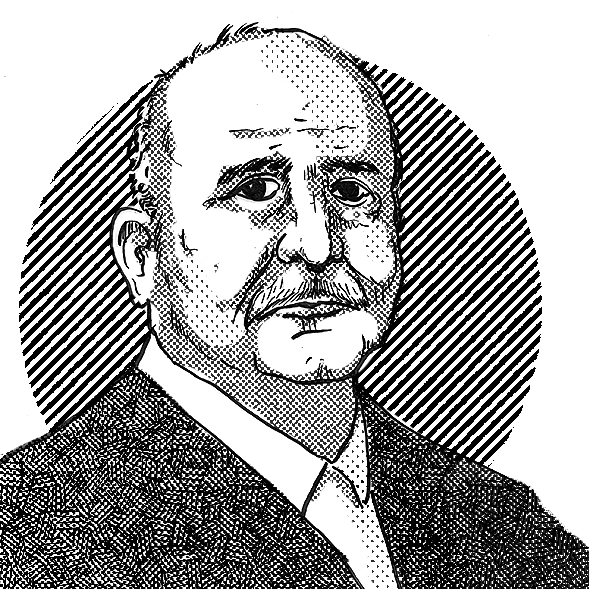
In the early 1870s, Mississippi lawyer Finis Bates moved with his family to Texas. In 1873, he met a man named John St, Helen, with whom he shared many interests, including the theater, specifically the works of William Shakespeare. The two became friends and saw each other often socially. In 1878, John St. Helens became ill. Believing death was near, he confided in his friend Finis Bates and offered, what he thought was a deathbed confession.
John revealed to Finis that his name was not John St. Helen, but in fact, he was John Wilkes Booth, the man responsible for the assassination of President Abraham Lincoln. Finis, as expected, was dumbfounded. However, John recovered from his illness and gave Finis further details about his claim. He said the Vice President Andrew Johnson was the lead conspirator of the Lincoln assassination. He also revealed that the man that Union Soldiers shot in the barn at Garrett’s tobacco plantation was an overseer named Ruddy St. Helens. John had switch identification papers with the real St. Helen’s leading authorities to assume it was Booth that was shot. After a full recovery, John St. Helens moved to Colorado. Finis lost touch with his friend after he relocated to Memphis, Tennessee.
Finis did not believe John St. Helens’ story… at first. But, he began to think more about John St. Helen’s character and personality. He contacted the Department of State and the FBI, relating the story he was told.
In 1903, a man named David George committed suicide in his Enid, Oklahoma hotel room. Prior to taking his own life, he confessed to the wife of a local minister that he was John Wilkes Booth. He spun a similar story as the one that was told to Finis Bates. David George’s body was turned over to undertaker William Penniman, along with a handwritten will that detailed some property. Penniman embalmed the body, but did not bury it, pending a claim of the body and the property. Subsequent investigation determined that the property did not actually exist. David George’s embalmed remains sat in Penniman’s front window as a tourist attraction… for eight years. Previously uncovered papers found in David George’s possession mentioned Finis Bates. Bates was summoned and the body was turned over to him. Finis stored the body in his garage until he began to rent it out to circuses and side shows, as well as the 1904 St. Louis Worlds Fair. Showmen’s League of America charter member William Evans paid Finis $1000 every five months to display it at his carnival. Over time, the body was stolen several times, involved in a train wreck. It changed owner ship many times and was put on public display all over the country. It was last documented as part of a carnival in the late 1970s.
In 1931, the now-mummified remains of John St. Helen or David George or whoever he was, were examined by a team of six doctors. X-rays showed a healed fracture in the left fibula. This was consistent with injuries that John Wilkes Booth sustained when he jumped from the balcony at Fords Theater.
In 1907, Finis Bates published a book called The Escape and Suicide of John Wilkes Booth, detailing his friendship and his eventual claim and revelation. The book, of course, stirred controversy. It even set Henry Ford off on his own investigation.
Finis Bates died in 1923, still holding fast to his belief that he had befriend John Wilkes Booth.
Acclaimed Academy Award-winning actress Kathy Bates is Finis Bates’s granddaughter.