IMT: pear

The word of inspiration on the Inspire Me Thursday illustration blog is “pear”.
When it's Apple Blossom time in Orange, New Jersey, we'd make a peach of a ...
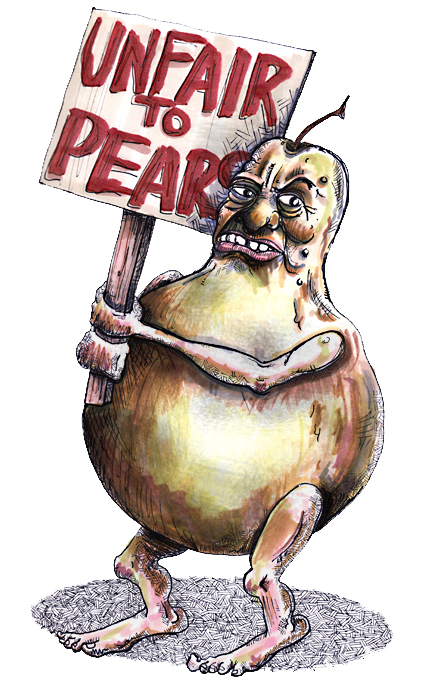
The poor pear. The pear has always gotten a raw deal. It’s been treated as a second-class fruit — the red-headed stepchild of the produce world.

New York City is “The Big Apple”, not the “Big Pear”.  An endearing term for a loved one is “the apple of my eye”. The noble apple stands for heart-stirring patriotism. It’s as “American as apple pie”, for goodness sake! Car enthusiasts long to paint their ride “candy apple red”, ’cause that would make it cherry. Apple sauce and apple juice are always at the forefront of baby’s first foods. As kids get older, Kellogg’s offers them Apple Jacks and McDonald’s offers apple slices as an alternative for french fries.

Apples even have enticing names like “Granny Smith” (how warm and homey!), “Red Delicious” and “Golden Delicious”. Do you think Steve Jobs just arbitrarily chose “Apple” for the name of his company? He didn’t go with “Pear” for a reason. Pears have stupid, almost unpronounceable names, like Bosc or D’anjou. And I don’t even know if I spelled those correctly. Sure, there’s Bartlett, too. Ever know anyone named “Bartlet”? He was that fat kid in elementary school. You know, the bookworm that everyone made fun of. And, of course, no one wants to be referred to as “pear-shaped”.

And it’s not just apples that overshadow pears. There are grapes with their tag as “Nature’s Candy”. The sour lemon is renowned for its deliciously refreshing summertime beverage. The mysterious pomegranate is also known as a Chinese apple to add to its appeal. There’s the sensuous strawberry, favored by candy-makers to dip into chocolate. There are bananas, with their splits and cream pies and their comedic notoriety from their peels. Slip on a banana peel and it’s funny. Slip on a pear peel and you’ll break your fucking neck. Even the exotic kiwi is chosen from a fruit basket before the lowly pear.

So, give a little support to the poor genus Pyrus L in the class of Maloideae in the subfamily Rosaceae.

And pass me an apple.

Comments

comments

IMT: cupcake

The word of inspiration on Inspire Me Thursday is “cupcake”.
You've gotta take tea, won't you take it with me? What a gay time it will be.
As mentioned many, many times on this blog, I love going to Disney theme parks. I went to Walt Disney World for the first time when I was nineteen. My wife and I went to Walt Disney World on our honeymoon. We took our son to Walt Disney World many times on family vacations. In 2004, we decided to stray from our usual pilgrimage to Walt’s Florida amusement enterprise in favor of a more adult experience. We planned a trip to Las Vegas. Our plans included a room at Excalibur, The Strip’s version of Camelot with slot machines. We took in a kitschy show called “The Rat Pack Returns”, a tribute to the heyday of 1960s-era Las Vegas. Longing for the familiarity of a Disney theme park, we planned to rent a car and drive four hours through the Mojave to Anaheim, California, the home of Disneyland, Walt Disney’s original park.

Everyone told us we’d be greatly disappointed in Disneyland. After years of extended visits to the sprawling mecca that is Walt Disney World, Disneyland would seem like a shopping-center parking lot carnival. We were warned of its puny size, its lack of atmosphere and its ancient and dated rides. Defying all warnings, we went ahead with our plans. We enjoyed three days in Nevada’s Sin City and, with our rental car loaded with suitcases and snacks, headed across the desert.

We came off of Interstate 91 at the Harbor Boulevard exit. My wife maneuvered our rental left onto Harbor Boulevard, past a post office, several fast food restaurants, a few unfamiliar West Coast gas stations and many hotels varying in degrees of luxury. Just ahead, a familiar sight emerged from unfamiliar surroundings. The unmistakable retro-future shape of Space Mountain sprang up from behind some trees, just a few feet from midday traffic. Just beyond that, the ominous Hollywood Tower Hotel, home of Disney’s signature Tower of Terror ride, loomed above the pedestrians waiting for the green light signaling a safe crosswalk. Jesus Christ! Disneyland is right THERE!  Right there on the fucking street! Disneyland, for crissakes!

We located our hotel, checked in, hurriedly dumped our luggage and rushed across the street to Disneyland. Disneyland! Right across the street from our hotel!  It was a mere minute and a half walk to the entrance gate. Just beyond the gate was the familiar elevated railroad platform, although this one was emblazoned “Disneyland” instead of “Walt Disney World.” We walked through the tunnel underpass and were greeted by another familiar, yet slightly unfamiliar sight. Main Street USA looked like an old friend, yet also like a stranger. The turn-of-the-century buildings were slightly rearranged from our memory. The Camera Shop was at the end of the street. There was a magic shop on the corner instead of a candy store. And the candy store was in the middle of the block, across the street. It was like Twilight Zone Disney. And that’s how the rest of the park presented itself, as a slightly skewed version of our beloved Florida Magic Kingdom. However, the more time we spent exploring and experiencing Walt Disney’s original dream, the more endearing and charming it became. There were rides (like Pinocchio’s Daring Journey) that were exclusive to Disneyland and old favorites (like Mr. Toad’s Wild Ride) long removed from its Florida counterpart. We fell in love with Disneyland and enjoyed it so much, we returned for four consecutive summers.

In the early summer of 2008, my wife returned to Walt Disney World for a two-week trip with her family — a trip on which my son and I were not invited. While I went to work, I kept in regular cellphone contact with my wife. She told of new attractions, new additions and reminded me of Disney World favorites almost brushed from my memory. She also reminded me of those cupcakes. The Walt Disney World bakeries offer an over-sized, butter cream frosting-topped, parchment cup full of heaven. And they are everywhere! In every park. In every hotel. At every restaurant. I had forgotten about them until I was reminded of their deliciousness. When she finally returned home, along with more stories of Walt Disney World adventures, I began to think about making another visit to the park I thought I’d never visit again.

Last week, my family and I returned from a week at Walt Disney World. I can honestly say, I was a little disappointed. Walt Disney World caters to the masses. It has become the destination for the lowest common denominator. Don’t get me wrong — the place is magnificent. The detail and theming of the resort hotels is beautiful. The staff throughout Disney property is wonderful and will bend over backwards to make sure their guests are exceptionally happy. The problem is the tourists. Walt Disney World draws a noticeably different clientele from Disneyland. Disneyland is a quaint, yet overly clever, amusement park in the middle of a major city suburb. Southern California residents can wake up in the morning and say “Hey! Let’s go to Disneyland!” A trip to Walt Disney World, however, is as involved as plotting a military coup. Our hotel in Anaheim was — no exaggeration — a few steps from the Magic Kingdom. Our accommodations in Walt Disney World, because of the massive size of the Disney-owned property, was a long walk to a bus stop followed by a fifteen minute bus ride, followed by another long walk to the front gate of a theme park. All in 95% humidity or sporadic thunderstorms. At the end of a grueling thirteen hour day of tiring fun, the process of returning to our hotel was an additional and unwelcome nearly sixty minutes.

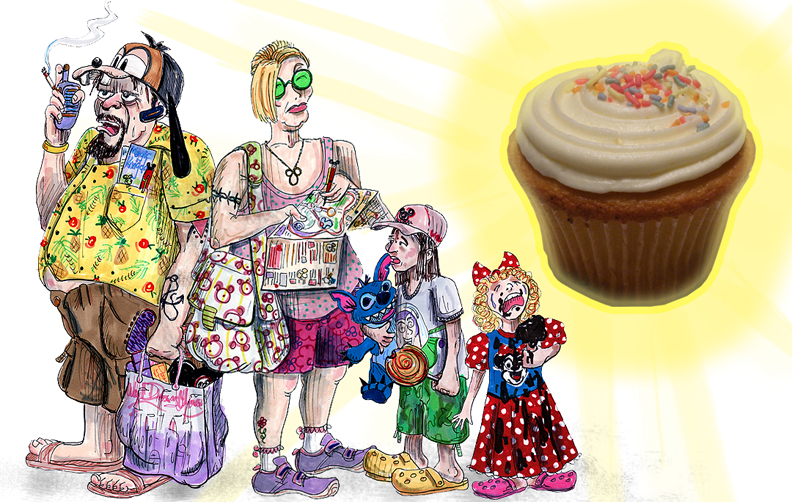
Sure, there is plenty of ingenious design in Walt Disney World, but the majority of it is lost on the screaming kids in their Bibbity-Bobbity-Boutique makeovers, the angry dads in their horrific Hawaiian shirts and Bluetooth headsets and the preoccupied moms in their Kate Gosselin haircuts, methodically marking off each conquered attraction on their park guide map. Walt Disney World is the perfect vacation objective for the WalMart-shopping, Larry the Cable Guy-watching, Hannah Montana-buying nuclear family. And Disney knows it.

While we did have a good time in Walt Disney World, seeing new attractions and experiencing new sights, I don’t see myself returning any time soon. I look forward to a trip to Disneyland next year. Although, Disneyland doesn’t have those damn cupcakes.

Comments

comments

IF: caution

The Illustration Friday challenge word this week is “caution”.
vagabonds and troubadours and chimbley sweeps
A Cautionary Song by The Decemberists

There’s a place your mother goes when everybody else is soundly sleeping
Through the lights of beacon street
And if you listen you can hear her weeping,
She’s weeping, cause the gentlemen are calling
And the snow is softly falling on her petticoats.
And she’s standing in the harbour
And she’s waiting for the sailors in the jolly boat.
See how they approach

With dirty hands and trousers torn they grapple ’til she’s safe within their keeping
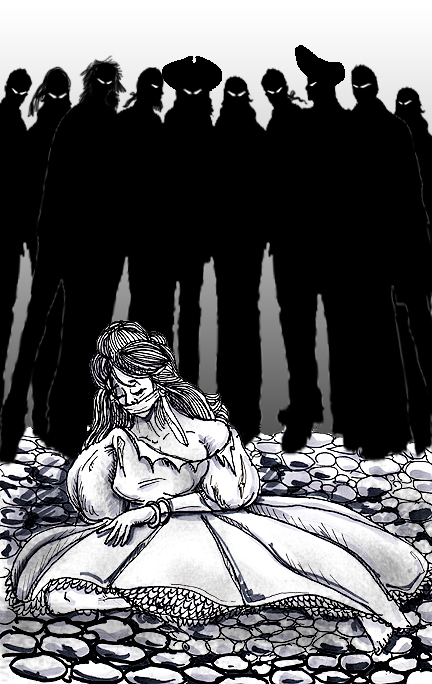
A gag is placed between her lips to keep her sorry tongue from any speaking, or screaming
And they row her out to packets where the sailor’s sorry racket calls for maidenhead
And she’s scarce above the gunwales when her clothes fall to a bundle and she’s laid in bed on the upper deck

And so she goes from ship to ship, her ankles clasped, her arms so rudely pinioned
‘Til at last she’s satisfied the lot of the marina’s teeming minions, and their opinions

And they tell her not to say a thing to cousin, kindred, kith or kin or she’ll end up dead
And they throw her thirty dollars and return her to the harbour where she goes to bed, and this is how you’re fed

So be kind to your mother, though she may seem an awful bother,
and the next time she tries to feed you collard greens,
Remember what she does when you’re asleep

Click HERE to hear the Decemberists’ “A Cautionary Song“.

Comments

comments

IF: impatience

This week’s illustrationfriday.com challenge is “impatience”.
I am a patient boy. I wait. I wait. I wait.
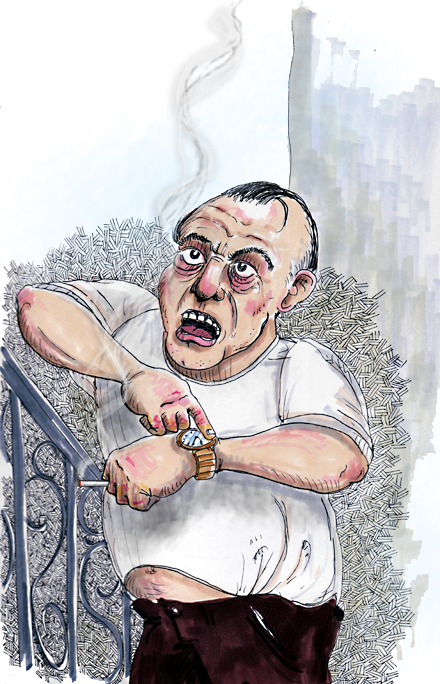
There was nobody that ever lived that was as impatient as my father.

Perhaps it started when he was a child. He and his parents lived at eight different addresses on West 52nd Street in Philadelphia. They kept moving up the block. My father told me it was because each time his father got a salary increase they would move to a bigger house. I think he just didn’t want to wait as long for the mail delivery.

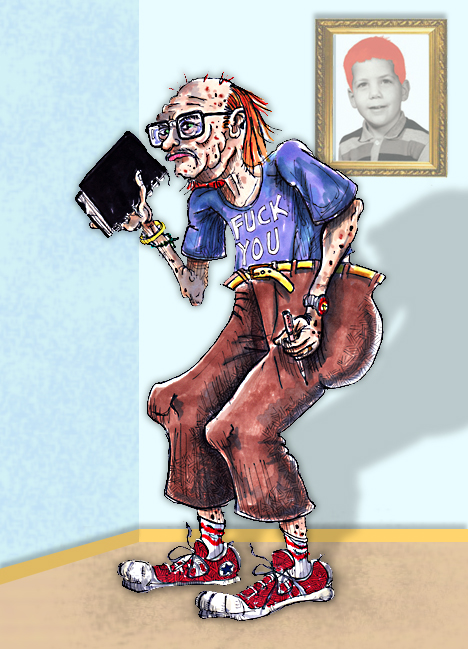
My father never enjoyed a leisurely meal. When I was a kid, dinnertime was a race. My father devoured his daily evening repast in record time. My father would always be served first. As my mother was presenting my brother and me with our prepared platters, my father would be dragging a slice of bread around the rim of his plate, sopping up the last bits of crumbs and gravy. My father would be on his third cigarette, flicking the ashes into his plate, as we remaining three diners were just beginning our dinner. This rushed and impatient gluttony may have stemmed from my father’s military service. In January 1944, my father enlisted in the United States Navy. He was stationed on the battleship USS South Dakota on its second tour in the Pacific. My father’s meals were taken in the ship’s mess hall with hundreds of other sailors. He described the food distribution as an efficient assembly line where your metal tray was piled with meat, potatoes, corn, a scoop of ice cream and a pack of cigarettes thrown on top of it all. The men were given approximately twenty-two minutes to eat before they were to return to their assigned post. My father carried this mindset for accelerated food consumption for the rest of his life, each meal becoming an Olympic event in speed eating. (In addition to biting my fingernails and walking like a duck, I seemed to have inherited this trait from my father, too.)

My father refused to wait in line. For anything. Ever. If we, as a family, went out for a special occasion, my father would pass on any restaurant where he couldn’t get immediate seating. My mom would sometimes be successful in persuading him to give a hostess our name for inclusion on a waiting list for a table, but after one or two minutes, we would invariably leave. We’d walk, silent and embarrassed, to the car as my father grumbled under his breath. We’d drive by several more restaurants in Northeast Philadelphia, seeing patient people patiently waiting for a table, patiently. My father would curse them and we would end up at The Heritage Diner, my father’s favorite eatery — unless there was a line. For years, my family would joke, wondering if our name was ever called for a table at the Open Hearth restaurant at Holme Circle, after we walked out because my father wouldn’t wait.

My father always wore a watch, but I don’t believe he could tell time. If my brother or I had an appointment to go to, my father would begin reminding us five or six hours prior. If it was an early morning appointment, he would wake up early, point to his watch and scream to us upstairs, “Get up! Get up! Don’t you have to be somewhere at 11:30? It’s almost 10 o’clock!” At my father’s anxious alert, we would scramble out of bed, and rush to the shower in a panic, assuming we were going to be late. In our frenzy, we’d catch a glimpse of our bedroom clock showing the time to be 7 AM. My father was not happy seeing anyone asleep. If he was awake, everyone must be awake.

When I was nineteen, I went to Walt Disney World with three of my friends. When  I returned home, I excitedly told my parents about the wonderful time I had. I urged them to visit the theme park themselves. Then I tried to imagine my father being there. He would refuse to wait in line for any ride, attraction, show performance or restaurant. (If you have ever been to a Disney theme park, you will know that the time spent there includes a certain amount of waiting in line.) He would return home, angry and complaining, “I don’t know what the big deal is about that place. We didn’t get to see a goddamn thing! I wasn’t gonna wait in line to ride some goddamn flying elephants!” I reconsidered my urging.

When my father died, my wife took the daunting task of cleaning and emptying his house in preparation for sale. She emptied closets and drawers, packaged clothing for charity contribution and gathered unwanted items for disposal. One day, she opened one of my father’s dresser drawers and discovered dozens and dozens and dozens of unused wallets, some still in department store packaging adorned with price tags. With my father not around to question, we surmised he never wanted to wait in line to buy a new wallet when the time came to replace his current one.

Comments

comments

DCS: bobby driscoll

I wish I had a Laughing Place
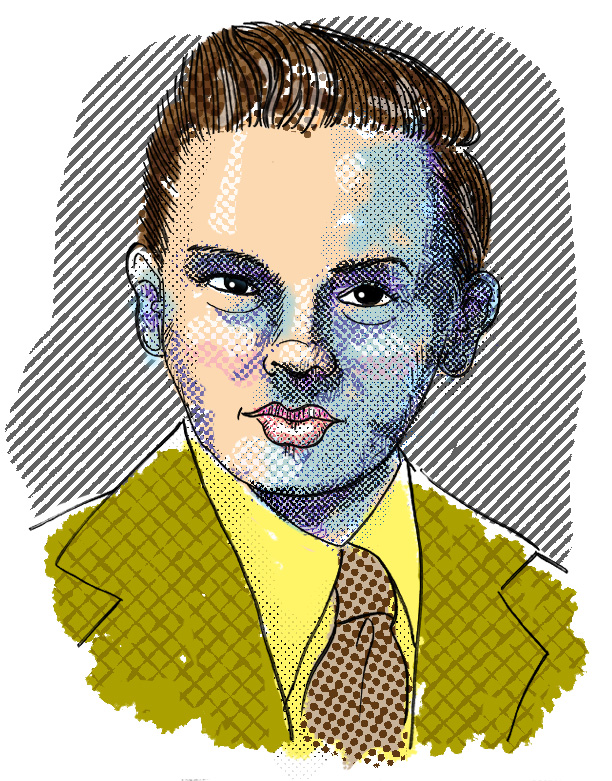
Bobby Driscoll was Walt Disney’s Golden Child. He was the typical cute, scrappy All-American boy and Disney Studios milked that image for all they could. Bobby starred in a string of classic live-action pictures for Disney, including Song of the South, So Dear to My Heart  and Treasure Island. He was also provided the voice for “Goofy Jr” in several animated short subjects. Bobby’s most famous Disney role was providing the voice of the title character in the 1953 animated classic Peter Pan. Bobby was in high demand and Disney allowed the young star to be “loaned out” to other studios, which was common practice for contracted performers. Bobby won an Oscar in 1950 for “Best Juvenile Actor.” (That category was discontinued by the Academy in 1960.)

As Bobby grew older, he didn’t quite fit the persona of the “likable kid” anymore. He grew dissatisfied with that image. He also developed terrible acne. He would make public appearances with heavy, concealing makeup. Disney seized this opportunity to sever Bobby’s contract, essentially abandoning him.

He found his demand dwindling in the early to middle 1950s. He took small, one-shot roles on episodic television, usually playing a bully or gang member. He was arrested for marijuana possession in 1956. In 1961, he was arrested and sentenced for disturbing the peace, assault and drug charges.

After his release from prison and and a year after his parole expired, Bobby moved to New York City. He became part of Andy Warhol‘s Greenwich Village art community known as The Factory, where he began focusing on his artistic talents. He took one more acting role in an experimental film called Dirt  in 1965.

Bobby soon afterward left Warhol and The Factory and disappeared, penniless. On March 30, 1968, two boys playing in a deserted East Village tenement found his dead body. The medical examination determined that he had died from heart failure caused by an advanced hardening of the arteries due to longtime drug abuse. There was no ID on the body, and photos taken of it and shown around the neighborhood yielded no positive identification. When Bobby’s body went unclaimed, he was buried in an unmarked grave in New York City’s Potter’s Field. Nineteen months after his death, Bobby’s mother sought the help of the Disney Studios to contact him for a reunion with his father, who was near death. Given his last know whereabouts, she contacted the New York City Police who, based on a fingerprint match, directed her to the pauper’s graveyard.

Comments

comments

Monday Artday: ghost

And consider this dismaying observation, this chamber has no windows, and no doors. Which offers you this chilling challenge, to find a way out!
What started out as a black and white sketch of a crooked street leading to a peaceful graveyard, with a run-down manor perched high on a hill that loomed over Main Street evolved into one of the greatest and most beloved attractions in Disneyland — The Haunted Mansion.

A short time after the opening of Disneyland in 1955, Walt Disney asked Imagineer Ken Anderson to elaborate on the original drawing and create a story for a future”haunted” attraction. Ken eventually presented Walt with a sketch of a run-down antebellum plantation house, boarded-up and overgrown with trees and weeds. Walt frowned upon the drawing, saying he would not have such a dilapidated building in his clean park. “We’ll take care of the outside,” he famously said, “The ghosts can have the inside.”

Between Ken’s stories of mysterious a sea captain, spectral wedding parties and ghostly families and Walt’s fascination with San Jose’s Winchester Mystery House, the Haunted Mansion attraction was beginning to take shape. Many concepts were considered including a wax museum, a “Museum of the Weird” restaurant, even a walk-through attraction. A ride-through was settled on and under Ken Anderson’s appointment, Imagineers Rolly Crump and Yale Gracey were given the task of creating the Mansion’s special effects. Their workshop was filled with creepy gags and spooky props. They kept the effects wired to a master switch that was motion-activated. At the end of the work day, they would leave and, later, the studio cleaning crew would proceed on their nightly duties. One morning, Crump and Gracey were informed that they would have to clean their own studio, as the custodial staff has tripped the motion sensor and were frightened out of the away.

Construction was completed on the Haunted Mansion structure in 1963, but due to Disney’s involvement in the 1964 New York Worlds Fair, the building sat untouched for six years, despite advertisements and signage for the attraction. Walt Disney’s death in 1966 was followed by an interior redesign of the show area. On August 9, 1969, Disney’s Haunted Mansion opened. The opening brought in record crowds and has remained one of the most popular attractions for everyone — living and dead.

Disney’s Haunted Mansion has a cult following. There are thousands of loyal and devoted fans. There are dozens of websites (including the excellent Doombuggies.com) that chronicle the history, secrets and updates to the attraction. The annual unofficial Disney celebration “Bats Day in the Fun Park” caps off the day’s activities with a group ride through The Haunted Mansion, with participants numbering over fifteen hundred.

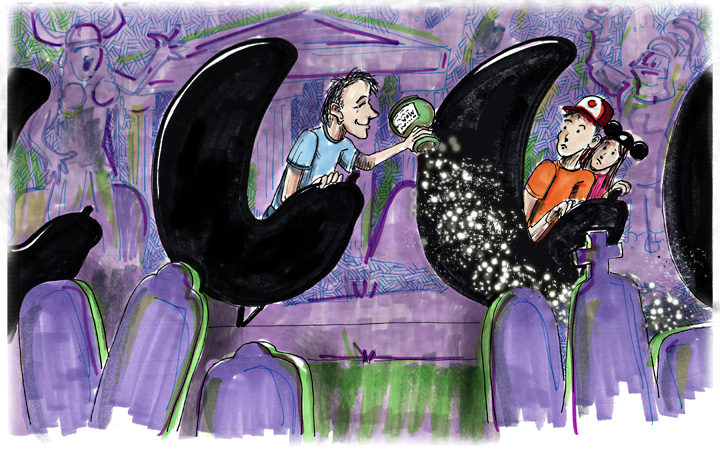
And then there are the ones who wish to make The Haunted Mansion their eternal home. Since the 1990s, several people have attempted to fulfill a deceased loved one’s last wish to become a permanent resident of The Haunted Mansion. Cast Members (Disney employees) have spotted riders on the surveillance cameras sprinkling cremated remains alongside the ride vehicle (affectionately called “Doom Buggies“) track. When a Haunted Mansion Cast Member sees ashes being spread from a passing Doom Buggy, the attraction is shut down for hours while the custodial department comes in and begins the clean up.  Disneyland’s custodial department had to purchase special vacuums with very sophisticated HEPA filters that can capture the gritty ash of human remains while also capturing the small bone fragments are usually present after cremation. When the “Ghost Host“, the on-vehicle ride narrator, announces that the Mansion is home to “999 happy haunts” and informs guests that there is room for a thousand, I believe he is kidding.

Comments

comments

from my sketchbook: ub iwerks

I have listened to the cuckoo cuke his coo-coo
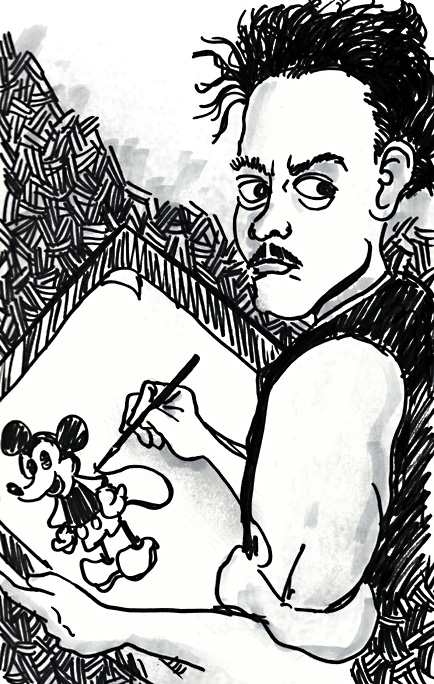
In 1919, eighteen year-old Ub Iwerks was working for the Pesman Art Studio in Kansas City, Missouri. It was here he met another eighteen year-old, a fellow artist named Walt Disney, who would become his oldest and best friend. Disney and Iwerks moved on to work as illustrators for The Kansas City Film Ad Company. While working for the Kansas City Film Ad Company, Disney became interested in animation and Iwerks soon joined him.

In 1922, Disney began his Laugh-O-Gram cartoon series and Iwerks joined him as chief animator.  In 1923, Iwerks followed Disney in his move to Los Angeles to work on a new series of cartoons. Disney asked Iwerks to come up with a new character. The character, Oswald the Lucky Rabbit, was animated entirely by Iwerks. Following the first cartoon, Oswald was redesigned on the insistence of Disney’s distributor, Universal Studios. Universal took full ownership of Oswald and eventually replaced Disney and Iwerks, handing the character over to Walter Lantz (who would later create Woody Woodpecker).

In 1928, Disney asked Iwerks to start drawing up new character ideas. Iwerks tried sketches of frogs, dogs, and cats, but none of these appealed to Disney. Iwerks was soon inspired by a drawing of Walt Disney done by fellow animator Hugh Harman. Harman drew some cartoony mice around a photograph of Walt Disney. Iwerks made some sketches and created a little mouse character. Walt approved, first naming the character “Mortimer”, and eventually “Mickey”.

Unhappy with Disney’s harsh command and a feeling he wasn’t getting proper credit, Iwerks left Disney and opened his own studio in 1930. Unable to match the success of other studios, especially that of his former employer, Iwerks returned to The Disney Studios in 1940. Upon his return, he worked mostly in the development of visual effects. Iwerks is credited with developing the process for combining live action and animation used in Song of the South as well as the xerographic process adapted for cel animation used in One Hundred and One Dalmatians. He also worked at Walt Disney Imagineering, helping to develop many Disney theme park attractions during the 1960s. Iwerks did special effects work outside the studio as well, including his Academy Award nominated achievement for Alfred Hitchcock’s The Birds.

Iwerks was known for his fast work at drawing and animation and his wacky sense of humor. Warner Brothers animator Chuck Jones, who worked for Iwerks’ studio in his youth, said “Iwerks” is Screwy  spelled backwards. Iwerks died of a heart attack in 1971.

Walt Disney is still credited with the creation of Mickey Mouse.

Comments

comments

DCS: carl mays

Buy me some peanuts and crackerjack. I don't care if I never come back.
Ray Chapman was born in Beaver Dam, Kentucky in 1891. Ten months later and 150 miles away the man who would kill him was born.

Ray was an above-average shortstop playing with the Cleveland Indians in the early twentieth century. He led the league in several hitting and fielding categories. He batted .300 in three seasons and is 6th on the all-time list for sacrifice hits.

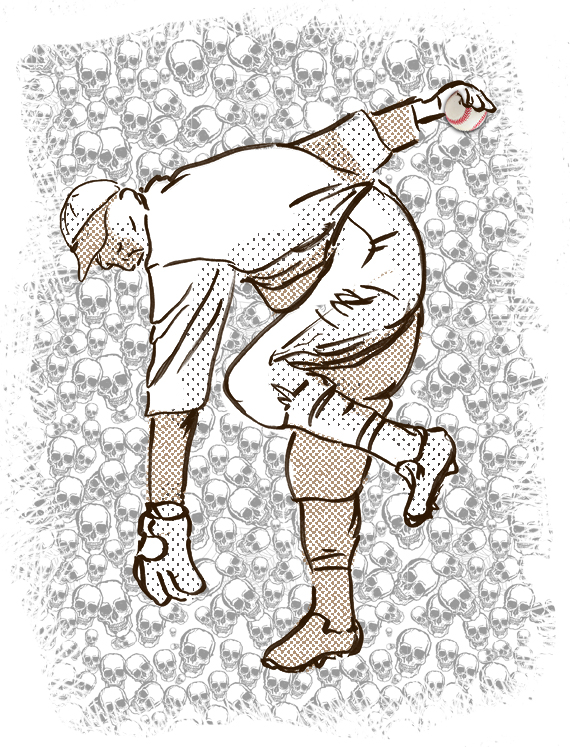
To his New York Yankee teammates, Carl Mays was a son-of-a-bitch. He was a mean, belligerent, complaining loner who had the disposition of a man with a constant toothache. He was, however, a master of deceptive pitching. In the early days of organized baseball, aside from the basics, there were few rules to be followed. This allowed for baseballs to be scuffed, scraped, sandpapered, spat upon, and cut by pitchers. Coupled with the fact that one baseball usually lasted an entire game, hitting, and even seeing, a ball was extremely difficult for batters. In addition to the physical augmentations Mays used on the ball, he earned himself the nickname “Sub” because of his underhand, “submarine”-style of pitch delivery.

On August 16, 1920, in a game at New York’s Polo Grounds between the Yankees and the Indians, Ray Chapman stepped to the plate in the fifth inning. Mays went into his wind-up and threw with his regular submarine delivery. The pitch was high and tight and Chapman never moved out of the way, unable to see the ball. Mays heard the ball crack and it was immediately returned to him at the pitcher’s mound. Mays assumed the ball hit Chapman’s bat, so he routinely tossed the ball to first base for the out. The “crack” was actually the sound of the ball penetrating Chapman’s skull. Chapman was rushed to a New York hospital where he died twelve hours later, after surgery.

This incident forced Major League Baseball to modify some of its rules. The spitball was officially banned. Dirty, scuffed or otherwise defaced baseballs are regularly replaced by umpires. Batters are now required to wear batting helmets. The submarine pitch, however baffling, is still legal.

Comments

comments